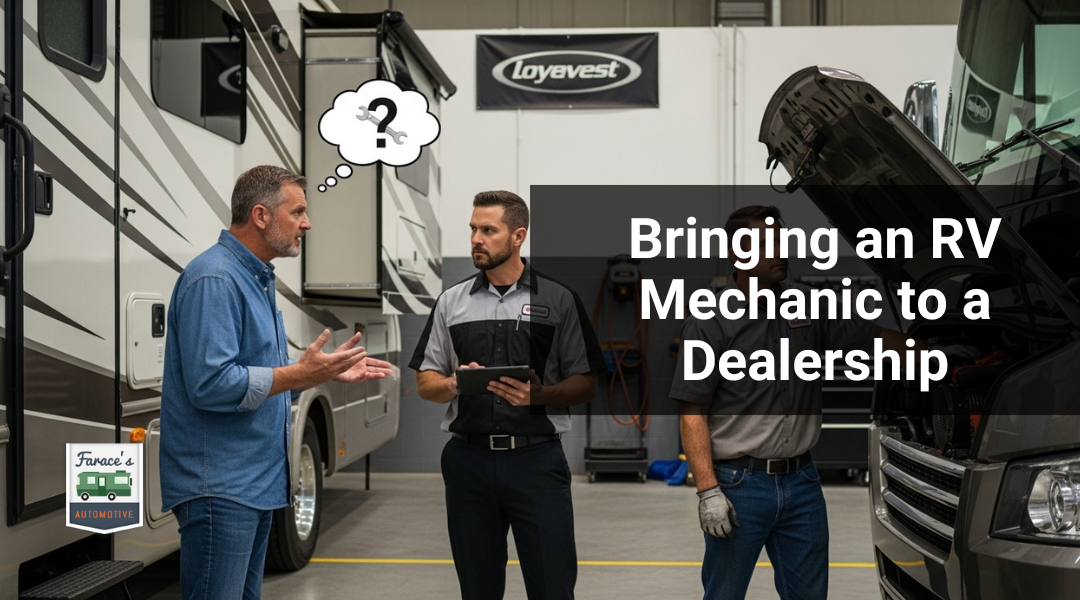
Buying an RV from a dealership is a big decision, and bringing your own mechanic along might seem like an unusual move. But for many buyers, it’s a smart way to avoid expensive surprises after the sale. Having a trusted RV mechanic inspect a unit before you buy can reveal hidden problems that a sales team won’t mention and help you negotiate a better price or walk away from a bad deal.
The idea is simple: you hire an independent expert to look over the RV while it’s still on the dealer’s lot. They check systems, test equipment, and give you an honest report before you sign anything. This isn’t common practice, but it’s becoming more popular as buyers realize how much money a pre-purchase inspection can save them.
In this guide, you’ll learn what happens when you bring a mechanic to a dealership, what the process costs, and whether it’s worth it for your situation. You’ll also find out how to make sense of what your mechanic tells you and when their findings should change your buying decision.
Bringing Your Own Expert Into a Dealer Environment
Dealerships operate under different protocols than independent shops, which affects how they view outside inspections. The relationship between your mechanic and dealership staff can range from cooperative to tense depending on the situation and what you’re buying.
How Dealership Pre-Delivery Checks Differ From Independent Inspections
Dealership pre-delivery inspections focus on making sure the RV meets factory standards and has no obvious defects. These checks typically cover fluid levels, basic electrical systems, and visible damage from transport. The inspection is meant to prepare the unit for sale, not to protect your interests as a buyer.
An independent mechanic’s inspection goes much deeper. They look for manufacturing defects, assembly problems, and potential failure points specific to your RV’s make and model. While dealership service technicians check off items on a standardized list, your mechanic examines components based on their real-world experience with repairs. They know which water heaters tend to fail early or which slide-out mechanisms need adjustment.
Dealerships rarely test systems under load or simulate actual camping conditions. Your mechanic might run the generator for 30 minutes, cycle the air conditioner repeatedly, or check for proper leveling jack operation. This kind of testing reveals problems that don’t show up during routine maintenance checks at the dealer lot.
When Dealers Welcome Third-Party Mechanics—And When They Tend to Resist
Most dealerships accept third-party inspections when you’re buying a used RV. They understand that buyers want protection on older units with unknown histories. The dealer may even provide a lift or workspace if your mechanic needs access to the undercarriage. This cooperation usually happens when the dealer is confident in the vehicle’s condition.
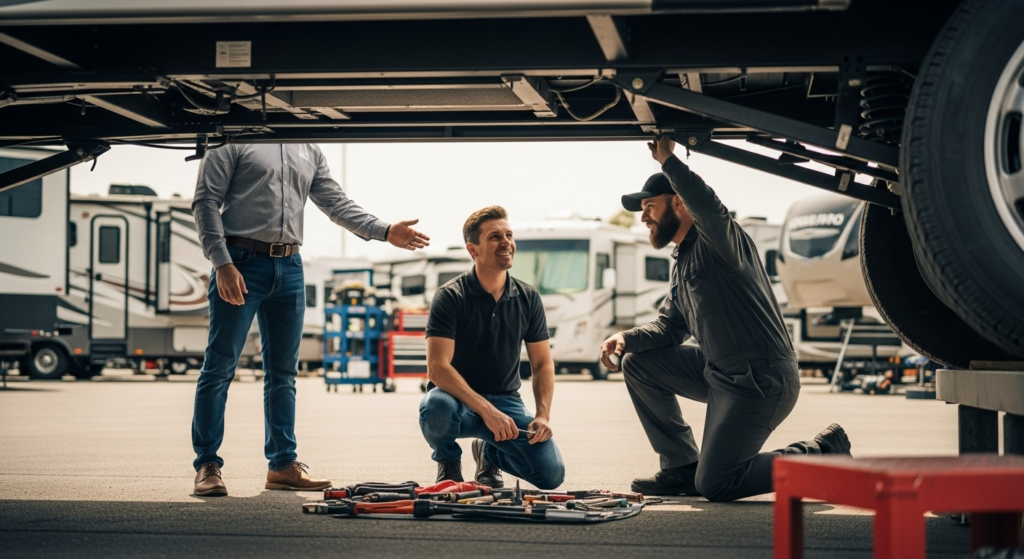
Resistance typically appears when you request an outside inspection on a brand-new RV. Dealers argue their pre-delivery inspection should be sufficient and may view your request as questioning their competence. Some locations have policies against allowing non-employees into service bays for liability reasons. You might also face pushback if your mechanic requests extensive testing that ties up the unit for hours.
The best approach is to ask about inspection policies before you start negotiations. Some dealers charge a fee for your mechanic’s time on the lot. Others require proof of insurance from any outside technician who enters their facility.
Situations Where a Mechanic’s Visit Adds Little Value Compared to Standard Dealer Processes
Bringing your own expert provides minimal benefit when you’re buying a current-year RV that’s still under full manufacturer warranty. Any defects discovered in the first year get covered by warranty repairs at no cost to you. The dealership service department handles these warranty claims as part of routine vehicle maintenance.
High-end dealerships with certified technicians often perform more thorough inspections than a general RV mechanic could provide. Luxury brand dealers invest in specialized training and diagnostic equipment specific to their product lines. Your independent mechanic may lack access to proprietary software needed to check advanced systems.
Simple cosmetic issues don’t require a mechanic’s expertise. You can spot upholstery stains, cabinet damage, or missing parts yourself during a walkthrough. Save your mechanic’s time for mechanical systems, plumbing, electrical components, and structural integrity. Their value lies in identifying problems that affect safety and function, not appearance flaws you can negotiate separately.
What an RV Mechanic Actually Does in a Dealership Inspection
An RV mechanic focuses primarily on the vehicle’s drivetrain and mechanical systems rather than the full range of coach systems. Their expertise centers on making sure the RV can safely travel down the road, but they typically won’t evaluate plumbing, appliances, or other RV-specific components with the same depth as a certified RV inspector.
Mechanical Priorities: Chassis, Engine, Brakes, and Roadworthiness Versus RV-Specific Systems
Your mechanic will concentrate on the chassis and engine first. They’ll check fluid levels, look for leaks, and assess the engine’s overall condition. Using diagnostic tools, they can identify trouble codes and potential engine repair needs before they become serious problems.
Brake systems get careful attention. Your mechanic will inspect brake pads, rotors, and brake lines for wear or damage. They’ll also check the suspension components, steering system, and wheel bearings.
The transmission receives a thorough review. Your mechanic will test shifting performance and check transmission fluid condition. They’ll look at drive shafts, differentials, and exhaust systems too.
What typically gets less attention:
- Electrical systems beyond the chassis
- Water heaters and furnaces
- Slide-out mechanisms
- Roof condition and seals
- Refrigerator operation
- Generator performance
Your mechanic ensures the vehicle itself is roadworthy, but RV-specific systems often fall outside their primary scope.
How an RV Mechanic’s Scope Compares to a Certified RV Inspector’s Multi-System Review
Certified technicians who specialize in RV repair bring different expertise than general automotive mechanics. Factory-trained technicians know specific RV brands and systems better, but even they focus mainly on mechanical components.
A certified RV inspector examines all major systems in a structured way. They test propane systems, water systems, electrical panels, appliances, and coach features. They’ll climb on the roof to check for damage and water intrusion risks.
Your mechanic uses diagnostic equipment designed for engines and chassis. An RV inspector carries tools to test LP detectors, check water pressure, verify slide-out alignment, and inspect seals throughout the coach.
Key differences:
| RV Mechanic | Certified RV Inspector |
|---|---|
| Engine and drivetrain focus | All coach systems included |
| Brake and suspension priority | Roof, seals, and water damage |
| Standard automotive diagnostic tools | RV-specific testing equipment |
| Chassis and roadworthiness | Full multi-system review |
Your mechanic keeps you safe on the highway. An inspector protects your entire investment.
Limitations Inside a Dealership Setting: Time Windows, Access Constraints, and Liability Concerns
Dealerships often restrict how long you can occupy a bay or service area. Your mechanic might get 60 to 90 minutes instead of the 3-4 hours needed for a complete evaluation. This time pressure means they focus on critical safety items first.
Access to OEM parts and repair records varies by dealership. Some dealers freely share service history and allow thorough inspections. Others limit what your mechanic can see or test. You might face additional fees if the dealer requires their own technician to be present during the inspection.
Your mechanic can’t always perform invasive tests. They won’t remove panels or components without dealer permission. Some systems need the RV to be fully set up with water, propane, and electrical hookups, which dealerships don’t always provide for inspections.
Liability issues affect what your mechanic will do. If they damage something during the inspection, questions arise about who pays for repairs. Most mechanics stay conservative in dealership settings to avoid these complications.
Common dealership restrictions:
- Limited inspection time slots
- No access to aftermarket parts for comparison
- RV must stay in specific location
- Testing limited to non-invasive methods only
These constraints mean your mechanic delivers a focused but incomplete assessment of the RV’s true condition.
Pros and Cons of Bringing a Mechanic With You
Bringing an independent mechanic to inspect an RV at a dealership shifts power toward you as the buyer. It creates friction with sales processes but reveals mechanical truths that affect both your initial price and your repair budget for years ahead.
Advantages: Uncovering Hidden Defects, Negotiating Leverage, and Realistic Expectations of Post-Sale Repair Needs
An independent mechanic spots problems you would miss. They check slide-out seals, roof membranes, frame welds, and appliance function. They identify worn suspension components and electrical shorts that a dealership service center might gloss over during their reconditioning process.
This knowledge gives you negotiating leverage. If the mechanic finds $3,000 worth of deferred maintenance, you can ask the dealer to repair it or reduce the price. Many dealerships would rather discount than fix non-critical items before sale.
You also gain realistic expectations about post-sale repair needs. Your mechanic can tell you which issues need immediate attention versus what can wait. This helps you budget accurately instead of facing surprise expenses three months after purchase.
Common defects mechanics uncover:
- Water damage behind wall panels
- Failing bearings or brakes
- Propane leaks or regulator issues
- Appliances that run but operate inefficiently
- Frame cracks or previous accident repairs
Drawbacks: Dealer Pushback, Scheduling Friction, and the Risk of Overreacting to Manageable Findings
Some dealerships resist outside inspections. They may argue their service center already inspected the unit or claim warranty coverage makes inspection unnecessary. Others limit inspection time or require appointments days out, which slows your buying timeline.
Scheduling an independent mechanic adds complexity. You coordinate your schedule, the dealer’s availability, and the mechanic’s calendar. Mobile mechanics offer more flexibility but charge travel fees on top of inspection costs.
There’s also risk of overreaction. A thorough mechanic will document every flaw, including minor cosmetic issues and normal wear items. You might walk away from a solid RV because the findings sound alarming when they represent typical maintenance for the age and mileage. Distinguishing between deal-breakers and routine upkeep requires experience you may not have.
Alternative Pathways: Post-Purchase Inspections, Life-Safety–Only Checks, and Hybrid Inspection Models
Post-purchase inspections work if the dealership offers a return window or money-back guarantee. You buy the RV, take it to an independent repair shop within three to five days, and return it if major problems surface. This removes scheduling friction at the dealership but reduces your negotiating power since you’ve already agreed to the price.
Life-safety–only checks focus exclusively on brakes, tires, propane systems, and structural integrity. This abbreviated inspection costs less and takes 30 to 45 minutes. It protects you from dangerous defects without overwhelming you with minor findings.
Hybrid models split the inspection. You bring a mechanic for the initial visit to check deal-breaker items like the engine and chassis. If you move forward, you schedule a comprehensive inspection at an independent repair shop before finalizing the purchase. This approach balances dealership cooperation with thorough evaluation.
What This Typically Costs—And How to Think About Value
Bringing an RV mechanic to a dealership involves upfront inspection fees, but the real cost includes travel time, hourly rates, and the potential to avoid expensive repairs on a problematic rig. Understanding these fee structures helps you determine whether the expense delivers real value.
Typical Fee Ranges for Mobile RV Mechanics Versus Certified RV Inspectors
Mobile RV mechanics typically charge between $75 and $150 per hour for their services. These rates vary based on your location and the mechanic’s experience level.
Certified RV inspectors offer more comprehensive pre-purchase evaluations. Their fees usually range from $300 to $600 for a standard inspection.
The difference comes down to scope. A mobile mechanic might focus on specific concerns you identify, while a certified inspector conducts a full system-by-system review. This includes checking electrical systems, plumbing, appliances, roof condition, and structural integrity.
For a dealership visit, you’re paying for expertise that can spot problems before you commit to a purchase. The inspection fee protects you from buying an RV with hidden issues that could cost thousands to repair.
Travel Charges, Hourly Rates, and Report-Writing Time as Hidden Cost Drivers
Mobile RV service providers often add travel fees to their base rates. Expect to pay $50 to $100 for travel, depending on distance from their location to the dealership.
Some mechanics charge portal-to-portal time. This means you pay from when they leave their shop until they return. Others only bill for on-site inspection time.
Report preparation adds another layer of cost. Detailed written reports with photos typically take 1-2 hours to complete. You might pay $75 to $150 for this documentation.
Ask for a complete cost breakdown before scheduling. Request a written estimate that includes inspection time, travel charges, and report fees. This prevents surprise charges and helps you budget accurately for the mobile rv repair evaluation.
Evaluating Cost Versus Potential Savings in Repairs, Warranty Work, and Avoided Problem Rigs
A $500 inspection can save you from purchasing an RV with $10,000 worth of hidden damage. Major issues like roof leaks, frame damage, or failing systems often go unnoticed during casual walkthroughs.
Common expensive problems inspectors catch:
- Water damage requiring structural repairs ($5,000-$15,000)
- Slide-out mechanism failures ($2,000-$8,000)
- Roof replacement needs ($3,000-$10,000)
- Electrical system overhauls ($1,500-$5,000)
The inspection also strengthens your negotiating position. Documentation of needed repairs gives you leverage to request price reductions or have the dealership fix issues before purchase.
For warranty considerations, having a professional inspection on record protects you if problems appear shortly after purchase. The documentation proves pre-existing conditions versus new damage.
Walking away from a problematic RV is sometimes the best outcome. Your inspection investment prevents you from inheriting someone else’s expensive problems.
Interpreting the Outcome: When a Mechanic’s Input Should Change Your Decision
A mechanic’s inspection report isn’t just a checklist. It’s a roadmap that helps you decide whether to proceed, renegotiate, or walk away from an RV purchase. Understanding the difference between minor fixes and major red flags determines whether you’re making a smart investment or taking on someone else’s problem.
Differentiating “Normal” New-RV Punch Lists From Signs of Systemic Neglect
Most new RVs come with minor issues that qualify as normal punch-list items. These include loose cabinet hardware, minor alignment issues with doors or windows, and small cosmetic blemishes. Manufacturers expect dealers to address these before delivery, but some slip through.
What shouldn’t be normal are signs of water damage, electrical system failures, or structural issues with the frame or axles. A skilled mechanic can spot the difference between a cabinet door that needs adjustment and water stains indicating a leak that could lead to mold and rot.
Red flags that should change your decision:
- Active leaks or evidence of previous water intrusion
- Non-functioning slide-outs or leveling systems
- Electrical shorts or repeated circuit failures
- Chassis damage or improper repairs
- Issues covered by manufacturer recalls that haven’t been addressed
If your mechanic finds items covered by warranty repairs, the dealer should fix them before you take delivery. If they’re unwilling, that tells you something about their service commitment.
How Professionals Decide When to Negotiate Harder, Walk Away, or Accept Issues as Part of Ownership
Your mechanic’s findings become negotiating leverage. Small issues worth $500 to $1,000 in repairs warrant a price reduction or dealer-performed fixes. Problems exceeding $3,000 to $5,000 require serious negotiation or walking away entirely.
Experienced mechanics help you calculate repair costs realistically. They know whether a technical service bulletin exists for a problem, which means the manufacturer acknowledges the issue and may cover repairs under warranty. This information changes your negotiating position completely.
Decision framework based on findings:
- Minor issues (under $1,000): Request dealer repairs or small price reduction
- Moderate issues ($1,000-$5,000): Negotiate significant price reduction or walk away if dealer refuses
- Major issues (over $5,000 or structural): Walk away unless price reflects extensive repairs needed
- Safety-critical problems: Never accept these; insist on complete resolution or abandon the purchase
Professional mechanics also assess whether problems indicate poor manufacturing quality or dealer negligence in prep work. Both scenarios suggest future headaches.
Long-Term Implications of Skipping Third-Party Input in a Dealership-Centric Purchase Process
Buying without independent inspection means you’re trusting only the dealer’s assessment. Dealers profit from sales, which creates an inherent conflict of interest in objectively evaluating RV condition.
The financial risk extends beyond immediate repairs. Undiscovered problems often multiply. A small roof leak ignored for months becomes a $15,000 delamination repair. Electrical issues not caught early can cause fires or total system failures on the road.
You also lose documentation that proves pre-existing conditions. If a major problem appears three months after purchase and falls outside your warranty repairs coverage, you’ll have no evidence the issue existed beforehand. Your mechanic’s written report becomes crucial if you need to pursue legal remedies or manufacturer goodwill repairs.
Insurance implications matter too. Some RV insurers require pre-purchase inspections for older or high-value units. Without documentation from a qualified mechanic, you might face coverage limitations or higher premiums. This single decision affects your ownership experience for years.