Diesel RVs thrive in Southern California’s unique driving environment, but they don’t follow the same maintenance rules as regular cars or trucks that get driven daily. Your motorhome might sit for weeks between trips, then tackle steep mountain grades or long desert highways in a single weekend. A maintenance schedule built around mileage alone won’t protect your diesel RV when heat, altitude changes, and irregular use patterns define your actual driving conditions.
The gap between what your owner’s manual recommends and what your RV actually needs can lead to expensive problems at the worst possible times. Your diesel engine, transmission, and exhaust systems respond to how you use the vehicle, not just how far you drive it. Understanding how maintenance intervals really work helps you plan service around your road trips instead of scrambling to fit repairs between them.
This guide breaks down a practical approach to diesel RV maintenance that matches Southern California’s climate and terrain. You’ll learn how to interpret what your fluids and filters reveal about your motorhome’s condition, and how proper timing keeps more travel options open throughout the year.
Diesel RVs In A Southern California Use Pattern
Southern California creates a distinct operating environment for diesel-powered RVs that doesn’t match the maintenance assumptions printed in most owner’s manuals. The combination of warm temperatures, steep mountain passes, stop-and-go coastal traffic, and California-specific emissions regulations means your diesel RV maintenance needs differ from what works in other regions.
Who This Schedule Actually Fits: Trip Frequency, Rig Age, And Engine Type
This maintenance approach works best if you own a diesel-powered RV registered in California with a GVWR over 14,000 pounds. Your rig likely sits parked most weeks and gets driven 1,500 to 3,000 miles annually for weekend trips and occasional longer journeys.
The schedule applies whether you own a 2007 pusher or a 2024 model. Engines from 2013 and newer require OBD-based emissions testing annually through California’s Clean Truck Check program. Older engines need smoke opacity tests instead.
If you use your rig commercially or take extended cross-country trips lasting months, this schedule won’t match your needs. Commercial use triggers twice-yearly emissions testing rather than annual checks.
How Regional Factors—Heat, Grades, Urban Traffic, And Coastal Air—Change Normal Service Assumptions
Temperature extremes in Southern California push coolant systems harder than moderate climates. Desert runs to places like Joshua Tree or Anza-Borrego mean sustained operation at 95-110°F ambient temperatures.
Mountain grades on Interstate 15 through the Cajon Pass, Highway 74 to Idyllwild, or the Grapevine on Interstate 5 force your engine to work at high load for extended periods. This accelerates oil breakdown and increases exhaust system stress.
Urban traffic patterns create more idle time than highway driving. Moving through Los Angeles or San Diego means frequent stops, which prevents your diesel particulate filter from reaching the temperatures needed for passive regeneration.
Coastal humidity and salt air affect RVs stored near the ocean differently than those kept inland. Corrosion happens faster on exhaust components, batteries, and chassis parts.
These factors mean you can’t simply follow time-based intervals. A diesel RV that covers 2,000 miles per year in Southern California experiences different wear than the same mileage in flat, temperate regions.
What Falls Outside This Discussion: Warranty Fine Print, Emergency Repairs, And Major Rebuilds
Warranty requirements from your chassis or coach manufacturer take priority over any generic schedule. Cummins, Ford, or Freightliner may mandate specific service intervals using particular fluids to keep coverage valid.
Emergency repairs like failed fuel pumps, blown turbochargers, or transmission problems need immediate attention regardless of your maintenance calendar. Breakdowns don’t follow schedules.
Major rebuilds including engine overhauls, transmission replacements, or structural repairs belong in a different category than routine diesel RV maintenance. These involve specialists rather than regular service shops.
California’s Clean Truck Check program handles emissions compliance separately from mechanical maintenance. You pay annual fees and complete required testing through CARB-credentialed facilities, but this doesn’t replace oil changes or filter services.
How Diesel Maintenance Intervals Are Really Determined
Diesel RV maintenance schedules aren’t random numbers pulled from a manual. They’re based on specific calculations about time, mileage, and how hard your engine works during different types of driving.
The Logic Behind Time Versus Mileage Service Triggers
Your diesel RV needs maintenance based on two different clocks: calendar time and miles driven. Oil breaks down chemically even when your RV sits parked, which is why you need to change it yearly regardless of mileage. The same applies to fuel that sits in tanks, filters that collect moisture, and coolant that loses its protective properties.
Mileage triggers matter because they track wear from actual use. Every mile adds heat cycles, combustion byproducts, and mechanical stress to your engine. A diesel that runs 15,000 miles in a year experiences more internal wear than one that only drives 3,000 miles, even though both are exposed to the same amount of calendar aging.
Most manufacturers recommend whichever limit comes first. For example, change your oil at 7,500 miles or once per year. This dual approach protects your engine from both types of degradation and supports extended engine life through consistent care.
Duty Cycles: Repeated Short Hops, Long Freeway Runs, And Mountain Climbs
Your driving pattern directly affects how quickly your diesel wears out. Short trips under 20 miles don’t let your engine reach full operating temperature, which means condensation builds up in the oil and exhaust systems. This creates acid that corrodes internal components and reduces enhanced fuel efficiency.
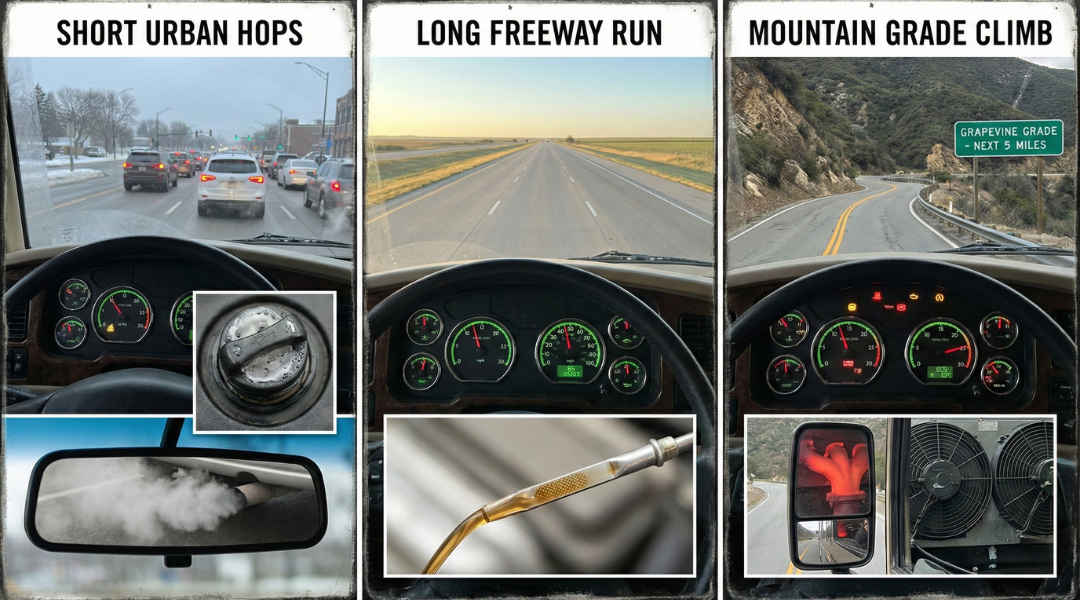
Long freeway runs at steady speeds are easiest on your diesel. The engine maintains consistent temperature, burns fuel completely, and operates in its most efficient range. These conditions produce reduced emissions and minimize wear on transmission and differential components.
Mountain driving is the hardest duty cycle. Climbing steep grades forces your engine to work at maximum load for extended periods. Your transmission downshifts repeatedly, your exhaust system reaches extreme temperatures, and your cooling system runs at full capacity. If you regularly tackle routes like the Grapevine or mountain passes to Big Bear, you need more frequent fluid changes and inspections.
Manufacturer Baselines Versus Real-World Adjustments For Southern California Routes
Factory maintenance schedules assume average driving conditions. But Southern California demands adjustments. The constant stop-and-go traffic on I-5 and I-405 counts as severe duty, not normal use. Your engine idles more, shifts more frequently, and operates at higher temperatures than the manufacturer’s baseline assumes.
Desert heat during summer trips to Joshua Tree or Palm Springs accelerates fluid breakdown. Your coolant works harder, your air conditioning system runs continuously, and heat radiates from pavement back into your undercarriage. These conditions mean you should cut standard intervals by 20-30% for critical fluids.
Coastal humidity and salt air near beaches affect different components. Battery terminals corrode faster, metal surfaces rust more quickly, and electrical connections need more frequent cleaning. Your real-world schedule should account for where you actually drive, not where the manufacturer imagines you might go.
Structuring A Practical Maintenance Calendar Around Road Trips
A maintenance calendar built around your actual travel patterns keeps your diesel RV ready without wasting time on unnecessary service visits. By timing major work with seasonal trips, combining tasks during single service sessions, and using your driving history to predict future needs, you create a schedule that fits Southern California’s unique RV lifestyle.
Anchoring Major Services To Seasons And Typical Travel Corridors
Plan your annual rv maintenance around the two major travel seasons in Southern California. Schedule comprehensive service in March before spring desert trips to Joshua Tree and Death Valley when temperatures climb. Book another full inspection in September before cooler fall trips to the mountains and coast.
Your rv maintenance checklist should align with where you’re heading. Desert routes demand extra attention to cooling systems and tire pressure checks. Coastal trips require testing your brakes before navigating Highway 1’s steep grades.
Time your oil changes and filter replacements to happen right before high-mileage journeys. If you typically drive 1,500 miles during summer travel, schedule your oil service in May rather than waiting until the 7,500-mile mark hits mid-trip. This approach keeps fresh fluids in your coach when it’s working hardest.
Grouping Related Tasks So The Coach Is Opened Up Less Often
Combine related maintenance items into single service appointments to reduce shop visits. When you schedule transmission work, add differential service and wheel bearing inspection to the same visit. These tasks all require similar access points under your RV.
Create quarterly rv maintenance blocks that group systems together:
Q1 (January-March): Engine oil, fuel filters, air filters, coolant check
Q2 (April-June): Generator service, hydraulic systems, brake inspection
Q3 (July-September): Transmission service, exterior inspection, tire rotation
Q4 (October-December): House batteries, water systems, chassis lubrication
Bundling your rv maintenance checklists this way means fewer trips to the service center. It also reduces labor costs since technicians spend less time setting up and breaking down for each job.
Using Past Trip Patterns And Odometer Trends To Refine The Next 12–18 Months Of Work
Review your last year’s mileage logs and trip dates to build a realistic maintenance schedule. If you drove 8,000 miles last year with most travel between April and October, you can predict similar patterns ahead.
Track which months add the most miles to your odometer. Many Southern California RVers pile on 600-800 miles per month during peak season but only 100-200 during summer heat or winter holidays. This data tells you when to schedule your pre-trip rv inspection.
Use your maintenance records to spot patterns in wear items. If you replaced tires at 45,000 miles and you’re now at 38,000, plan for tire replacement within the next 18 months. The same logic applies to belts, hoses, and brake pads.
Build a simple spreadsheet with these columns: month, expected miles, major trips planned, and monthly rv maintenance due. Update it after each trip to improve accuracy for the following year. This living document becomes your comprehensive rv maintenance checklist tailored specifically to how you actually use your diesel RV.
Interpreting Wear, Fluids, And Filters Over Time
Filters and fluids tell a story about your diesel RV’s health, especially under Southern California’s unique demands of mountain grades and desert heat. Learning to read these signals helps you move from reactive repairs to predictive maintenance that protects your investment.
Reading Oil, Coolant, And Fuel Filter Changes As Signals—Not Just Checkboxes
Your engine oil color and texture reveal combustion efficiency and contamination levels. Dark, gritty oil suggests soot accumulation or extended intervals, while a milky appearance indicates coolant intrusion that demands immediate attention.

Fuel filter replacement intervals shorten when you encounter water contamination or biodiesel blends common at California truck stops. A clogged fuel filter triggers performance loss before warning lights appear. The 10-micron water-separating filter and 2-micron secondary filter work together—if you drain water from the first, you must change the second.
Coolant conditioner levels drop faster in hot climates, making your 20,000-mile checks critical. Low supplemental coolant additive (SCA) concentration allows cylinder liner pitting and radiator corrosion. Professional analysis catches pH shifts and glycol degradation that visual inspection misses.
The hydraulic oil filter for slide-outs and leveling jacks shows metal particles when seals wear. Air dryer filter condition affects brake system moisture—a wet filter means your air brake components face accelerated corrosion.
Distinguishing Normal Heat- And Grade-Related Wear From Emerging Drivetrain Stress
Southern California’s sustained grades and 100°F summers accelerate specific wear patterns. Your brake inspection should reveal gradual pad thinning, but uneven rotor scoring or frequent pad replacement indicates binding calipers or inadequate engine braking usage.
Drive belt tension loosens faster in heat, but cracking or glazing signals misalignment or pulley wobble. When you lube chassis components and pack wheel bearings, consistent grease color indicates normal wear. Black, burnt grease or metal shavings point to bearing failure or inadequate lubrication intervals.
Battery maintenance becomes critical as heat degrades electrolyte faster than cold climates. A battery requiring frequent water additions may suffer from overcharging or internal shorts. Generator maintenance intervals remain calendar-based, but if you notice harder starting or voltage fluctuations, your fuel system or exhaust components need attention before the scheduled service.
DPF cleaning frequency increases with stop-and-go driving that prevents complete regeneration cycles. Professional DPF cleaning becomes necessary when back-pressure exceeds normal range, even if your interval hasn’t arrived.
Tradeoffs Between Conservative Early Service, Stretched Intervals, And Total Ownership Cost
Conservative intervals—oil changes every 5,000 miles instead of 10,000—cost more upfront but extend engine life and improve resale value. Your service differential and transmission benefit from early fluid changes that remove wear metals before they circulate.
Stretching intervals works only with fluid analysis confirming remaining service life. Skipping lube slack adjusters or chassis lubrication saves $75 but risks $3,000 suspension component replacement. Tire pressure checks cost nothing but prevent $2,000 blowout damage.
Comprehensive fluid changes every 24 months versus 36 months add $800 to your maintenance budget but prevent cooling system failures that strand you in desert heat. Brake line inspection catches rubber degradation before a failure, while wheel bearing repack prevents hub fires.
You balance immediate savings against breakdown risks. Southern California’s remote desert stretches and mountain passes make reliability worth the premium of conservative service.
Downstream Effects: How Maintenance Timing Alters Trip Options
When you stick to a maintenance schedule, your diesel RV unlocks longer routes and harder-to-reach destinations. When you skip it, your choices shrink fast.
How A Well-Structured Schedule Expands Acceptable Trip Length And Route Choices
A current maintenance log gives you the freedom to book trips six months out without worrying whether your coach can handle a 2,000-mile loop through the Sierra Nevada or along Highway 395. Fresh oil, new fuel filters, and tested air brakes mean you can tackle Donner Pass or the Grapevine without second-guessing your rig.
You also gain access to remote boondocking spots where mobile service is scarce. When your generator, leveling jacks, and cooling system are documented as healthy, you can camp off-grid near Joshua Tree or Anza-Borrego for a week.
Southern California road trips often mean elevation swings of 8,000 feet in a single day. A maintained cooling system and clean DEF filter let you climb those grades without overheating or limp mode. That opens up routes to Big Bear, Mammoth Lakes, and the Eastern Sierra that would otherwise feel risky.
When Deferring Maintenance Starts To Constrain Where And How You Can Drive
Skipping an oil change or ignoring a small air leak doesn’t ground your RV immediately. It just starts to shrink your map. You avoid mountain highways because you’re unsure about brake pressure. You skip Death Valley in summer because your coolant is two years old. You turn down a two-week Baja trip because your tires show sidewall cracks.
Deferred RV winterizing after a mountain trip can freeze and crack water lines, forcing you to stick to low-desert routes until repairs are done. That cuts out destinations like Idyllwild or Lake Arrowhead during cooler months.
Eventually, you’re choosing campsites based on proximity to diesel shops instead of scenery. You spend vacation time troubleshooting instead of exploring.
The Long-View Relationship Between Schedule Discipline, Resale Condition, And Confidence On The Road
Buyers pay more for a diesel pusher with stamped service records and no deferred items. A coach with documented fluid changes, brake overhauls, and slide maintenance can command $15,000 to $30,000 more than an identical model with gaps in its history.
Schedule discipline also compounds your confidence. Each completed checklist—air-dryer desiccant swapped, wheel bearings repacked, roof seals inspected—means one less thing that can fail on I-15 between Barstow and Vegas.
Over five years, that confidence turns into memories from places you went instead of repair bays you sat in.