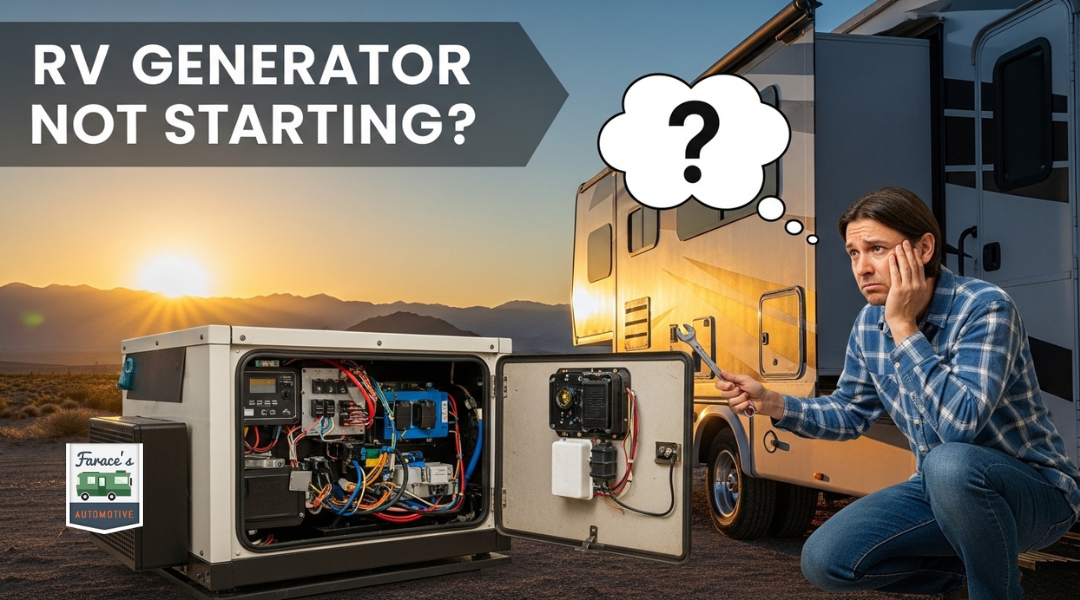
You’re packed for a desert escape or coastal weekend, but your RV generator refuses to start. An RV generator that won’t start typically fails due to fuel delivery problems, electrical system faults, or environmental factors—issues that become more common in Southern California’s heat and varied terrain. Without power, your trip stops before it begins.
Southern California’s climate puts unique stress on RV generators. High desert temperatures, coastal humidity, and long stretches between service stops create conditions where small maintenance gaps turn into total failures. Understanding how your generator responds to these conditions helps you avoid being stranded without air conditioning, refrigeration, or basic power.
This guide walks you through the diagnostic approach used at Farace’s Automotive & RV Center in Huntington Beach. You’ll learn how to identify fuel and electrical issues, understand when environmental factors matter, and make informed decisions about repair versus replacement before your next trip.
Operational Context And Failure Boundaries
A generator that won’t crank is different from one that runs but produces no power, and problems that appear after months of storage have different causes than those that emerge mid-trip.
When Non Start Differs From No Power Output
An RV generator won’t start scenario means the engine won’t turn over or catch at all. You press the start button and hear silence, a single click, or weak cranking without ignition. This points to fuel delivery problems, dead batteries, bad spark plugs, or tripped safety sensors.
A no-power-output problem is completely different. The generator starts and runs normally, but your outlets and appliances receive no electricity. This indicates issues with the generator’s voltage regulator, brushes, stator windings, or output breakers. The engine works fine but the electrical generation system has failed.
Start problems require fuel system, ignition, and mechanical checks. Power output problems need electrical component testing.
If your generator won’t start, don’t waste time checking voltage output or testing circuit breakers on the AC side. Focus on getting the engine running first. Check fuel levels, battery charge, oil level sensors, and whether the engine turns over when you hit start.
Trip Timing Versus Storage Related Failure
Generator won’t start issues during a trip usually stem from immediate operational causes. Low fuel levels, overheating from excessive use, or tripped overload breakers are common mid-trip failures. Your house batteries might have drained from running lights and fans overnight.
Storage-related failures happen after your RV sits unused for weeks or months. Stale fuel clogs the carburetor with varnish. Batteries lose charge from parasitic drain. Rodents build nests in air intakes or exhaust pipes. Moisture corrodes electrical connections.
Southern California’s dry climate reduces some corrosion risks but intensifies fuel evaporation problems. Gas in your tank or carburetor bowl evaporates faster in heat, leaving sticky residue that blocks jets and passages.
A generator that ran fine when you parked it but won’t start months later needs different troubleshooting than one that quit halfway through Joshua Tree. Address fuel system cleaning, battery charging, and filter replacement for storage failures. Check for overloads, overheating, and depleted fuel for trip failures.
Conditions Where Generator Faults Mask Larger Electrical Issues
Your RV generator won’t start problem might actually be a symptom of house battery failure. If corroded or loose battery terminals prevent current flow, your generator can’t receive the 12-volt power needed for starting. This looks like a generator fault but it’s really a battery system problem.
Low voltage from failing batteries can also prevent your generator’s control board from functioning. The start button might not send proper signals to the starter solenoid. Display panels stay dark or show error codes.
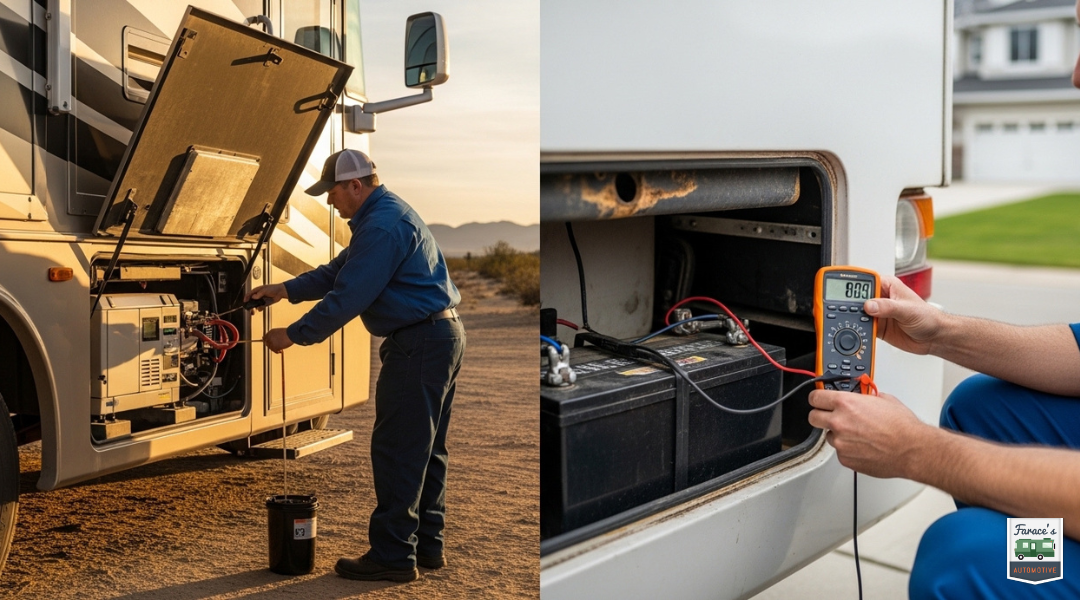
Test your house batteries with a multimeter before assuming generator failure. You need at least 12.4 volts for reliable starting. Anything below 12 volts indicates discharged batteries that need charging before generator diagnosis can continue.
Blown fuses between the battery and generator starter circuit create identical symptoms to a failed starter motor. Check all fuses in the path from batteries to generator before replacing expensive components. A $2 fuse might solve what appears to be a $400 starter problem.
Electrical And Fuel System Fundamentals
Your RV generator relies on two connected systems to run: electrical components that trigger ignition and fuel delivery that powers combustion. Problems in either system will prevent your built-in RV generator from starting, and knowing how these parts work together helps you find solutions faster.
Chassis Battery Versus House Battery Interaction
Your RV uses two separate battery systems. The chassis battery starts your vehicle’s engine and often powers the generator starter motor. The house battery runs your appliances and lights inside the RV.
Most built-in RV generators draw starting power from the chassis battery. When this battery drops below 12.4 volts, you won’t have enough power to crank the starter. Your house batteries might show full charge, but that doesn’t help if the chassis battery is dead.
Some RV models include a battery transfer switch that lets you use house battery power to start the generator. Check your owner’s manual to see if your system has this feature. Always test your chassis battery voltage before attempting other repairs.
Fuel Pickup Thresholds In Motorhome Tanks
Your motorhome generator draws fuel from the main vehicle tank through a separate pickup tube. This tube sits higher than the main fuel line to protect you from being stranded with an empty tank.
Most systems require at least 1/4 tank of fuel for the generator to operate. The pickup tube sits about 3-4 inches above the tank bottom. When fuel drops below this level, the generator can’t draw enough to run even though your gauge shows fuel remaining.
Old or contaminated fuel causes additional problems. Fuel breaks down after 3-6 months and forms varnish that clogs lines. A clogged fuel filter blocks flow completely. Replace your fuel filter every 12 months or 200 hours of use, whichever comes first.
Starter Circuits, Relays, And Control Boards
The starting sequence involves multiple electrical parts working together. When you press the start button, the control board sends power through a relay to engage the starter motor.
A faulty relay produces clicking sounds without turning the engine. Loose wire connections cause intermittent starting problems. Blown fuses in the control circuit prevent any power from reaching the starter.
Your low oil sensor acts as a safety cutoff that prevents starting when oil levels drop too low. This protects the engine from damage. Check your oil level first before investigating other electrical issues.
The control board manages the entire starting sequence and monitors operating conditions. Circuit board failures require professional replacement. Test simpler components like fuses, relays, and connections before suspecting board problems.
Altitude And Air Mixture Considerations Inland
Southern California’s inland areas sit between sea level and 6,000 feet elevation. Higher elevations have thinner air that affects how your generator runs.
Your generator needs the right mix of fuel and air for combustion. At higher altitudes, less oxygen enters the carburetor. This creates a “rich” mixture with too much fuel and causes hard starting, black smoke, and poor performance.
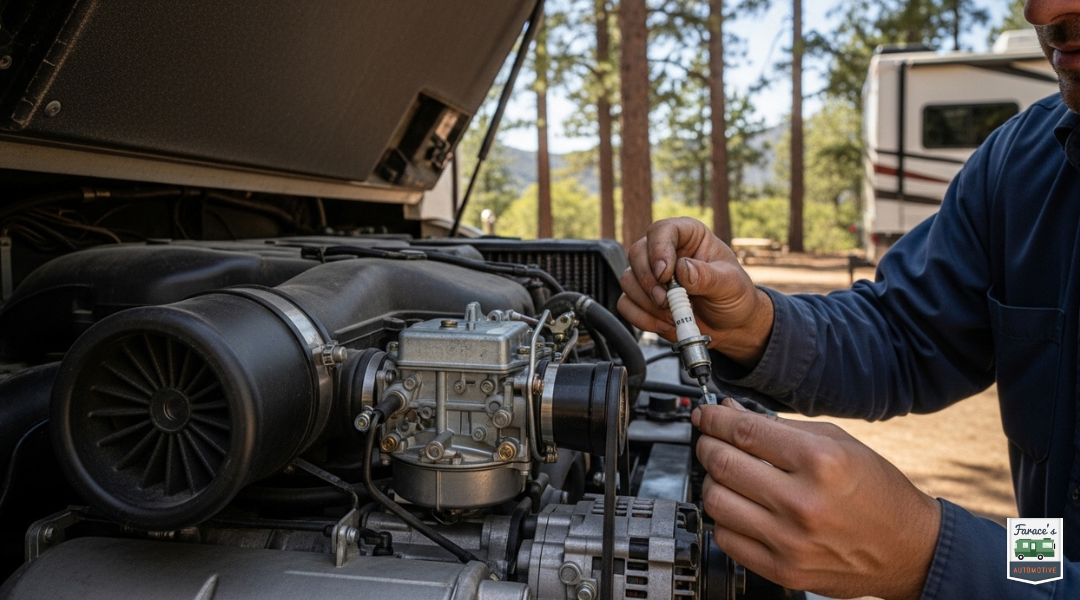
Spark plug issues become more common at elevation. Plugs foul faster in rich-running conditions. Inspect your plugs for black carbon buildup or wet fuel deposits. Replace fouled plugs and consider one heat range colder if you frequently camp above 4,000 feet.
Most generators have altitude compensation kits available. These kits adjust the air-fuel ratio for elevations above 2,500 feet. Ask your dealer about kits for your specific model if you regularly visit mountain areas.
Environmental Stress In Southern California Travel
Southern California’s unique climate zones create specific challenges for RV generators that differ from standard maintenance concerns. Coastal moisture accelerates corrosion, desert temperatures strain cooling systems, and irregular usage patterns between trips lead to component deterioration.
Coastal Humidity And Corrosion Patterns
When you park your RV near coastal areas from San Diego to Malibu, salt-laden air attacks electrical connections and metal components. The marine layer brings moisture that settles on battery terminals, creating white or green corrosion buildup. This corrosion blocks electrical flow and prevents your generator from starting.
Check your battery terminals monthly if you store your RV within 10 miles of the coast. Clean connections with a baking soda and water mixture. Apply dielectric grease to protect against future corrosion.
Fuel system components also rust faster in coastal conditions. Metal fuel lines and filters develop surface corrosion that flakes into your fuel supply. Inspect fuel lines every three months during coastal storage. Replace filters more frequently than manufacturer recommendations suggest.
Desert Heat Exposure Beyond Orange County
Desert destinations like Joshua Tree, Anza-Borrego, and the Mojave expose your generator to temperatures exceeding 110°F. This extreme heat causes fuel to evaporate from carburetors and degrades rubber components faster than normal.
Oil breaks down quicker in desert heat. Change your generator oil every 25 hours of use instead of the standard 50-hour interval when traveling to desert areas. Low oil levels trigger automatic shutdowns that prevent starting.
Check coolant levels before desert trips. Overheating remains the primary generator failure cause in inland Southern California. Ensure air intake vents stay clear of sand and dust. Clean cooling fins after each desert camping trip to maintain proper airflow.
Long Storage Intervals Between Seasonal Trips
Many Southern California RV owners use their generators only during summer camping season or winter desert trips. This creates 3-6 month gaps between uses. Fuel deteriorates in as little as 30 days without stabilizer additives.
Run your generator for 30 minutes every month during storage periods. This circulates oil through the engine and prevents fuel system gumming. Add fuel stabilizer to your tank before storage to prevent carburetor deposits.
Battery charge drops 5-10% monthly during storage. Use a trickle charger or disconnect battery cables completely. Dead batteries rank as the most common reason generators won’t start after storage. Test battery voltage before each trip using a multimeter. Replace batteries showing less than 12.4 volts.
Diagnostic Logic Used At Farace’s Automotive & RV Center
Professional RV shops follow a specific testing order to find the real problem with your generator, not just swap parts until something works. This approach identifies whether issues come from worn components, bad wiring, or control system failures.
Sequential Testing Versus Parts Replacement Assumptions
The technicians at Farace’s start with voltage checks at the battery terminals before touching any components. This baseline reading tells them if power is even reaching the generator’s starter circuit. They then move through each system in order: fuel delivery, ignition spark, compression, and finally the control board.
This method costs you less than random part replacement. A fuel pump that tests fine doesn’t need replacing, even if it’s old. You get charged only for the actual failed component.
The shop uses a digital multimeter to test voltage drops across connections. A reading above 0.2 volts means a connection has too much resistance. They clean or replace that specific terminal instead of replacing entire wire harnesses.
Each test builds on the last one. If fuel pressure measures normal, they know the problem sits downstream. This eliminates guesswork and cuts diagnostic time from hours to minutes.
Interpreting Fault Codes In Onboard Generators
Modern RV generators store trouble codes when sensors detect problems. Farace’s technicians plug a scan tool into your generator’s diagnostic port to read these codes. A code like P0562 means low system voltage, but it doesn’t tell you if the battery, alternator, or wiring failed.
The shop cross-references codes with actual measurements. They might see a low oil pressure code but then verify the oil level is full and pressure reads normal. That points to a faulty sensor, not an engine problem.
Common fault codes they see:
- Overspeed condition – Governor linkage binding or control board failure
- Overcrank shutdown – Fuel starvation or weak ignition
- Low frequency alarm – Engine rpm problems or alternator issues
They clear codes after testing and run the generator to see if they return. Intermittent codes need different troubleshooting than permanent ones.
Differentiating Component Wear From Wiring Degradation
Southern California’s heat breaks down wire insulation over time. The shop checks for brittle or cracked insulation before condemning any component. A starter motor might work perfectly but never engage because corroded wires can’t carry enough current.
They perform voltage drop tests while components run under load. A wire that looks fine sitting still might fail when current flows through it. This catches problems that basic continuity testing misses.
Testing priorities:
- Visual inspection of all connections for corrosion
- Resistance measurements on ground paths
- Load testing of the battery and charging system
- Component testing only after wiring checks pass
Generator brushes wear down after 500 hours of use. Farace’s measures brush length and spring tension with specific gauges. If brushes measure above minimum length but the generator still won’t start, they look at the voltage regulator or field windings instead.
Repair Decisions, Risk, And Preventive Strategy
A generator that restarts after several attempts might seem fixed, but that behavior often masks a problem that will strand you later. The decision to repair or replace depends on how often failures occur, how many hours the unit has run, and whether the root cause is a cheap fix or a sign the generator is at the end of its service life.
Temporary Restart Success Versus Underlying Instability
If your generator starts on the third try, runs for an hour, then refuses to start again, you’re looking at an unstable system. That pattern typically points to a failing component that works when cold but fails when hot—like a weak starter solenoid, a flaky oil pressure sensor, or a carburetor that clogs after running.
These intermittent failures are risky for Southern California desert trips where afternoon temperatures push generators harder. You might leave camp with a working unit and return to find it dead when you need AC most.
Red flags for underlying instability:
- Starts only after multiple attempts or long rest periods
- Runs fine for 20–30 minutes, then shuts down without warning
- Requires constant choke adjustment to stay running
- Oil level is correct but low-oil shutdown activates anyway
Don’t treat a temporary restart as a real fix. Track how often the problem repeats over the next few uses.
Maintenance Intervals Relative To Runtime Hours
Most RV generators need an oil change every 50–100 hours of runtime, not calendar months. If you run the generator two hours per day on a week-long trip, that’s 14 hours. Six trips like that equals 84 hours—time for fresh oil and a new spark plug.
Southern California’s dusty conditions shorten air filter life. Check the filter every 25 hours and replace it if you see dirt clogging the pleats. A dirty filter starves the engine and causes rough running or stalling under load.
Basic maintenance schedule:
| Task | Interval |
|---|---|
| Oil change | 50–100 hours |
| Air filter inspection | 25 hours |
| Spark plug replacement | 100 hours or annually |
| Fuel stabilizer (storage) | Every tank if sitting 30+ days |
Skipping maintenance accelerates wear and increases the chance you’ll face RV generator replacement years earlier than necessary.
When Repeated No Start Events Signal Deeper Failure
If you’ve fixed the same problem three times in six months—swapped the spark plug, cleaned the carb, replaced the battery—the generator is failing at a systems level. Repeated no-start events after repairs suggest worn internal components like piston rings, valve seats, or a failing stator.
At that point, repair costs stack up fast. A control board runs $300–$600, a stator replacement can hit $800–$1,200 in parts and labor, and multiple overlapping issues can exceed 60% of a new generator’s cost.
When to stop repairing:
- Total repair estimates exceed 50% of replacement cost
- Generator is 12+ years old with 1,500+ hours
- Two or more major component failures within one season
- Repeated failures even after professional service
Continuing to pour money into an aging unit delays the inevitable and leaves you vulnerable to failure during trips where generator power isn’t optional.