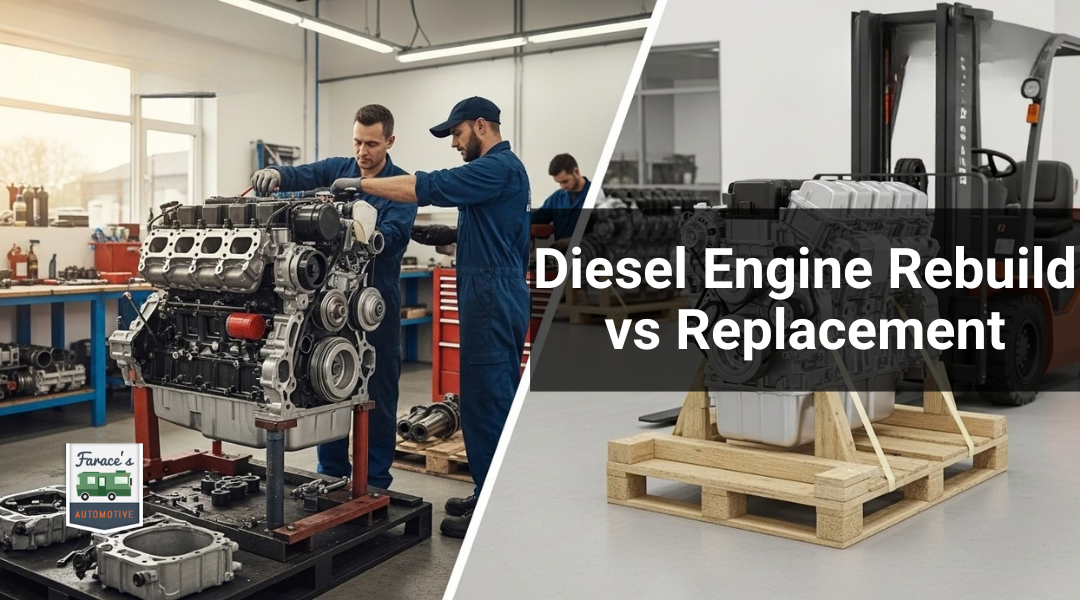
When your diesel engine starts losing power or burning oil, you face a decision that affects both your wallet and your truck’s future. Rebuilding a diesel engine typically costs 35% less than replacing it, but the right choice depends on the type of damage, your vehicle’s condition, and how long you plan to keep it. For Orange County owners who rely on their diesel trucks for work or recreation, understanding the difference between these two paths matters more than you might think.
The decision isn’t just about comparing price tags. You need to consider how much downtime you can handle, whether your engine suffered sudden failure or gradual wear, and what your truck will be worth after the repair. Some engines are perfect candidates for a rebuild, while others have damage so severe that replacement makes more sense.
At Farace’s Automotive & RV Center, we’ve helped Huntington Beach and Orange County diesel owners make this call for nearly 50 years. Our approach looks at your specific situation, not just general rules. This guide walks you through the mechanical realities, cost comparisons, and long-term ownership factors that should shape your decision.
Decision Context And Practical Boundaries
The choice between rebuild and replacement depends on specific technical boundaries and vehicle economics, not just upfront cost. Your mechanic needs to evaluate engine age, failure type, and whether either option makes financial sense given your truck’s remaining useful life.
Engine Age, Platform Support, And Intended Vehicle Lifespan
Your diesel engine’s age directly affects parts availability and the wisdom of investing in major repairs. Engines under 15 years old typically have full parts support and are strong rebuild candidates if you plan to keep the vehicle for at least five more years.
Older platforms present complications. A 20-year-old diesel may need parts that are discontinued or require extensive machine work. Your mechanic might struggle to source quality components at reasonable prices.
Consider your vehicle’s total expected lifespan. If your truck has 180,000 miles and you need it to reach 350,000 miles, rebuilding makes sense. If you’re planning to sell within two years or the vehicle has significant frame or transmission issues, major engine work becomes harder to justify financially.
When Partial Failure Differs From Systemic Wear
Partial failures involve isolated component damage while the rest of the engine remains sound. Systemic wear means multiple components have degraded together from age and accumulated miles.
A compression test and oil analysis reveal which situation you’re facing. Low compression in one or two cylinders with normal oil analysis often indicates worn piston rings or valve issues in specific cylinders. Your mechanic can address this with targeted repairs or a rebuild focused on the cylinder head.
Systemic wear shows up differently:
- Low compression across all cylinders
- Metal particles throughout the oil analysis
- Bearing wear in multiple locations
- Degraded seals and gaskets throughout
Diesel engine failure from a single catastrophic event (coolant leak causing overheating, for example) differs from gradual wear. Sudden failures often cause hidden damage that surfaces after a rebuild starts, increasing costs unexpectedly.
Situations Where Neither Option Is Economically Rational
Sometimes walking away makes more financial sense than repair or replacement. If your vehicle’s market value sits below $8,000 and either option costs $5,000 or more, you’re unlikely to recover your investment.
Serious structural problems change the equation. Cracked engine blocks, damaged frame rails, or failing transmissions that need $3,000+ in additional work make engine investment questionable.
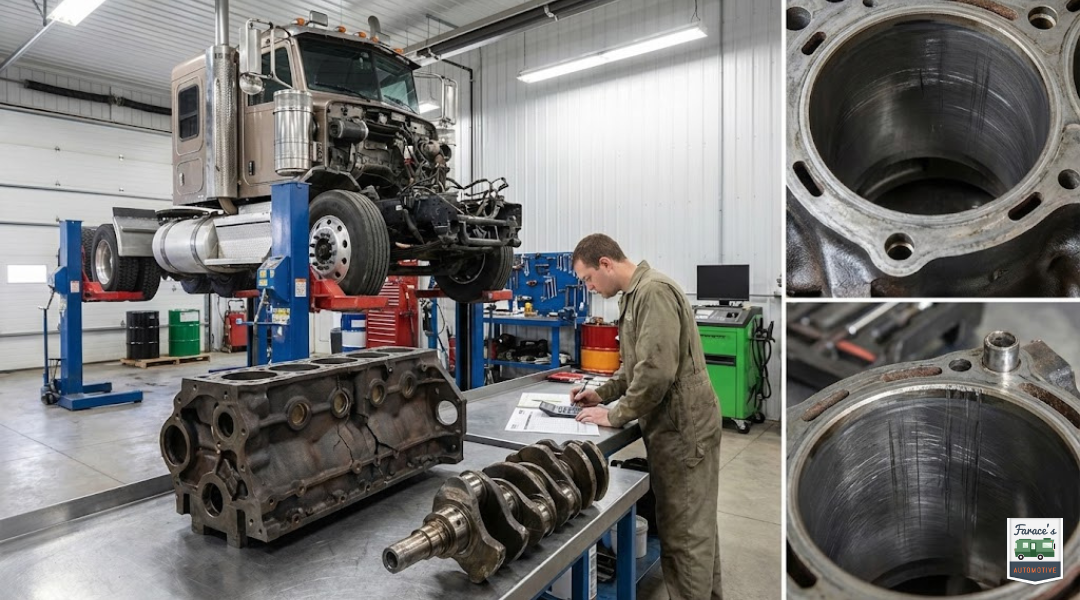
Your mechanic might discover during teardown that machine work exceeds initial estimates. Cylinders scored beyond standard boring limits or a crankshaft requiring replacement push rebuild costs toward replacement pricing. At that point, neither option delivers good value compared to selling the vehicle as-is and purchasing a different truck.
Mechanical Scope: Rebuild Versus Full Replacement
The technical differences between rebuilding and replacement center on which components you reuse, how much machining your engine block requires, and whether updated systems integrate with your truck’s electronics.
Bottom End Restoration Versus Crate Engine Installation
An engine rebuild focuses on restoring worn internal parts while keeping your original engine block. Your mechanic disassembles the engine to replace piston rings, crankshaft bearings, and connecting rods. The cylinders get measured to check if they need machining or new cylinder liners.
An in-frame rebuild keeps the engine in your truck and addresses only the most worn components. This approach works when your engine block and cylinder walls remain within spec.
A crate engine or remanufactured engine arrives as a complete assembly with new pistons, rings, bearings, and often updated internal parts. Your shop removes your old engine and bolts in the replacement unit. You transfer external components like your water pump, alternator, and accessory brackets from the old powertrain to the new one.
Remanufactured diesel engines go through factory-level rebuilding with zero-mile internal components and tested tolerances.
Machining Tolerances, Component Reuse, And Updated Parts
Rebuilding an engine requires measuring every component against factory specifications. Your machine shop checks the engine block deck surface, cylinder bore dimensions, and crankshaft journals. Worn cylinders need boring to the next oversize, which requires matching oversized pistons.
You can reuse your original crankshaft if journal surfaces measure within tolerance after polishing. Connecting rods get inspected for straightness and proper bearing clearances. Your cylinder head needs pressure testing and valve seat machining.
| Component | Rebuild Decision | Typical Action |
|---|---|---|
| Engine Block | Must be within .003″ flatness | Machine or replace |
| Crankshaft | Journals within .001″ spec | Polish or grind undersize |
| Connecting Rods | No cracks or bends | Resize and reuse |
| Cylinder Walls | Taper under .005″ | Hone or bore oversize |
Performance camshafts and upgraded pistons install during a rebuild if you want more power. A new engine or remanufactured engine comes with standard components unless you special-order performance cams.
Electronic Integration And Emissions System Compatibility
Modern diesel engines use electronic controls that must match your truck’s existing systems. An engine replacement requires programming the ECU to recognize the new engine serial number and calibration files. Your diesel particulate filter and DEF system need to communicate properly with the replacement powertrain.
A used engine from a different model year may have incompatible sensors or wiring harnesses. You face additional costs to adapt the electronics or swap control modules.
Engine overhaul keeps your original electronic architecture intact. All sensors, wiring, and emission components stay matched to your truck’s computer system. Orange County emissions testing requires that your engine year matches your chassis year unless you install a certified remanufactured diesel engine with the correct emission controls.
Crate engines designed for your specific year and model include the correct sensor provisions and mounting points. Generic replacement engines need modification to meet California Air Resources Board requirements.
Tradeoffs In Cost, Risk, And Downtime
The numbers on a rebuild quote versus replacement invoice tell only part of the story. What separates a sound financial decision from a costly mistake is understanding how warranty protection, downtime impact, and asset valuation shift the true cost of each option.
Short Term Savings Versus Long Term Reliability Exposure
A rebuild typically costs $18,000 to $35,000 while a replacement engine runs $40,000 to $55,000. That $15,000 to $25,000 gap looks attractive until you factor in downtime cost.
Your truck sitting in the shop for 10 days during a rebuild costs approximately $760 per day in lost productivity. That adds $7,600 in downtime cost. A replacement taking 4 days costs $3,040 in downtime. The real cost comparison becomes $25,600 versus $43,040—narrowing the gap to $17,440.
Rebuilt engines deliver 400,000 to 600,000 miles of additional service. Replacement engines provide 750,000 to 1,000,000 miles. Your cost-per-mile calculation matters more than the upfront price.
A $25,000 rebuild over 500,000 miles equals $0.05 per mile. A $43,000 replacement over 850,000 miles equals $0.05 per mile. But if your rebuilt engine develops excessive oil consumption at 350,000 miles and needs another $8,000 in repairs, your cost-per-mile jumps to $0.09.
Warranty Structures And Risk Allocation
Rebuild warranties typically cover 1 to 2 years or 100,000 to 200,000 miles. Factory replacement engines include 3 to 5 years or 300,000 to 500,000 miles of protection.
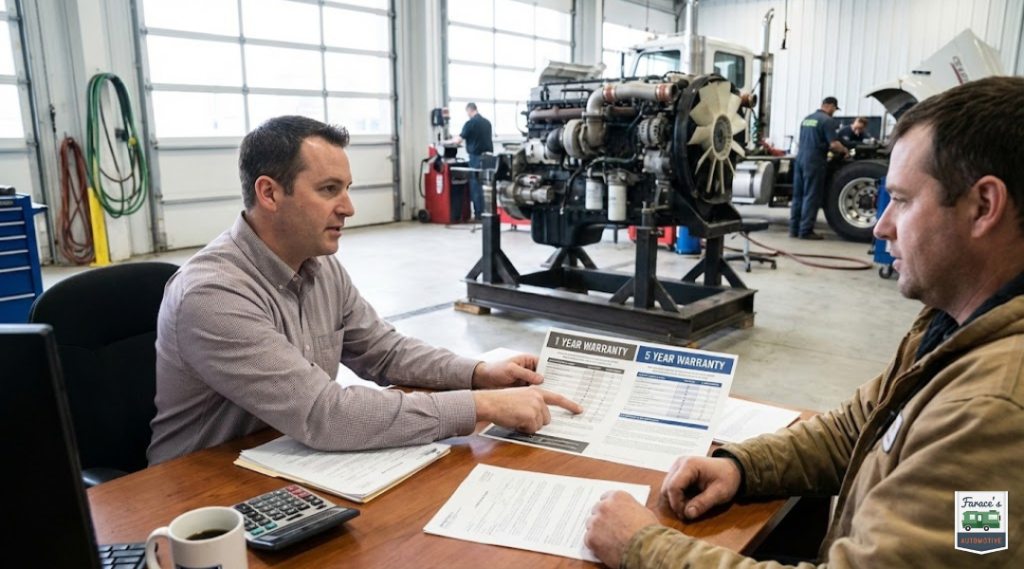
That warranty difference transfers financial risk. If a rebuilt engine fails at 150,000 miles post-overhaul, you absorb the full repair cost. If a replacement engine fails at the same point, the manufacturer covers it.
Independent rebuild shops offer less warranty protection than dealer rebuilds. You might save $8,000 using an independent shop but receive only a 12-month warranty versus a dealer’s 24-month coverage. That cost savings disappears if you face a $12,000 failure in month 18.
The warranty also affects your maintenance budget predictability. Replacement engines let you forecast costs with confidence for 3+ years. Rebuilds require larger maintenance reserves to cover potential failures outside the warranty window.
Vehicle Value Impact In RV And Heavy Duty Markets
A quality engine replacement adds $25,000 to $40,000 to your vehicle’s resale value. A rebuild adds $12,000 to $20,000. Buyers pay premium prices for documented replacement engines with transferable warranties.
If you plan to sell your Class 8 truck or RV within 2 years, replacement protects your asset value better than a rebuild. The buyer sees a near-new powertrain with years of warranty remaining. Your higher sale price recovers part of the replacement cost.
Orange County’s commercial truck market values warranty documentation heavily. A replacement engine with 4 years of factory warranty remaining commands 15% to 20% higher prices than an equivalent truck with a 2-year-old rebuild.
Your vehicle’s overall condition determines whether the value increase matters. Installing a $45,000 replacement engine in a chassis with frame damage or transmission problems doesn’t improve marketability. The investment makes sense only when the rest of your vehicle justifies the engine upgrade.
How Farace’s Automotive & RV Center Sees Diesel Decisions In Orange County
Farace’s Automotive & RV Center handles diesel engine decisions daily at their Huntington Beach facility. Their veteran-owned shop looks at mileage patterns, state regulations, and supply chain realities when guiding Orange County RV and truck owners through rebuild versus replacement choices.
High Mileage RV Use Patterns Across Southern California
Your RV likely racks up miles differently than vehicles in other regions. Many Orange County owners use their motorhomes for weekend trips to local spots like Joshua Tree or longer hauls to Arizona and Nevada. This creates unique wear patterns on diesel engines.
Farace’s technicians see engines with 150,000 to 200,000 miles that still have strong core components. The climate here helps. Southern California’s mild temperatures mean your engine doesn’t face the extreme cold starts that damage engines in other states.
Most owners bring their RVs in when they notice power loss or increased oil consumption. The shop performs detailed inspections to check if your engine block and crankshaft are in good shape. If these core parts are solid, rebuilding makes sense. If you find major cracks or damage to the block, replacement becomes the better path.
CARB Compliance Considerations In California Engine Swaps
California’s Air Resources Board rules change your engine replacement options. You can’t simply drop in any used diesel engine when yours fails.
CARB Requirements for Engine Swaps:
- The replacement engine must be the same year or newer than your vehicle
- All emissions equipment must remain intact and functional
- The engine must meet the emissions standards for your vehicle’s model year
- You need proper documentation for emissions compliance verification
These rules make some replacement options illegal in California. A rebuilt engine keeps your original EPA certification, which simplifies the process. When you install a different engine, you need to ensure emissions standards match or exceed your current setup.
Farace’s shop handles the paperwork and verification for engine swaps. They know which replacements will pass California inspections and which ones will create problems down the road.
Parts Availability And Turnaround Realities In Regional Supply Chains
The Orange County area gives you better access to diesel parts than many regions. Farace’s works with local suppliers and national distributors to source components.
Common rebuild parts like pistons, bearings, and gaskets typically arrive within days. Specialty items for older RV chassis can take two to three weeks. New engines require longer wait times, often four to eight weeks depending on the manufacturer.
Your downtime matters when you have trips planned. A rebuild at Farace’s usually takes one to two weeks once parts arrive. Installing a new engine takes similar time, but you wait longer for the engine to ship.
The shop keeps some common parts in stock for popular diesel platforms. They also maintain relationships with core suppliers to speed up the rebuild process. If you need your RV back quickly, rebuilding often wins because sourcing a compliant replacement engine takes more time.
Long Term Implications For Ownership Strategy
Your choice between rebuilding and replacing affects not just immediate costs but your truck’s maintenance burden, reliability curve, and market value for years ahead. Each path creates a different ownership timeline with distinct financial and operational outcomes.
Maintenance Trajectory After Rebuild
A rebuilt engine requires more frequent monitoring in its first 50,000 miles compared to a replacement. You need to change oil at 5,000 miles post-rebuild, then follow accelerated intervals until break-in completes. During this period, minor oil seepage and consumption adjustments are normal as rings seat and gaskets compress.
Maintenance intensity increases if your rebuild used non-OEM parts or if machining tolerances weren’t precise. Budget an extra $800-$1,200 annually for the first two years in oil analysis, filter changes, and minor adjustments. After proper break-in, a quality rebuild should match factory maintenance costs for 300,000-400,000 miles.
The rebuild warranty period (typically 12-24 months) represents your highest-risk window. Component failures often appear in months 6-18 if machining was substandard or parts were marginal quality.
Lifecycle Reset Assumptions With Replacement
Installing a new or remanufactured engine essentially resets your truck’s service clock to zero. You gain 500,000-750,000 miles of expected life with factory-backed warranties covering 3-5 years. This timeline allows you to plan equipment replacement cycles with confidence.
Your PM schedule starts fresh with a replacement engine. All service intervals reset, giving you predictable maintenance windows and costs. For fleet operators, this simplifies scheduling and parts inventory planning across multiple units.
You can defer major truck replacement decisions by 4-6 years with a new engine, assuming the chassis, transmission, and drivetrain remain sound. This matters most when truck prices are elevated or when your current unit has desirable specifications hard to replicate in new equipment.
Resale Positioning And Documentation Credibility
Rebuilt diesel engines add $8,000-$15,000 to resale value when documented properly. You need dated invoices showing parts used, machining performed, and warranty terms. Buyers discount undocumented rebuilds by 30-50% due to uncertainty about quality and remaining life.
A replacement engine commands higher resale premiums—typically $18,000-$25,000 above comparable units with original high-mileage engines. The factory warranty transfers to new owners, making your truck more attractive to both dealers and private buyers.
Create a maintenance file with all rebuild or replacement documentation, oil analysis reports, and service records. This paper trail proves your investment and separates your truck from similar-looking units at auction or private sale.