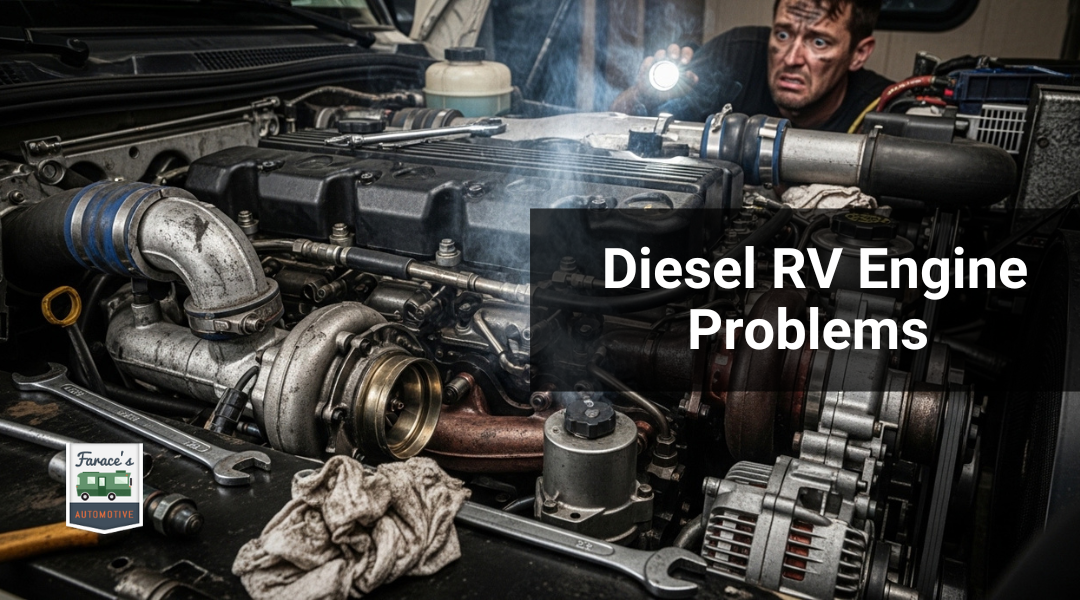
Climbing long grades in your diesel RV tests every part of your engine. Heat, load, and fuel demand rise sharply, and even small issues can turn into big repairs. When you understand how your diesel engine behaves under extended strain, you can prevent breakdowns, protect performance, and enjoy the drive instead of worrying about it.
On extended climbs, your engine faces thermal stress, increased fuel pressure, and reduced airflow, all of which can lead to overheating or power loss. These conditions challenge components like turbochargers, injectors, and cooling systems. Recognizing what happens inside your engine during these climbs helps you make smarter driving and maintenance decisions.
At Farace’s Automotive & RV Center in Huntington Beach, you can count on decades of experience diagnosing and repairing diesel RV engines that face these exact conditions across Coastal Southern California. By learning to spot minor warning signs before they become major failures, you keep your RV running strong on every grade you face.
Operating Boundaries On Extended Grades
When driving long grades, your diesel engine works continuously under heavy load and heat. Understanding how engine design, slope severity, and environmental factors interact helps you protect major components like the turbo, cylinders, and transmission from stress or failure.
Load Duration Versus Engine Design Limits
Diesel engines handle high torque for long periods, but constant high load can reveal weak points such as piston slap, overheating, or excessive exhaust gas temperature (EGT). These issues grow when engine speed, cooling, and fuel delivery aren’t balanced. Even minor oil quality problems can become serious under sustained power demand.
Each engine type has a rated continuous power range where it runs efficiently. Exceeding that for long periods increases wear on rings, bearings, and injectors. Cummins and other manufacturers often advise operating near the torque peak instead of pushing maximum horsepower. This keeps internal pressure lower and helps the cooling system manage heat buildup.
If you notice rising temperature or power loss, ease off the throttle, downshift if needed, and allow the engine to stabilize. Using a pyrometer or scan gauge helps you see when EGTs approach limits, usually around 1,200°F to 1,250°F under load.
When Grade Severity Changes Risk Profile
The risk from steep grades depends on both slope angle and how long it takes to climb. A 6% grade over five miles heats cooling and lubrication systems more than a short, sharp hill. Altitude also worsens heat retention by reducing air density, making it harder for the intercooler and radiator to shed temperature.
Below is a simple reference:
| Grade Severity | Typical Condition | Primary Concern |
|---|---|---|
| Mild (<4%) | Rolling hills | Minor heating |
| Moderate (4–6%) | Long climbs | EGT rise, fan cycling |
| Severe (>6%) | Mountain passes | Overheating, power fade |
Your risk also increases with heavy towing weight or dirty filters that limit airflow. Watch coolant and oil temperature gauges closely. If temperatures climb steadily, slow down or use a lower gear to keep airflow over the radiator consistent.
Conditions Where Concerns Are Overstated
Many drivers worry excessively about brief high RPM or short heat spikes. In reality, modern diesel engines are tested to handle intermittent loads far beyond what most RVs experience. Electronic control modules adjust fuel delivery and turbo boost automatically to prevent critical stress under most conditions.

Short climbs at proper RPM rarely cause common diesel problems like oil contamination or head gasket failure. Problems arise more from poor maintenance—clogged radiators, neglected oil changes, or low coolant—than from occasional steep-grade operation. When temperatures rise quickly but drop again after backing off the throttle, that’s usually within normal behavior, not a sign of permanent damage.
As long as you respect recommended service intervals and monitor key gauges, you can safely operate through long grades without constant worry. The key is moderation, observation, and timely response to warning signs before they turn into genuine common diesel engine issues.
Thermal And Fuel System Stress Under Load
When your diesel RV climbs a long grade, heat and pressure rise in every major system. Continuous load increases exhaust gas temperature, limits coolant capacity, and places extra strain on the turbocharger and fuel system. Each of these stresses affects power output, efficiency, and long-term engine reliability.
Exhaust Gas Temperature Accumulation
As you maintain throttle on steep grades, exhaust gas temperature (EGT) can climb rapidly. High EGTs increase thermal stress on pistons, valves, and the turbocharger. Prolonged operation above recommended limits can cause excessive oil consumption or even component warping.
Installing an EGT gauge helps you monitor temperature trends. You can prevent accumulation by downshifting to reduce sustained boost pressure and fuel demand. Keep the diesel particulate filter (DPF) and exhaust gas recirculation (EGR) systems clean; blockages restrict flow and trap heat.
Avoid lugging the engine, since low RPM under load raises combustion temperature. Routine DPF regeneration or manual cleaning, along with timely maintenance of the EGR valve, keeps thermal buildup in check. Regular oil changes using manufacturer-approved grades also support better heat dissipation.
Cooling System Saturation Dynamics
Your RV’s cooling system must handle both ambient heat and engine output during long climbs. Under constant load, heat saturates the radiator, reducing its ability to shed energy. A clogged radiator, worn fan clutch, or weak water pump worsens the problem by limiting coolant flow.
Inspect coolant levels and pressure test the system before long trips. Replace coolant at proper intervals to maintain its thermal stability. Ensure airflow through the radiator is unobstructed—debris or bugs can trap heat around the core.
If coolant temperature creeps upward despite normal airflow, check for faulty sensors that may give inaccurate readings to the engine control unit. Some owners install supplemental fans or upgraded radiators when traveling in mountainous or high-load conditions. Consistent maintenance prevents the system from reaching thermal saturation, which protects critical seals and gaskets.
Turbocharger Boost And Air Density Effects
As you climb and engine load increases, your turbocharger works harder to maintain boost pressure. High sustained boost raises air temperature at the intake and increases mechanical stress on turbine components. Turbocharger issues often start as small oil leaks or wastegate malfunctions but can lead to full turbocharger failure if ignored.
Check for any drop in performance, rise in smoke output, or whistling noise under load. These are early signs of turbocharger troubles. Cleaning or replacing air filters reduces strain by improving airflow and lowering intake restriction.
Altitude and temperature changes also alter air density. As density decreases, the turbo compresses more air to maintain oxygen supply, which can increase shaft speed and heat. Monitoring boost pressure and using proper oil grades help reduce wear during long grade climbs.
Fuel Delivery And Injection Timing Strain
Continuous load demands more fuel flow and precise timing from your diesel system. Any fuel system issues, such as a clogged fuel filter, contaminated fuel, or fuel pump failure, restrict delivery and cause rough running. Dirty or worn fuel injectors can lead to poor atomization, reducing power and causing increased fuel consumption.
Carry spare filters and inspect for fuel contamination after refueling at unfamiliar stations. Use quality fuel additives that remove moisture and improve lubricity to prevent corrosion inside the system.
High temperature and load also affect injection timing, as sensors adjust fuel delivery to protect the engine. Faulty sensors can create incorrect timing signals, leading to misfires or power loss. Addressing fuel system problems early, such as checking pressure at the pump and verifying electronic control signals, keeps the engine responsive and efficient under heavy demand.
Failure Patterns Observed In Coastal Southern California Service Environments
Engines operating in Southern California often face unique conditions that combine long highway climbs, variable temperatures, and high salt exposure. These factors can quickly expose weaknesses in your RV’s diesel engine systems, especially if preventive care or diesel engine repair checks are overdue.
Long Interstate Climbs Beyond Orange County
When you drive east from coastal areas toward the inland passes, steep highway grades demand sustained engine load. Continuous full-throttle operation raises cylinder pressures and stresses the turbocharger. You may notice reduced boost, higher exhaust gas temperatures, or slower acceleration.
A common failure pattern involves turbo oil seal wear from prolonged heat and inadequate cooling after shutdown. Letting the engine idle for several minutes at rest stops helps stabilize temperatures. Routine RV repair service should also include checking intake hoses for leaks, inspecting intercoolers for contamination, and confirming proper oil flow to the turbo.
| Component | Typical Symptom | Preventive Step |
|---|---|---|
| Turbocharger | Loss of boost or smoke | Cooldown before shutdown |
| Fuel injectors | Misfires or rough idle | Clean fuel, replace filters regularly |
| Transmission cooler | Elevated temps | Flush and inspect fluid annually |
Regular maintenance before long climbs keeps heat management systems reliable and prevents compounding wear that can lead to costly breakdowns.
Heat Cycling During Inland Desert Travel
As you move inland from the coast, ambient temperatures rise sharply. Rapid changes between coastal humidity and desert heat cause metal expansion and contraction that can loosen fittings and degrade seals. Electrical connectors may corrode faster, leading to intermittent faults in sensors or control modules.
You can reduce these issues by inspecting harness connections and using dielectric grease on exposed contacts. Maintaining proper coolant levels and ensuring radiator fins remain clean improves thermal regulation. During diesel engine repair, mechanics often find weakened thermostats and failing fan clutches after prolonged inland trips. These small parts are inexpensive but critical for preventing overheating.
Persistent high heat also oxidizes engine oil faster, so shorter oil change intervals make sense when traveling regularly into desert regions like Palm Springs or Barstow.
Maintenance Gaps Revealed After Mountain Routes
After tackling steep grades through the San Bernardino or Santa Monica mountains, you may notice small performance declines or new leaks. These often trace back to maintenance gaps that heavy load cycles expose. Climbing and descending grades repeatedly test the cooling, braking, and transmission systems.
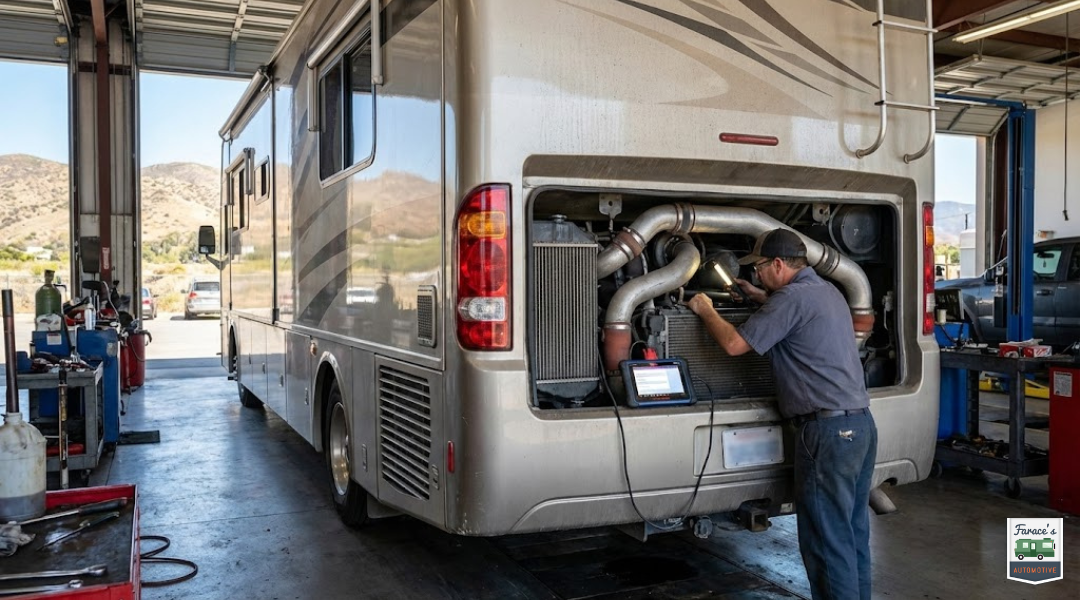
Inspect for exhaust manifold cracks, coolant seepage, or degraded belts once you return to lower elevations. A checklist from your RV repair technician should include torque checks on fasteners and a scan for hidden diagnostic codes that may not trigger a dashboard alert. Pay close attention to exhaust aftertreatment components like the DPF, as regeneration cycles can fail under uneven driving loads.
Catching these stress‑related faults early keeps your diesel RV reliable on future long hauls across Southern California’s varied terrain.
Interpreting Warning Signs Before Mechanical Failure
Understanding early warning signals lets you act before damage occurs. Careful reading of gauges, recognizing true overloads, and knowing how your engine’s protective systems react helps prevent costly breakdowns and keeps your RV performing on steep grades.
Gauges That Matter Versus Secondary Indicators
While every dashboard display offers information, a few gauges require your constant attention on long climbs. The most important include engine coolant temperature, oil pressure, and boost pressure. Each one shows real-time stress on your diesel engine.
High coolant temperature or dropping oil pressure can indicate restricted coolant flow, low oil level, or a failing component. Boost pressure helps confirm that the turbocharger operates correctly. When boost falls or spikes unexpectedly, the air system may be restricted or leaking.
Secondary indicators, such as battery voltage or fuel economy, provide context but usually change slowly. Use them to spot developing issues, not urgent failures. Keeping a simple checklist helps:
| Gauge | Typical Normal Range | What to Watch For |
|---|---|---|
| Coolant Temp | 180–210°F | Over 220°F |
| Oil Pressure | 30–70 psi | Drop below 25 psi |
| Boost Pressure | 20–35 psi under load | Sudden changes or surging |
Distinguishing Transient Spikes From Sustained Overload
Momentary changes in readings often reflect normal engine response to grade, load, or gear shifts. A short boost surge or brief climb in temperature can occur when the engine works harder for a few seconds. You can often confirm this by easing off the throttle and watching the gauge return to normal.
Sustained overload, however, means the reading stays outside the safe range for longer than 15–30 seconds. Persistent high temperature, steady low oil pressure, or thick exhaust smoke show that engine stress exceeds its capacity to cool or lubricate properly.
A good practice is to note duration and pattern. If a gauge slowly trends upward over several miles, back off power, downshift, and allow airflow to stabilize. Consistent monitoring helps you prevent overheating, cracked head gaskets, or turbo damage before they escalate.
Limp Mode Triggers And Protective Programming Logic
Modern diesel RV engines include electronic safety systems that intervene when severe conditions appear. When the control module senses overheating, low oil pressure, or excessive boost, it can activate limp mode to protect internal parts.
In limp mode, the engine reduces fuel delivery, limits RPM, and sometimes restricts gear selection. This helps you reach a safe location without causing further damage. Warning lights or messages often accompany this reduced-power state, such as Check Engine, Derate Active, or Overheat Protection.
You should never attempt to override limp mode or continue climbing a grade in this condition. Instead, pull over, verify coolant and oil levels, and allow the system to cool. Once safe, use a scan tool to read diagnostic codes or consult a qualified diesel technician to confirm the underlying cause.
Prevention Tradeoffs In Real World Driving
Managing a diesel RV engine on long grades involves continuous tradeoffs between performance, engine protection, and fuel cost. The way you handle speed, gearing, and maintenance directly affects engine stress, temperature stability, and long-term reliability.
Gear Selection Versus Fuel Economy Compromise
Choosing the right gear on grades helps control exhaust temperatures, turbo boost, and fuel use. Lower gears keep engine speeds higher, improving coolant flow and oil pressure, which reduces the chance of overheating. However, they also raise fuel consumption and engine noise.
You may try to stretch into higher gears to save fuel, but that can force the engine to lug. Lugging increases combustion pressure and cylinder temperatures, stressing pistons and bearings. A practical approach is to use manual gear selection or “tow/haul” mode to keep the engine within its optimal RPM band. This supports both diesel engine maintenance and longevity.
When driving through mountain passes, short-term fuel sacrifice often prevents long-term repair costs. Maintaining the engine’s breathing and cooling efficiency outweighs a small gain in miles per gallon.
Speed Control And Cooling Margin Balance
Speed strongly affects both cooling capacity and thermal load. Driving slower lets the cooling system keep up, especially on hot days or steep grades, but reduces airflow through the radiator if engine RPMs drop too low. On the other hand, maintaining higher speed raises airflow but also increases heat generation from the engine and transmission.
You must watch the engine temperature gauge and pay attention to coolant and exhaust gas temperatures. Reducing throttle slightly at the first sign of heat rise often prevents severe overheating.
Keeping your radiator, fan clutch, and coolant in good condition helps preserve your cooling margin. Routine RV maintenance—including coolant replacement and cleaning of radiator fins—ensures predictable cooling performance when load demands climb.
Preventive Maintenance Intervals Versus Usage Intensity
Maintenance intervals listed in manufacturer manuals assume moderate use, not repeated climbs under heavy load. If your RV operates mostly on long grades or in high temperatures, you should shorten certain intervals.
Frequent oil changes, air filter replacements, and fuel filter checks extend engine life and preserve consistent power output. Heat and soot buildup shorten the service life of lubricants and filters, making early replacement cost-effective.
Tracking engine hours and temperature history offers a more reliable indicator of maintenance needs than mileage alone. Adjusting preventive maintenance schedules based on how you drive keeps your diesel engine performance stable and minimizes the risk of costly breakdowns.