Electrical grounding problems in RVs can lead to more than just flickering lights—they can create real safety hazards. From “hot skin” shocks to power interruptions at campgrounds, poor grounding puts both people and equipment at risk. Understanding how your RV’s electrical system grounds and what new safety standards require helps you prevent dangerous issues before they start.
In Southern California, where RV travel is a year-round lifestyle, these problems often stem from corroded connectors, faulty cords, or campground pedestals with weak or missing grounds. The upcoming 2026 National Electrical Code update adds another factor to consider: the required installation of Grounding Monitor Interrupters (GMIs) on many RVs. These devices automatically cut power if a grounding fault occurs—protecting you when the park’s wiring doesn’t.
With the right knowledge, you can identify early warning signs, maintain compliance, and stay safe on every trip. This article walks you through how RV grounding works, the most common issues in SoCal conditions, and practical steps to diagnose and fix them before they disrupt your travels.
Understanding RV Electrical Grounding
Your RV’s electrical safety depends on how effectively the system handles fault current and maintains stable voltage conditions. A proper grounding setup protects you from electric shock, prevents equipment damage, and ensures that breakers trip when a fault occurs. It connects all exposed metallic parts to a known potential through a defined path.
How RVs Are Grounded
Your RV’s grounding system uses the equipment grounding conductor (EGC)—the green or bare wire in your shore power cord—to connect the vehicle’s chassis to the power source’s grounding point. This wire doesn’t normally carry current but serves as a dedicated fault path if live voltage contacts the metal body.
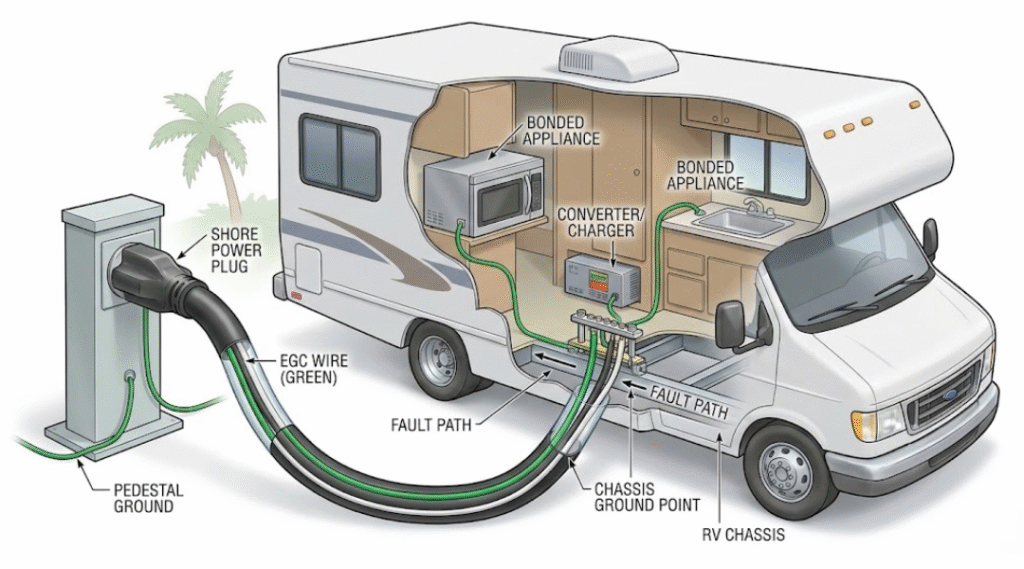
Inside the RV, all metal fixtures and appliance cases bond to the chassis. This creates an equipotential surface that prevents stray voltage buildup. Proper bonding ensures that if a short circuit occurs, current flows immediately through the grounding wire to trip the breaker rather than energizing the RV body.
Unlike a stand‑alone building, your RV typically does not use a ground rod. Soil has high resistance that cannot safely carry fault current. Therefore, safety depends entirely on the integrity of the shore power cord, the plug, and internal ground connections.
The Role of Shore Power in Grounding
When you connect to shore power, your RV’s EGC links directly to the service panel’s neutral‑ground bond—either at your home or at the campground pedestal. This connection forms the return path for any fault current and keeps your RV at the same electrical potential as the supply source.
If the green conductor inside your power cord becomes loose, damaged, or corroded, your RV loses its protective ground. This can result in a “hot‑skin” condition where touching the exterior causes electric shock. You should regularly inspect your cable, plug blades, and any adapters for continuity and tightness.
Electrical engineers emphasize that voltage stability across the RV’s frame depends on this single grounding link through the shore power cord. GFCI or ELCI breakers add another layer of safety by detecting imbalance, but they still rely on a solid ground connection to work properly.
Key Differences Between RV and Home Grounding
Residential systems establish a neutral‑ground bond at one permanent location in the main service panel. The grounding electrode conductor then ties this bond to earth through a ground rod or plate. An RV, on the other hand, operates as a subpanel of the supply source and must not create its own neutral‑ground bond.
Bonding incorrectly inside the RV can cause circulating current on the neutral and ground wires. This may lead to unexpected voltage on the chassis or nuisance tripping. RV electrical systems need to remain isolated from earth except through the power pedestal’s established grounding point.
You also move your RV between different power sources, increasing the chance of encountering improper wiring. Always test new pedestals with a plug‑in outlet tester and verify that voltage and polarity meet expected ranges. Maintaining this awareness ensures the grounding path remains reliable regardless of where you connect.
Grounding Monitor Interrupters and NEC 2026 Updates
The 2026 edition of the National Electrical Code (NEC) introduces a major electrical safety change for RV owners. You’ll see a new requirement for Grounding Monitor Interrupters (GMIs)—devices that help detect and stop dangerous ground faults before they cause electric shock or equipment damage.
What Is a Grounding Monitor Interrupter (GMI)?
A Grounding Monitor Interrupter (GMI) is a loss-of-ground protection device installed in RVs with 30‑amp or 50‑amp service. Its main function is to verify and constantly monitor the electrical ground connection between your RV and the campground’s power pedestal.
Before current is allowed to pass, the GMI tests the source for proper grounding. If it detects no or poor ground, it prevents electricity from powering your RV. Once connected, it continues to monitor for faults such as broken cords or damaged connectors.
If the ground connection is lost during operation, the GMI automatically cuts power. This stops electricity from energizing the RV frame, which can otherwise lead to a “hot skin” condition. Common causes include frayed cords, corroded plugs, or reverse polarity in the campground outlet.
Many new devices also include diagnostic indicators and reset functions. These features let you quickly confirm whether power is shut off due to a legitimate grounding issue or another fault.
NEC 2026 Grounding Requirements
Under the 2026 NEC update, Article 551 specifies that all new RVs with 30‑amp or 50‑amp electrical service must include a Grounding Monitor Interrupter. The National Fire Protection Association (NFPA) issues the NEC, which updates every three years to improve safety across electrical systems.
This requirement builds on prior 2023 code discussions but becomes enforceable once compliant devices are widely available. The goal is to address electric shock hazards from poor grounding at campgrounds.
You should expect manufacturers, electricians, and RV service technicians in Southern California to begin referencing NEC 551.40(D) during inspections and installations. Retrofitting older RVs isn’t mandatory, but doing so can help align your vehicle with future safety and insurance expectations.
Key Code Reference:
| Code Section | Summary |
|---|---|
| NEC 551.40(D) | Requires a GMI for 30A and 50A RV shore power systems |
| NEC 551.71(A) | Emphasizes safe grounding of RV park pedestals and receptacles |
How GMI Devices Improve Safety
A properly functioning GMI reduces one of the most serious campground electrical risks—accidental shock from an energized RV body. When the grounding system fails, the GMI disconnects power instantly, lowering the chance of injury.
You also gain an early warning system. If your RV refuses to power on when connected, it may signal a grounding problem at the campsite pedestal, not a fault in your RV. This allows you to avoid unsafe hookups before damage or shock occurs.
The device helps maintain compliance with NEC standards while giving renters and owners added confidence in their electrical systems. Regular inspection of cords, plugs, and GMI status indicators helps ensure reliable operation under the new electrical code standards.
For the most protection, have a qualified RV electrician test grounding continuity regularly and confirm that your GMI meets UL-listed and NEC‑compliant specifications.
Common RV Electrical Grounding Problems
Electrical grounding faults in RVs can lead to safety hazards, unreliable power, and damage to equipment. You can prevent many of these issues by recognizing abnormal readings, inspecting your shore power connections, and understanding how grounding interacts with voltage across your system.

Signs of Grounding Issues
You might notice subtle warning signs before a complete failure occurs. These include flickering lights, frequent GFCI trips, or a mild tingling sensation when touching metal surfaces on your RV. Voltage irregularities, especially between hot, neutral, and ground conductors, often signal grounding faults.
A multimeter can help verify the issue. Proper ground-to-neutral voltage should measure close to 0 volts, while hot-to-ground should read around 120 volts in a typical setup. Readings outside these ranges point to resistance in the grounding path or poor connections.
Other indicators include circuit breakers tripping without an apparent overload or corrosion on plugs and receptacles. Persistent static or interference in electrical devices can also suggest grounding deficiencies. Detecting these symptoms early reduces the risk of electric shock or component failure.
Causes of Open or Faulty Ground
An open or poor ground connection can develop from damaged wiring, corrosion, or incorrectly bonded circuits at the shore pedestal. In Southern California’s coastal or desert climates, high humidity and salt exposure accelerate corrosion, especially around grounding lugs and terminals.
Loose screws within breaker panels, outlet boxes, or the RV’s main chassis cause fluctuating voltage. Over time, movement and vibration during travel weaken bonding points, increasing the resistance in ground returns. That resistance allows current to find unintended paths through metal parts of the frame.
Campground wiring is another major factor. A miswired pedestal with reversed neutral and ground conductors places your RV at risk. Using a plug-in RV circuit tester before connecting verifies safe voltage and proper grounding alignment. Routine inspection and tightening of all ground connections improve performance and safety.
Hot Skin Phenomenon Explained
The hot skin effect occurs when your RV’s metal body unintentionally carries voltage. It happens when a fault allows current to flow through the chassis rather than returning along the designated ground. Touching the exterior while standing on earth or damp ground can result in a mild to severe electric shock.
This condition usually stems from a missing ground path, damaged insulation, or a reversed polarity connection at the power source. Even stray voltage as low as 30 volts between chassis and ground can pose a danger, particularly on wet surfaces.
To test for this hazard, use a non-contact voltage detector or measure between the ground and the RV frame with a multimeter. Any measurable voltage difference above a few volts suggests urgent attention is needed. Disconnect power immediately and check for wiring faults before reconnecting to shore power.
Diagnosing and Fixing Grounding Problems
A grounded and balanced electrical system keeps your RV safe from shock hazards and damaged equipment. You can verify system integrity by checking the power source, ensuring a continuous ground path, and identifying voltage irregularities before they harm appliances or batteries.
Inspecting Shore Power Connections
Start by inspecting the shore power pedestal and your power cord for physical damage. Look for burn marks, corrosion, frayed insulation, or loose prongs on the plug. These are common signs of weak grounding connections that can interrupt safe current flow.
Use a non-contact voltage tester to confirm that no voltage appears on the ground pin when disconnected. If voltage exists on the ground wire, the RV or pedestal might have a wiring fault. Always perform this test with the breaker turned off before reconnecting.
Check the pedestal outlet for secure mounting and proper labeling of hot, neutral, and ground terminals. Miswiring can create reversed polarity or an open ground. If you detect inconsistencies or find exposed wiring, stop using that power source and have the campground maintenance team or a licensed electrician inspect the installation.
Keep a checklist inside the RV to track regular visual inspections. Recording the condition of cords and outlets helps spot gradual wear before it causes faults.
Testing for Proper Ground Continuity
Proper ground continuity ensures electricity flows safely to the RV chassis during a short circuit. Use a multimeter to test the connection between the RV frame and the ground wire at the main panel. A reading near zero ohms indicates good continuity, while higher resistance points to corrosion or a broken ground path.
If you suspect an open ground, trace the wire from the chassis to the power distribution center. Tighten any loose bolts or replace damaged lugs. Avoid using the RV until the issue is corrected; without grounding, GFCI outlets and surge protectors won’t function properly.
Document your test results in a simple table:
| Test Point | Expected Reading | Action if Abnormal |
|---|---|---|
| Frame to Ground | 0–1 ohm | Clean and retighten |
| Panel Ground Lug | 0–1 ohm | Check corrosion |
| Cord Ground Pin | Continuity | Replace cord |
Call a licensed electrician if continuity cannot be restored easily or if the resistance varies between test points.
Recognizing Low Voltage and Its Dangers
Low voltage often accompanies grounding issues or poor shore power supply. When the voltage drops below 108 volts on a 120V system, sensitive devices like air conditioners, refrigerators, and converters may overheat or shut down.
Monitor your voltage with a plug-in surge protector or EMS (Electrical Management System). These monitors alert you when voltage or ground integrity falls outside safe limits.
Persistent low voltage can result from undersized wires, corroded terminals, or overloaded circuits at the park pedestal. Document readings over a few hours to determine if the problem is on your RV or the grid side.
If voltage readings fluctuate widely, disconnect immediately and consult a licensed electrician. Continued operation under low voltage causes hidden damage to motors and wiring insulation, increasing the risk of further faults or fire.
Safe Practices and Compliance for SoCal RV Owners
Keeping your RV’s electrical system grounded and code-compliant protects both personal safety and property. In Southern California, where RV use and rental activity are high, proper installation and ongoing maintenance are essential to meeting standards and avoiding hazards like shock or power interruption.
Working With Licensed Electricians
Use a licensed electrician experienced in RV systems to inspect and service your electrical setup. A qualified professional can verify that your shore power connection, distribution panel, and grounding paths meet the latest standards set by the National Electrical Code (NEC). This is especially important for RVs with 30‑amp or 50‑amp service where grounding faults can lead to “hot skin” conditions.
When hiring, confirm licensure through the California Contractors State License Board. Ask for evidence of NEC familiarity and RV-specific training.
A licensed electrician should:
- Test pedestal and cord continuity before connecting power
- Inspect for corrosion, loose terminals, or damaged cords
- Install or retrofit safety devices like Grounding Monitor Interrupters (GMIs)
Regular inspections by a professional reduce liability and ensure a safe connection whether parked at a beach campground or desert site.
Following Updated Electrical Codes
The 2026 NEC update introduces required GMIs for many RVs with 30‑ or 50‑amp shore power systems. These devices block unsafe power from entering your RV when the pedestal ground is faulty. Following these guidelines early helps you avoid disruption when enforcement begins.
For SoCal owners, compliance means understanding Article 551 of the NEC, which governs RV electrical systems. Work closely with your electrician to ensure installations conform to:
| NEC Section | Focus Area | Action Required |
|---|---|---|
| 551.40(D) | Grounding Monitor Interrupter | Install and verify GMI compliance |
| 551.71 | Power supply cords and attachments | Inspect cords for wear and rated capacity |
| 551.77 | Bonding and grounding | Maintain correct neutral‑to‑ground separation |
Document updates and keep a service log. Some campgrounds now check grounding safety devices before allowing hookups, so having clear records simplifies inspection and rental operations.
Maintaining Grounding Equipment
RVs endure movement, weather changes, and frequent plug-ins, all of which can loosen or damage grounding components. You should inspect cords, plugs, and grounding lugs before every trip. Look for burn marks, cracked insulation, or bent prongs. Replace or repair any part showing wear.
For rigs equipped with a Grounding Monitor Interrupter, check its indicator before connecting shore power. A red or flashing light often signals a missing or poor ground. Never bypass a tripped device; instead, test the outlet with a portable ground tester or contact the park’s maintenance team.
Add these practices to your routine maintenance:
- Clean and tighten battery and chassis ground points
- Test continuity between the frame and grounding system
- Use only UL-listed adapters and surge protectors
Consistent upkeep ensures stable connectivity and minimizes the risk of electrical faults during Southern California’s varied travel conditions.
Preventive Maintenance and Best Practices
Keeping your RV’s electrical system grounded and reliable depends on maintenance that focuses on inspection, occupant awareness, and external safety checks. Consistent oversight reduces the risk of GFCI trips, damaged wiring, and system instability caused by poor grounding or moisture exposure.
Regular Equipment Inspections
Schedule electrical inspections at least once a year, or more often if your RV operates frequently in coastal or humid areas. Look for discoloration on outlets, loose terminals, or frayed wires. These signs often precede ground faults and voltage irregularities.
Use a multimeter to verify continuity and ground resistance. Test GFCI outlets monthly by pressing the test and reset buttons. Confirm the protective circuit reacts correctly. Inspect the shore power cord for cracks, pin corrosion, and proper grounding between the green wire and the main bonding point.
When replacing components, always use wiring rated for 30- or 50-amp RV systems. If you detect inconsistent voltage or current imbalance, consult an electrical engineer or certified RV technician. Their evaluation ensures the electrical bonding meets both National Electrical Code (NEC) and recreational vehicle standards.
Checklist:
| Task | Frequency | Responsible Party |
|---|---|---|
| Test GFCI outlets | Monthly | Owner |
| Inspect power cord | Before each trip | Owner |
| Torque check on breaker screws | Annually | Electrician |
| Verify system ground resistance | Annually | Engineer/Technician |
Educating Renters and Occupants
If you rent out your RV or share it with others, make sure every user understands safe power use. Demonstrate how to connect and disconnect the shore power cord, and explain why extension cords not rated for RV current loads can be dangerous.
Post clear instructions near the service panel showing which breakers control major appliances. Encourage occupants to unplug non-critical devices before switching circuits.
During wet or coastal travel, remind users to avoid plugging or unplugging cords while barefoot or standing on damp ground. Providing a laminated quick-reference safety guide ensures everyone can react appropriately to tripped breakers, smell of overheating, or visible sparking. Promoting awareness prevents many of the wiring faults and shocks that occur through inexperience.
Campground Electrical Safety Tips
Before connecting to any campground pedestal, inspect it visually. Check for burn marks, exposed wiring, and secure covers. Use a plug-in surge and polarity tester to ensure the pedestal is wired correctly before you connect. If readings indicate reversed polarity or open ground, notify park management rather than attempting to use the outlet.
Keep all exterior plug connections dry and elevated above puddles. Portable cord covers or rubber mats minimize contact with moisture. Avoid running multiple high-draw appliances if the pedestal voltage drops below 108 volts, as this can overheat cords and prematurely trip breakers.
Whenever possible, verify the campground follows compliance with NEC Article 551, which governs RV supply equipment. A brief discussion with the site operator or their electrical engineer can confirm that the neutral-to-ground bond occurs at the correct location—typically the main service—not inside individual pedestals.