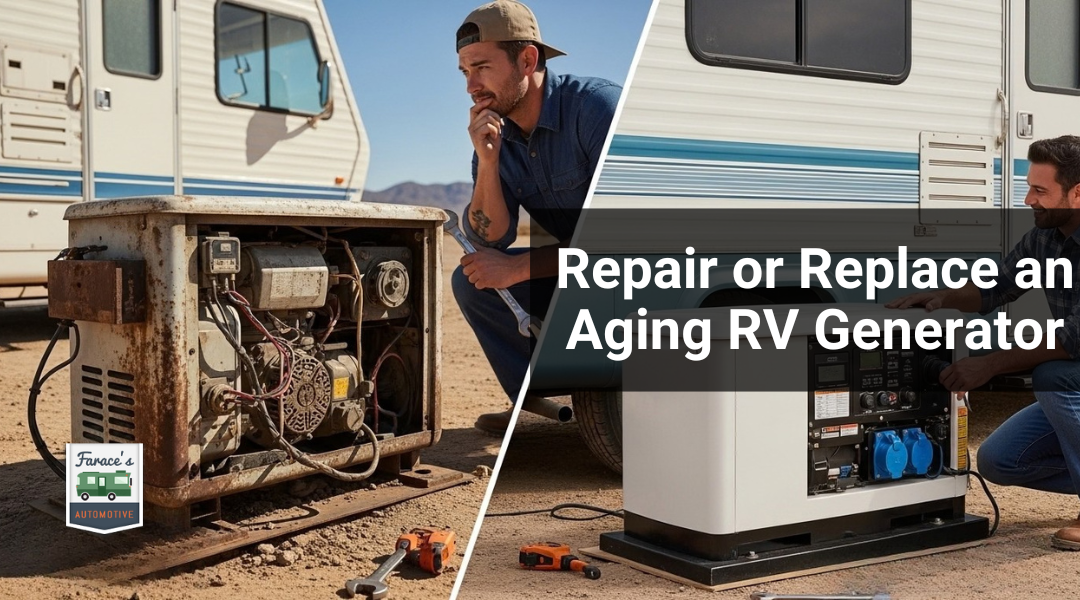
Your RV generator has served you well over the years, but now it’s struggling to keep up with demand or refusing to start altogether. The decision to repair or replace an aging RV generator depends on its total operating hours, the extent of mechanical wear, and whether repair costs exceed 50-60% of replacement value. This choice affects not only your immediate budget but also your peace of mind on future trips across Orange County and beyond.
Understanding when to invest in repairs versus purchasing a new unit requires looking at more than just the sticker price. Factors like electrical system degradation, fuel efficiency losses, and the availability of parts for older models all play a role in determining the smartest path forward. Making the wrong choice can leave you stranded without power or stuck with mounting repair bills that drain your travel fund.
This guide breaks down the key considerations Orange County RV owners face when evaluating an aging generator. You’ll learn how to assess mechanical condition, calculate true lifecycle costs, and understand what professional technicians look for when determining whether your generator has life left in it or needs replacement.
Decision Context For High Hour Generators
Generator hours reveal usage intensity but don’t tell the complete story about your RV generator’s condition. Calendar age, how you actually used the unit, and the specific type of failure all shape whether repair makes financial sense.
Runtime Hours Versus Calendar Age
A motorhome generator with 3,000 hours accumulated over five years presents a different situation than one with the same hours over fifteen years. Higher hour counts mean more wear on pistons, bearings, and injectors. However, a generator that sat unused for long periods faces its own problems.
Infrequent use causes fuel degradation and carburetor clogging, which are common RV generator problems. Moisture builds up in the oil when a unit sits idle. Gaskets and seals dry out and crack without regular operation.
You might own a 10-year-old generator with only 500 hours that needs extensive carburetor work and fuel system cleaning. Meanwhile, a 5-year-old unit with 2,500 hours could run smoothly if it received consistent maintenance. The hour meter number matters less than the combination of hours and maintenance history.
Usage Patterns In Motorhomes And Fifth Wheels
RV generators typically run in short bursts during camping trips rather than continuous operation. You might use yours 4-6 hours per day on weekends and during summer vacations. This intermittent pattern accumulates 100-300 hours annually for most recreational users.
Short run cycles without reaching full operating temperature create carbon buildup. This pattern leads to common RV generator issues like rough idling and reduced output. Extended idling at light loads causes similar problems.
Full-time RVers run their generators more frequently and often maintain better performance. Regular use at proper operating temperature prevents many maintenance problems. Your usage pattern directly affects which components wear first and what repairs you’ll eventually need.
When Declining Output Differs From Starting Failure
A generator that won’t start usually needs carburetor service, spark plug replacement, or fuel system repairs. These fixes typically cost $300-$800 depending on parts availability. You face a straightforward repair decision based on the estimate versus replacement cost.
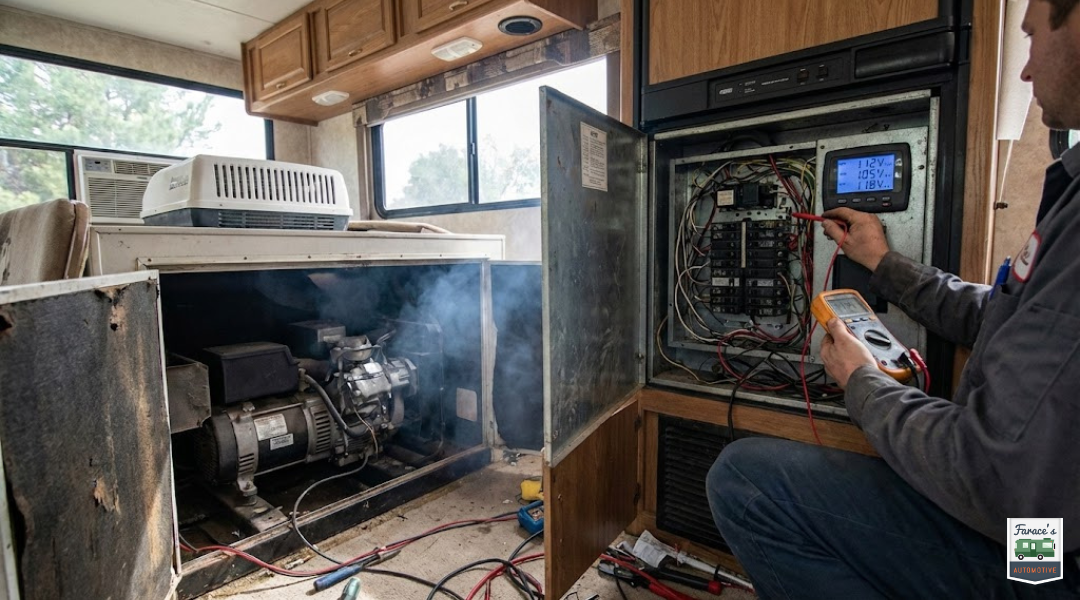
Declining power output signals different problems. Your generator starts fine but can’t run the air conditioner anymore. This points to worn piston rings, valve problems, or failing voltage regulation. These repairs often exceed $1,500-$2,500.
Output decline also creates safety concerns that starting problems don’t. Inconsistent voltage damages RV appliances and electronics. Poor combustion from worn engine components increases carbon monoxide risk inside your motorhome. A generator producing abnormal exhaust or running rough poses immediate hazards that justify replacement over repair.
Mechanical Wear And Electrical Degradation
RV generators fail through two distinct paths: physical components break down from friction and heat, while electrical systems deteriorate from age and environmental exposure. These problems often happen at the same time in older units, making repair decisions more complex.
Engine Compression And Internal Wear Indicators
Compression loss signals serious internal engine damage. You can test this with a compression gauge on each cylinder. Readings below 90 PSI or variations over 10% between cylinders mean worn piston rings, valve damage, or cylinder wall scoring.
Physical wear shows up in other ways during RV generator troubleshooting. Look for excessive oil consumption, blue smoke from the exhaust, or hard starting when the engine is warm. Metal shavings in the oil indicate bearing or camshaft wear. A load test reveals whether the engine maintains proper RPM under demand.
Spark plug replacement provides clues about internal conditions. Fouled plugs with oil deposits confirm ring wear. White or blistered electrodes mean the engine runs too hot. Black, sooty plugs suggest rich fuel mixture or incomplete combustion.
Check valve clearances if your generator model allows adjustment. Tight valves cause hard starting and power loss. Worn camshaft lobes create excessive clearance and valve noise. These mechanical issues compound over time and rarely improve without major engine work.
Stator, Rotor, And Voltage Regulation Failure Modes
The stator produces electrical current through copper windings. These windings break down from heat cycles and vibration. Test stator resistance with a multimeter between each winding pair. Readings should match manufacturer specifications. Open circuits or shorts to ground mean stator replacement.
Rotor bearings wear out from normal operation. You’ll hear grinding or squealing sounds during generator troubleshooting. Bearing failure damages the rotor shaft and end bells. The rotor itself develops shorted windings or damaged slip rings that prevent proper field excitation.
Voltage regulators fail from heat and electrical stress. Symptoms include fluctuating output, overvoltage conditions that damage RV appliances, or complete loss of power generation. The engine runs but produces no electricity. Testing requires checking AC output voltage under varying loads and comparing against specifications.
Battery connections affect voltage regulation performance. Corroded terminals or loose cables create resistance that confuses the regulator. Always clean battery terminals during RV generator maintenance. Poor connections also prevent proper starting and charging.
Fuel System Varnish And Storage Related Damage
Old fuel creates varnish deposits throughout the fuel system. This sticky residue clogs carburetor jets, fuel lines, and injectors. Contaminated fuel with water or debris causes similar problems. Ethanol fuel absorbs moisture and separates during storage, creating fuel issues that prevent starting or cause rough running.
Remove the carburetor bowl during generator maintenance to inspect for varnish. Brown or amber deposits coat metal surfaces and block tiny passages. Air filter replacement won’t fix fuel delivery problems, but a clogged air filter makes existing fuel problems worse by creating too rich a mixture.
Storage damage extends beyond fuel varnish. Rubber fuel lines crack and leak. Gaskets dry out and allow air leaks that disrupt fuel flow. The fuel pump diaphragm hardens and tears. These battery problems often combine with fuel system issues in generators that sit unused for months.
Drain fuel before long-term storage or add stabilizer. Run the generator monthly under load to keep fuel fresh and components lubricated. Even properly stored units develop fuel system issues after 2-3 years of minimal use. Complete RV generator repair of fuel systems requires cleaning or replacing multiple components, not just adding fresh gas.
Cost, Risk, And Lifecycle Tradeoffs
Deciding between repair and replacement requires weighing upfront costs against long-term reliability and how each option affects your RV’s value and usability. Generator repair costs, installation complexity, and warranty coverage all play crucial roles in determining which path makes financial sense for your situation.
Component Level Repair Versus Full Overhaul
Component-level repairs typically cost between $300 and $800 depending on the part and labor involved. Common fixes include replacing starter motors, voltage regulators, or fuel pumps. These repairs work well when your generator’s core engine remains sound.
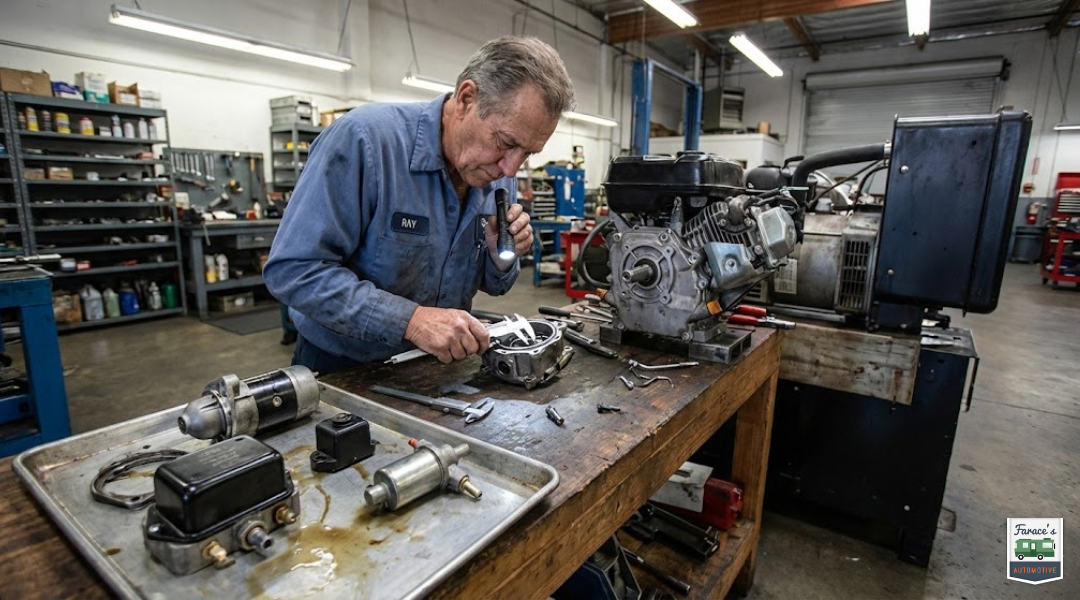
A full overhaul runs $1,500 to $3,000 and involves rebuilding the entire unit. You’re essentially getting a refurbished generator at this price point. If your repair costs exceed 60% of replacement cost, the math favors buying new.
Consider how long you’ve owned the generator and its maintenance history. A well-maintained 5-year-old unit justifies a major overhaul. A neglected 12-year-old generator with multiple issues does not. Parts availability matters too since older models may require custom fabrication or hard-to-find components that drive up generator repair cost significantly.
Replacement Unit Compatibility And Installation Scope
New RV generators range from $2,500 to $6,000 before installation. You must verify physical dimensions match your existing compartment space. Mounting points, exhaust routing, and proper ventilation requirements vary between manufacturers and models.
Fuel system compatibility is critical. Your current unit might run on propane while a replacement requires gasoline or diesel. Converting fuel systems adds $500 to $1,200 to your total project cost. Electrical integration includes matching voltage output and transfer switch compatibility.
Installation labor typically runs $800 to $1,500 depending on complexity. Some RV service centers in Orange County charge flat rates while others bill hourly. A direct swap takes 6-8 hours. Modifications for different mounting configurations or fuel systems can extend this to 12-15 hours. Factor in whether you’ll need shore power during the installation period if you’re living in your RV.
Warranty Exposure And Downtime Implications
New generators include 2-3 year manufacturer warranties covering parts and labor. This protection eliminates unexpected repair expenses during the coverage period. Rebuilt units typically carry 1-year warranties with limited coverage terms.
Component repairs usually come with 90-day to 1-year parts warranties but may not cover labor for subsequent failures. Read warranty terms carefully since some exclude damage from improper maintenance or operating conditions.
Downtime affects your plans differently based on usage patterns. Weekend campers can schedule repairs during the off-season. Full-time RVers need faster solutions since extended periods without generator power limit your camping options. Most repair shops in Orange County complete component replacements within 3-5 business days. Full overhauls take 2-3 weeks. New generator installations require 1-2 weeks for ordering plus installation time.
Resale Value Considerations For Documented Upgrades
A new generator installation adds $1,500 to $2,500 to your RV’s resale value when properly documented. Keep all receipts, warranty papers, and service records organized. Buyers pay premium prices for RVs with recent major upgrades backed by paperwork.
Major repairs add minimal resale value unless you’re selling immediately after the work. A $2,000 overhaul completed three years ago doesn’t significantly boost your asking price. Buyers focus on current condition and remaining useful life rather than past repair investments.
Energy-efficient models appeal to buyers concerned about fuel consumption and noise levels. Quiet diesel generators command higher resale premiums than older gasoline units. Document your generator’s maintenance schedule and provide service history to potential buyers. This transparency builds confidence and justifies your asking price better than verbal claims about the unit’s condition.
How Farace’s Automotive & RV Center Evaluates Generator Viability
Farace’s Automotive & RV Center uses a practical approach when deciding if your generator needs repairs or replacement. Their certified technicians look at how you actually use your RV in Southern California, what parts are available locally, and whether repair costs make sense for your situation.
Typical Southern California Travel Cycles And Storage Gaps
Your RV generator faces unique challenges in Orange County compared to full-time travelers. Most local RVers use their vehicles for weekend trips or seasonal camping, which means generators sit idle for weeks or months at a time.
Farace’s technicians ask about your travel patterns during their evaluation. If you only use your RV a few times per year, they consider whether extensive repairs make sense. Generators that sit unused develop different problems than those running regularly.
Storage conditions matter too. Orange County’s coastal humidity can cause corrosion and fuel system issues. Inland areas deal with heat that breaks down fuel and degrades seals. The shop checks for storage-related damage that might not show up in standard tests.
They also look at your future plans. If you’re planning more frequent trips, investing in RV generator repairs might make sense. But if your RV mostly stays parked, a costly rebuild might not be worth it.
Parts Availability Realities In The Orange County Market
Finding parts for older generators can determine whether repair is even possible. Farace’s has built relationships with suppliers over 40 years, but some components simply aren’t made anymore.
Onan generators are the most common in RVs, and parts remain widely available for most models. Other brands can be harder to service locally. The shop checks parts availability before giving you a repair estimate.
Some older units require special-order components that take weeks to arrive. This matters if you have trips planned. Their certified technicians tell you upfront about wait times and costs for hard-to-find parts.
Generic or aftermarket parts exist for some repairs, but quality varies. Farace’s only recommends alternatives when they meet their standards for reliability.
Balancing Repair Thresholds Against Long Term Reliability
The shop uses a straightforward calculation when evaluating your options. If repair costs exceed 50% of a new generator’s price, replacement usually makes more sense. This threshold accounts for both immediate costs and future reliability.
Key factors in their evaluation:
- Age of the generator and total operating hours
- Condition of major components like the engine and alternator
- History of previous repairs
- Expected lifespan after repairs
A generator with multiple failing systems needs more than just fixing the obvious problem. Farace’s technicians explain what else might fail soon based on their inspection. They won’t sell you a repair that only buys a few months.
They also consider your RV’s overall value. Putting a new generator in an older RV doesn’t always make financial sense. Their mobile RV repair team has seen many situations where owners spent too much on aging equipment.
Long Term Ownership Strategy
Your choice between repairing and replacing your aging RV generator shapes maintenance obligations and cost patterns for years ahead. Understanding how each option affects your budget cycles and upkeep requirements helps you plan more effectively.
Preventive Maintenance After Major Repair
When you invest in a major repair for your aging generator, you need a strict preventive maintenance schedule to protect that investment. Start with monthly inspections of oil levels, fuel filters, and coolant systems. Change the oil every 50-100 hours of runtime or at least twice yearly if you use your RV seasonally.
Replace spark plugs annually and clean the air filter every month during active use periods. Check and tighten all electrical connections every three months to prevent the vibration-related failures common in older units.
Document every maintenance task and repair in a logbook. This tracking helps you spot patterns that signal declining reliability. If you spend more than half the replacement cost on repairs within 12 months, that repaired generator likely won’t deliver good value going forward.
Lifecycle Reset Assumptions With New Units
A new generator gives you a fresh start with manufacturer warranties typically covering 2-3 years of parts and labor. You can expect 10-15 years of reliable service with proper maintenance compared to the uncertain lifespan of a repaired older unit.
Your maintenance costs drop significantly in the first five years since new generators need only basic service: oil changes, filter replacements, and periodic inspections. Budget around $200-400 annually for routine maintenance versus $800-1,500 for aging units requiring frequent repairs.
New generators also offer better fuel efficiency, often using 15-20% less fuel than models over 10 years old. This savings adds up quickly if you run your generator regularly. Modern units also run quieter and include updated emission controls that meet current California standards.
When Phased Upgrades Outperform Full Replacement
Sometimes upgrading specific components makes more financial sense than replacing the entire generator. If your generator’s engine runs strong but the control board fails frequently, replacing just the electrical system costs $800-1,200 versus $3,000-8,000 for a complete new unit.
Consider phased upgrades when your generator is under 8 years old and has low operating hours. Replace the carburetor, fuel pump, and voltage regulator as a package for around $600-900. This approach works best when only one system shows problems while the rest of the unit remains solid.
Avoid phased upgrades if multiple systems need work simultaneously or if parts become scarce for your model. Orange County’s coastal environment accelerates corrosion, so inspect the frame and mounting hardware carefully before investing in component upgrades.