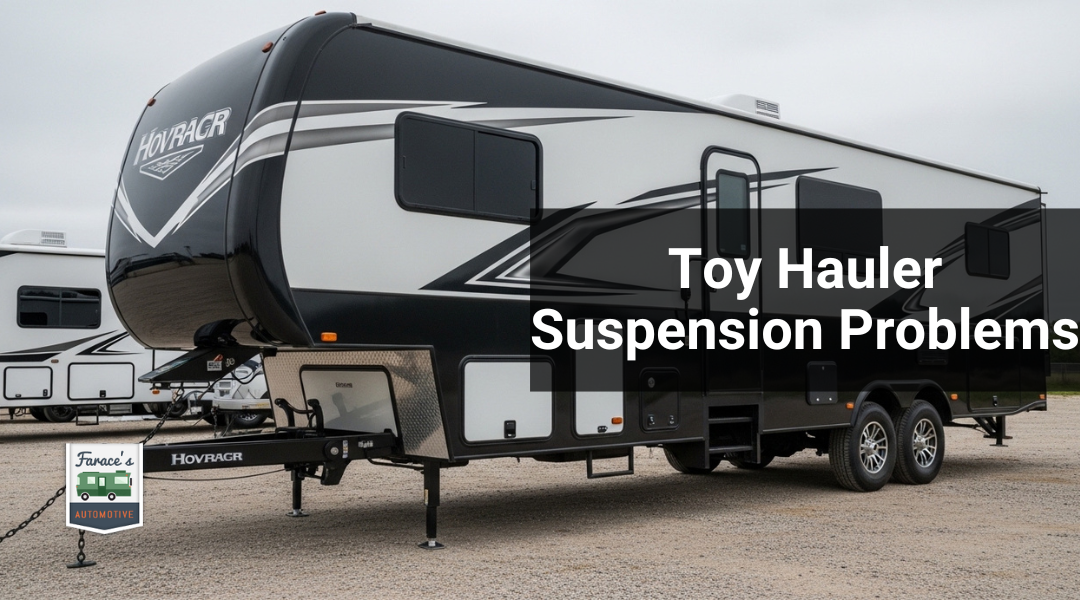
Hauling toys like motorcycles or ATVs means your suspension carries more than just weight—it carries the stability and safety of your entire setup. When bushings wear, leaf springs sag, or axles shift out of alignment, you feel it in every bounce and pull of the trailer. Understanding toy hauler suspension problems early helps you avoid uneven tire wear, unsafe handling, and costly damage to both your RV and cargo.
You depend on your suspension to absorb shocks and keep heavy loads steady under stress. The more gear you haul, the harder your suspension system works, especially on rough California roads or when turning into tight campsites. Recognizing when suspension issues become operationally significant can prevent accidents and keep your trips smoother.
At Farace’s Automotive & RV Center in Huntington Beach, you can rely on certified technicians who understand how suspension systems behave under heavy use. Whether your trailer needs reinforcement, replacement parts, or a performance upgrade, proper RV suspension maintenance ensures your hauler stays safe, balanced, and road-ready for every adventure.
When Suspension Issues Become Operationally Significant
Suspension wear becomes a major concern when handling, ride comfort, or load balance start to affect safe towing. When these problems grow, they often show through weight distribution changes, terrain stress, and visible signs of failing parts.
Load Distribution Changes With Cargo And Toys
Toy haulers carry heavy items like ATVs, motorcycles, or side-by-sides, and each adds pressure to the trailer suspension system. If the load sits too far to the rear or front, improper weight distribution can overload one axle and cause sagging or uneven tire wear. You may notice your trailer nosing down, leaning to one side, or swaying more on turns.
Tip: Balance your cargo evenly between axles. Keep the tongue weight around 10–15% of total trailer weight. A weight distribution hitch can also help share the load more evenly.
Check tire pressure before every trip since uneven loads quickly affect alignment and suspension geometry. Underinflated tires worsen bounce and stress weak shocks or leaf springs. Over time, this imbalance leads to cracks, loosened shackles, or even frame flex in large toy haulers. Recognizing these shifts early keeps handling consistent and prevents long-term structural damage.
Highway Towing Vs Off-Road Stress Conditions
Suspension systems react differently depending on road conditions. Highway towing puts steady pressure on leaf springs and bushings, revealing issues through excessive bounce or drifting when passing larger vehicles. In contrast, off-road trails create sharp impacts that strain equalizers, hangers, and bushings beyond normal limits.
A rough ride on paved roads often means worn shocks or sagging springs, while clunking over dirt roads may signal loose shackles or leaf spring damage. Dust and vibration can also increase wear on rubber bushings, leading to metal-on-metal contact and faster deterioration.
You can reduce these stresses with periodic inspections after off-road use. Lubricate moving points, tighten mounting bolts, and remove mud buildup around suspension brackets. This keeps the assembly aligned and reduces unexpected failures during highway towing.
Early Warning Signs Vs Late-Stage Failure
Signs of suspension problems often begin subtly—mild bouncing, uneven tire tread, or squeaking noises. These symptoms suggest minor wear but still allow safe operation for short distances if addressed quickly. If ignored, problems move into late-stage failure, marked by collapsed leaf springs, cracked equalizers, or misaligned axles.
When the trailer tilts or tires scrub unevenly, the suspension is likely no longer distributing weight evenly. Late-stage issues increase braking distance and make turns unstable. You might also feel vibration through the tow vehicle, especially at higher speeds.
Use this simple checklist for quick inspection:
| Warning Indicator | Likely Cause | Recommended Action |
|---|---|---|
| Uneven tire wear | Bent axle or worn bushings | Align suspension, replace parts |
| Excessive bounce | Worn shocks or sagging springs | Replace worn components |
| Clunking noise | Loose shackles or hangers | Tighten or replace hardware |
Regular maintenance, load checks, and listening for new noises help you catch early issues before repair costs grow.
Suspension System Behavior Under Heavy Toy Hauler Loads
When your toy hauler carries heavy cargo such as motorcycles or off-road vehicles, the suspension system faces added pressure that changes how it rides, steers, and brakes. You may notice rear-end sag, uneven tire wear, or a rougher ride as load weight affects the movement of springs, shackles, and axles.
Leaf Springs, Shackles, And Equalizer Dynamics
Leaf springs handle most of the suspension load. Under heavy weight, they flex more deeply and can flatten, reducing ride height and shock absorption. Worn or overloaded springs may crack or lose tension, causing poor leveling and trailer instability.
Shackles and equalizers allow limited movement between axles and help balance vertical forces. When they wear out or the bushings become loose, you might feel increased sway or hear popping sounds after braking. Inspect them regularly for elongation, missing bolts, or corrosion.
Tip: Use the manufacturer’s rated spring pack for your axle load. Reinforcing or replacing with heavy‑duty leaves or equalizers can restore ride height and reduce trailer squat. Keep pivot points lubricated to prevent metal fatigue.
| Component | Function | Common Problem | Maintenance |
|---|---|---|---|
| Leaf Springs | Support main load | Flattening or cracking | Inspect for shape and rust |
| Shackles | Connect springs to frame | Elongated holes | Replace if worn |
| Equalizers | Balance axle movement | Excess wear | Grease and check bushings |
Axle Alignment And Weight Transfer Effects
A misaligned or bent axle affects tracking, braking distance, and tire wear. Heavy rear loads increase downward force on the back axle while reducing weight on the front, changing how your rig tows. A bent axle or loose U‑bolts can shift alignment and make the trailer pull to one side.
Weigh your hauler loaded to ensure each axle stays within limits. Uneven cargo placement causes one side to compress more than the other, stressing shackles and equalizers unevenly.
When alignment drifts, tires will scuff or show feathered edges. Realign the axles at a certified RV service center and tighten all U‑bolts to manufacturer torque values. Balanced load distribution and aligned axles improve control and extend tire life.
Shock Absorption Limits And Frame Stress
Shock absorbers control movement from bumps and uneven pavement but can wear out faster under sustained heavy loads. Once the shocks reach their limit, the suspension may bounce repeatedly, straining welds and frame mounts. You may feel vibration through the floor or notice clunking over bumps.
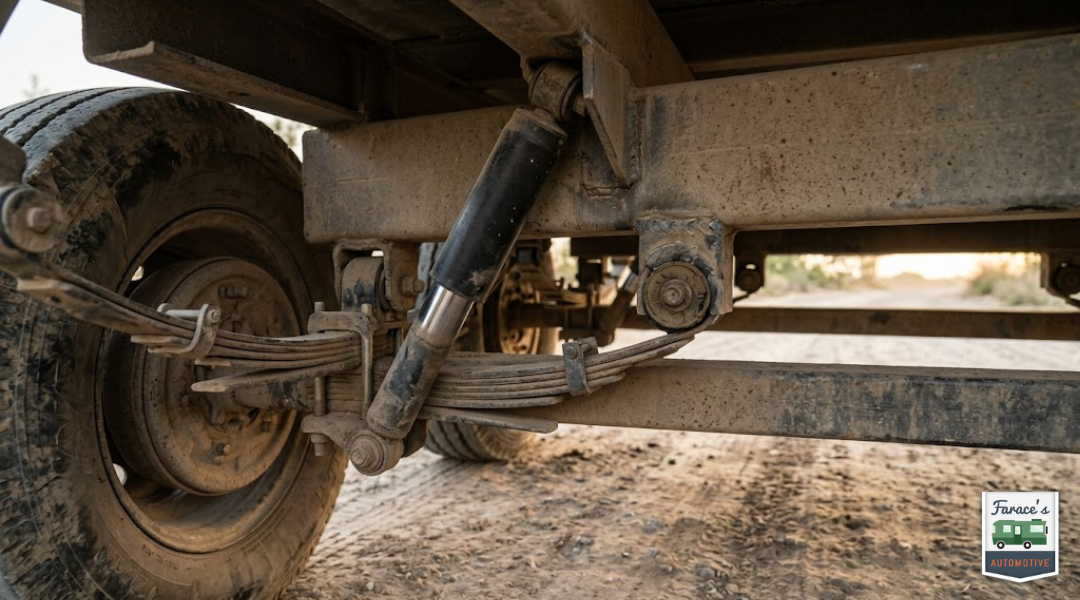
Upgrading to gas‑charged or heavy‑duty shocks increases damping ability. Also, check for cracked mounts or broken welds near suspension points; repeated bottoming out can fatigue the frame.
If you use load‑equalizing hitches or air springs, set them to keep the trailer level while maintaining proper wheel travel. Monitoring these components helps keep the RV suspension system stable even when your toy hauler carries maximum cargo.
Safety Implications Of Progressive Suspension Degradation
As suspension components wear down, your toy hauler becomes less stable, less predictable, and more prone to uneven mechanical stress. These changes can affect how the trailer tracks behind your tow vehicle, how evenly your tires wear, and how efficiently the trailer brakes respond under varied load conditions.
Handling Instability And Trailer Sway Risk
When suspension springs, bushings, or shackles degrade, they allow excess movement between the trailer frame and axles. This movement reduces stability, especially when cornering or driving in strong crosswinds. You may notice trailer sway, delayed steering response, or difficulty maintaining a straight line.
Excessive bouncing often accompanies this instability. Each bump transfers more force to the hitch, which can push and pull your tow vehicle. Over time, worn suspension parts can increase the risk of jackknifing or rollover, particularly at highway speeds or on uneven pavement.
For safety, regularly inspect spring hangers and equalizers for cracks, loose bolts, or distortion. Even small amounts of play can multiply sway forces, making your rig harder to control. Replacing compromised components early prevents handling issues from becoming dangerous.
Tire Wear Patterns And Blowout Probability
Suspension degradation causes uneven tire wear, one of the first warning signs of alignment or balance issues. As leaf springs or axles shift out of position, one side of the trailer may carry more load than the other. This leads to rapid tire wear on certain edges and increases blowout probability under heavy loads or high temperatures.
Monitor tread depth regularly and note any cupping or feathering across the tire surface. These patterns often point to bent axles or sagging springs. Inconsistent ride height between axles also stresses the tires and frame.
To reduce wear, maintain proper tire pressure, replace worn suspension parts promptly, and ensure even weight distribution when loading your trailer. Each of these actions extends tire life and lowers the chance of on-road failures.
Braking Performance Under Uneven Load Conditions
Suspension wear affects braking balance more than most drivers realize. When one side of the trailer sits lower or bounces excessively, braking forces distribute unevenly between the wheels. The trailer may pull to one side or experience longer stopping distances.
Aging bushings and shackles can also delay brake activation by allowing axle movement before the brakes engage fully. Combined with uneven loads, this makes stopping less predictable. You might notice a jerking motion or noise when applying the brakes.
Keep the suspension balanced by checking ride height, leaf spring condition, and shackle alignment. Properly functioning suspension ensures that every wheel maintains good road contact, allowing even brake pressure and safer, smoother stops.
Repair Path Decisions: Reinforcement, Replacement, Upgrades
When your toy hauler’s suspension starts showing wear, you must decide whether to restore it to factory strength, replace it entirely, or upgrade for long-term performance. The right choice depends on how you use your rig, how much weight you carry, and the condition of existing components like springs, hangers, and equalizers.
Stock Component Restoration Vs Heavy-Duty Upgrades
Restoring stock components works best if your suspension is still structurally sound and you want to keep the original ride quality. You can replace worn leaf springs, bushings, and shackles with new factory-spec parts and lubricate moving parts regularly to reduce friction and noise. This approach keeps handling consistent with manufacturer design.
Upgrading to heavy-duty suspension hardware gives you more strength and better control under load. Reinforced hangers, wet bolt kits, and MORryde or Roadmaster equalizers improve stability and reduce metal fatigue. These parts absorb more road shock—important if you travel rough roads or haul near maximum weight.
| Option | Main Benefit | Typical Materials | Maintenance Level |
|---|---|---|---|
| Stock Restoration | Keeps factory ride and handling | OEM steel parts | Low |
| Heavy-Duty Upgrade | Better durability and stability | Hardened steel, polyurethane | Medium |
Cost, Durability, And Ride Quality Tradeoffs
A full suspension replacement costs more upfront but can save money over time by preventing trailer suspension repair emergencies. Rebuilding factory systems is cheaper but may require repairs sooner, especially if the trailer operates near its weight limit.
Ride comfort also differs. Heavy-duty components feel slightly stiffer when empty but handle smoother once loaded. Stock systems generally offer a softer ride, though they may sag or sway with age. Balance your budget with how often you tow and the total miles you expect the components to last.
Routine tasks like greasing zerks and checking torque values help extend the lifespan of either option. Good lubrication and timely inspection prevent bushing wear and keep the suspension moving freely.
Compatibility With Existing Axle And Frame Systems
Before upgrading or replacing anything, confirm measurements and load ratings match your current axle and frame setup. Verify centerline spacing between tandem axles and clearance for larger equalizers or reinforced brackets. Installing mismatched parts can cause uneven ride height and premature wear.
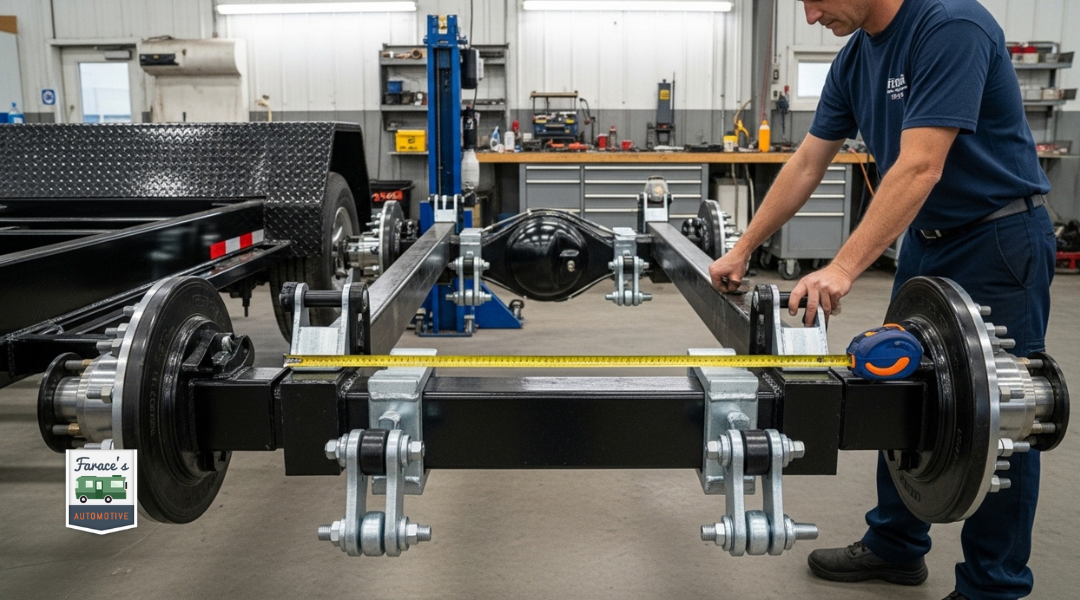
Manufacturers often design suspension kits around specific axle ratings, such as 7,000 lb or 8,000 lb assemblies. If your hauler already uses upgraded axles, you may only need stronger shackles or equalizers rather than a full swap.
When in doubt, measure twice and review specifications with both your parts supplier and frame manufacturer. The correct fit ensures proper load transfer, smooth rotation, and safe towing performance.
Suspension Failures Seen In Huntington Beach RV Repair Bays
Shops in Huntington Beach often inspect toy haulers showing uneven ride height, rapid tire wear, and handling vibration. Technicians trace many of these problems to fatigue within suspension components exposed to coastal humidity, constant towing, and unbalanced cargo weights.
Premature Spring Fatigue Under Uneven Loading
When you load heavy gear—like ATVs or motorcycles—toward one side or rear of the trailer, the leaf springs carry different stress levels. Over time, this imbalance causes early sagging or cracking. Once a spring loses its arch, the trailer can lean and place extra strain on bearings, tires, and shackles.
In Huntington Beach repair bays, this issue appears often after long coastal drives where salt and moisture accelerate corrosion. Mechanics typically find one side’s springs polished from overextension while the others remain intact. A quick weighing by wheel position can confirm excess load on a single axle.
If fatigue is confirmed, replace the springs in matched pairs. Shops recommend verifying axle alignment afterward to prevent further wear. Keeping cargo weight centered and below the gross axle weight rating (GAWR) helps maintain suspension life.
Worn Bushings Causing Lateral Instability
Rubber or bronze bushings connect your trailer’s spring eyes and equalizers. As these parts wear, you may feel a side-to-side shift when braking or encounter irregular tire wear. Huntington Beach repair centers frequently note bushings hardened by age or contaminated with road grit, leading to metal-on-metal contact.
A simple inspection checklist:
- Look for looseness at the spring hangers.
- Check for shiny wear marks where components rub.
- Listen for clunking noises at low speed.
If ignored, these worn joints allow the axle to wander and damage the wheel bearings. Replacement options include wet bolt kits that allow greasing for longer service life. Using nylon or upgraded bronze bushings also helps reduce play and vibration.
Frame Stress Linked To Overloaded Configurations
Exceeding cargo ratings or uneven distribution often transfers high loads into the frame rails and hanger welds. Huntington Beach technicians frequently repair cracked welds near the suspension brackets on toy haulers used for heavy off-road cargo.
Stress spreads from the axle mounts and weakens crossmembers supporting the floor. You may notice fine fractures in paint or separation at weld seams. Once the frame flexes, it accelerates spring and shackle failure, making ride control unpredictable.
To detect the problem early, measure ride height at all corners and inspect suspension brackets for elongation. Reinforcing the affected area with properly sized gussets or cross-frame plates restores rigidity. Maintaining correct cargo balance and performing periodic weigh-station checks reduces the chance of repeating structural damage.