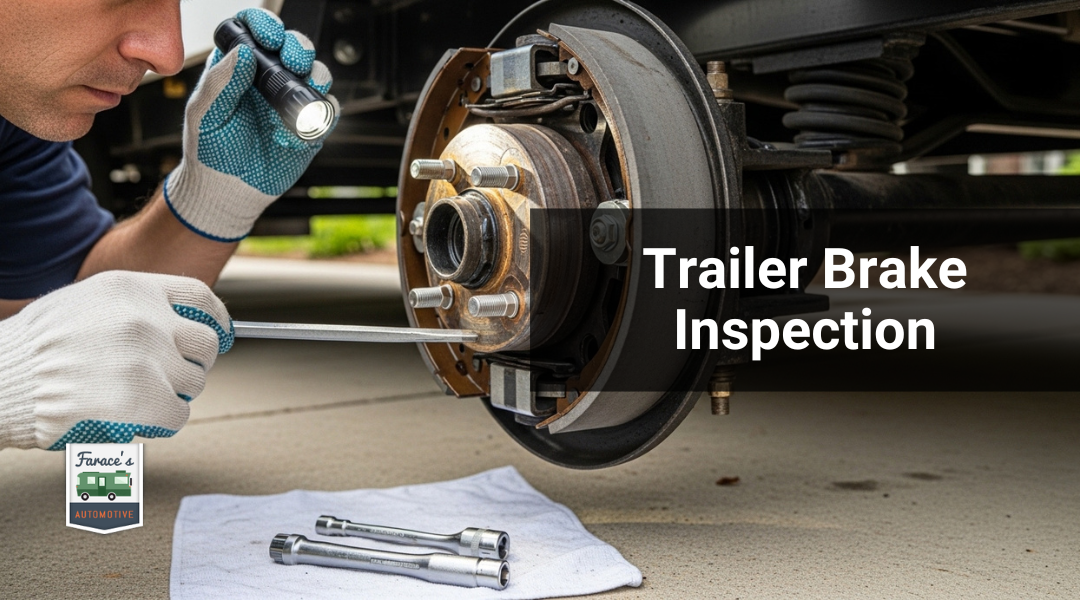
You depend on your trailer brakes every time you tow, but they’re easy to forget—until they fail or start to drag. In Orange County, where stop‑and‑go traffic and coastal humidity add extra stress, neglecting routine inspections can quickly turn into costly repairs. You should inspect your trailer brakes before every trip and schedule a full service at least once a year. That schedule can change based on how often you haul, your load weight, and the type of braking system your trailer uses.
Local driving conditions also play a big role. Orange County’s mix of freeways, hills, and coastal air means your brakes face constant temperature changes and potential corrosion. Understanding how these factors affect wear patterns helps you avoid unsafe towing situations and unnecessary expenses.
At Farace’s Automotive & RV Center in Huntington Beach, technicians see the same issues repeat across trailers used for recreation and work—uneven wear, contaminated brake shoes, and neglected electrical systems. Knowing when and why brake service frequency changes gives you the confidence to plan maintenance before problems appear.
When Trailer Brake Service Frequency Actually Changes
Brake service needs often depend on how and where you tow your trailer. Factors like total load weight, terrain, and how long your trailer stays parked can all shorten or extend the time between inspections. Knowing what causes wear helps you plan maintenance before small issues become costly repairs.
Towing Weight, Terrain, And Braking Demand
Heavier loads create more friction and heat in the brake system. If you regularly tow near your trailer’s maximum capacity, you’ll need to schedule inspections more often—sometimes every few months rather than once a year. Excessive heat can cause brake pads to glaze and rotors to warp, reducing stopping power.
Hilly or mountainous terrain increases wear too. Continuous braking on long descents puts more stress on electric or hydraulic systems. On flat highways, brakes last longer because you use them less often.
Use this as a quick guide:
| Condition | Recommended Service Interval |
|---|---|
| Heavy loads / steep grades | Every 3–6 months |
| Moderate towing | Every 6–12 months |
| Light loads / flat roads | Annually |
This approach balances safety and cost by matching service intervals to actual demand rather than a fixed schedule.
Short-Haul Coastal Driving Vs Long-Distance Trips
Short daily trips with frequent stops cause small but repeated wear on brakes. The system doesn’t reach stable operating temperature, which allows condensation and surface rust to build up. Over time, this can lead to uneven braking pressure or noisy operation.
In contrast, long-distance towing puts brakes under prolonged stress. Extended braking at highway speeds increases heat buildup, which can degrade brake fluid and pads faster. Frequent travelers across states or through mountain passes should check brake condition after every few major trips.
Coastal driving adds another factor: salt air and moisture can corrode metal parts. If you live near the ocean, rinse the trailer underside after trips and schedule full cleanings and inspections every six months. Preventing corrosion is as important as checking pad thickness or brake controller function.
Storage Duration And Inactivity Effects
Long storage periods can also affect brake performance. When a trailer sits unused for months, brake components may seize, springs can weaken, and surfaces can rust. Even hydraulic brake fluid may absorb moisture, lowering its effectiveness the next time you tow.
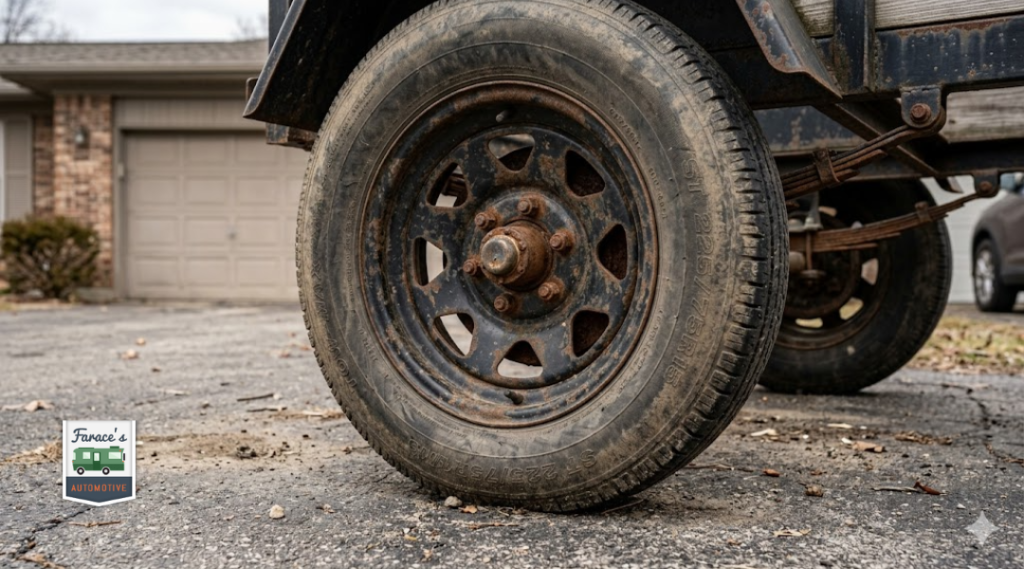
If your trailer stays parked for long periods, perform basic brake checks before moving it. Spin each wheel to ensure free movement and verify that the brakes release properly.
For trailers stored outdoors, cover wheels and hubs and apply an anti-rust coating on exposed hardware. Schedule a professional inspection before your first trip of the season. Addressing these inactivity issues early helps you avoid failures once back on the road.
Mechanical And Electrical Brake System Wear Patterns
Both mechanical and electrical trailer brakes wear out through heat, friction, and everyday use. Understanding how pads, drums, magnets, and wiring degrade helps you plan maintenance before small issues become costly repairs. Each system’s wear patterns reveal clues about driving habits, load weight, and setup condition.
Drum Vs Disc Trailer Brake Degradation Behavior
Drum and disc trailer brakes wear differently because of how each design handles friction and heat. Drum brakes trap more heat inside the housing, which can cause gradual glazing on the brake shoes and fade under heavy use. Disc brakes, which use rotors and brake pads, cool more quickly but experience direct contact wear on exposed surfaces.
Uneven pad thickness often signals misalignment or contamination. Rust and debris inside drums increase friction, leading to faster lining loss. Disc setups are easier to inspect visually, which helps you catch cracks, scoring, or rotor warping early. Consistent cleaning and periodic measurements of drum diameter or rotor thickness keep braking performance even and predictable.
| Component | Common Wear Issue | Recommended Check |
|---|---|---|
| Brake Shoes | Glazing or rivet exposure | Inspect lining every 12,000 miles |
| Brake Pads | Grooves or cracking | Replace when under 3 mm thickness |
| Rotors/Drums | Heat discoloration or warping | Measure for runout or expansion |
Magnet, Wiring, And Controller Signal Issues
Electric trailer brakes rely on magnets and signals from the brake controller to perform reliably. A weak or uneven magnet surface produces inconsistent braking, especially if the face shows grooves or metal dust buildup. Poor electrical contact can make one wheel brake harder than another, increasing trailer sway and tire wear.
Corrosion in connectors or frayed wiring often causes intermittent signals. Use a multimeter to verify voltage at each wheel; typical reading should match the tow vehicle’s output when the controller is applied. Clean connections with dielectric grease and secure wires away from moving parts. Replacing worn magnets in pairs maintains balance across the axle and prevents uneven pad loading.
Heat Cycles And Friction Material Breakdown
Each braking cycle converts movement into heat, placing stress on friction materials like pads and shoes. High temperatures cause resins within these materials to harden or burn, reducing grip. If you haul heavy loads or drive on steep grades, repeated heat cycles can lead to fading and accelerated wear.
Watch for discoloration on pads or drums, a sign of excessive heat exposure. Crystallized surfaces or a burnt smell indicate friction breakdown. Regular cooling periods during long descents help limit thermal stress. Some drivers install vented rotors or upgraded linings for better heat dissipation. Tracking pad temperature with infrared tools provides a precise way to gauge when your brakes are nearing their thermal limit.
Orange County Driving Conditions And Brake Stress
The varying terrain and climate across Orange County expose trailer brakes to unique sources of wear. Frequent city congestion, ocean air, and high inland temperatures each place different types of strain on your braking system.
Stop-And-Go Traffic And Urban Towing Patterns
Towing through Orange County’s dense city roads demands repeated braking. Stoplights, short freeway merges, and heavy commuter traffic force you to apply brakes every few seconds, especially around Irvine, Anaheim, and Santa Ana. These conditions create high heat that can weaken brake pads and reduce stopping power.
You might also face more ramp starts or turns in tight parking lots, which add pressure on both the tow vehicle and trailer brakes. Over time, the friction from constant starts and stops can cause glazing on brake shoes or pads.
Checklist for city towing brake care:
- Inspect brake linings every 3,000–5,000 miles when towing frequently
- Monitor brake fluid clarity and levels
- Test brake response after long traffic drives
Coastal Humidity And Corrosion Exposure
Along the coast—especially near Huntington Beach and Newport—the humid, salt-rich air accelerates brake corrosion. Salt particles settle on metal parts and lead to surface rust, which can spread into calipers, drums, and backing plates. Moisture can also infiltrate brake fluid, lowering its boiling point.
Even if you don’t drive daily along the coast, storage near ocean areas introduces similar risks. Trailers left parked outdoors can see faster oxidation on brake hardware.
To slow corrosion, you can:
- Rinse the undercarriage and wheels with fresh water after coastal trips
- Use anti-corrosion sprays on metal fittings
- Replace rusted bolts or worn housings as soon as they show flaking
Inland Heat And Downhill Braking Strain
Inland routes like those crossing Santiago Canyon or the 241 Toll Road raise brake temperatures quickly, especially during summer. Long downhill grades require steady, controlled braking to prevent fade. Each press of the pedal converts momentum into heat, which can cause fluid boiling or warped rotors when unchecked.
You can reduce these problems by downshifting before descents and letting engine compression assist braking. Trailers equipped with electric brake controllers need precise adjustments so braking remains balanced under load.
During high-heat trips, pause periodically to allow the brakes to cool. Inspect drums or rotors afterward for discoloration or uneven surfaces, both signs of overheating or glazing from temperature stress.
Inspection Timing As Risk And Cost Tradeoff
Balancing cost, time, and risk requires steady attention to how often you inspect your trailer brakes. Small issues, when caught early, reduce unexpected repair bills and downtime. Waiting too long can turn an affordable fix into a costly problem that affects safety and reliability.
Preventive Checks Vs Reactive Repairs
You save money and reduce risk by performing preventive checks rather than waiting for issues to appear. Inspecting brakes every 12 months or 12,000 miles, whichever comes first, helps you catch worn linings, leaking seals, and damaged wires before they cause failure. This approach aligns with DOT guidance for trailers operating in heavy-use regions such as Orange County’s urban and highway routes.
Reactive repairs, on the other hand, happen after a breakdown or inspection violation. The cost usually includes towing, part replacement, labor, and downtime. These costs can easily double or triple compared to preventive service fees. Preventive maintenance also improves brake performance consistency, avoiding compliance issues that may lead to fines.
| Approach | Timing | Typical Cost Impact | Risk Level |
|---|---|---|---|
| Preventive | Scheduled (monthly, quarterly, or annual) | Lower long-term cost | Low |
| Reactive | After failure or inspection notice | Higher immediate cost | High |
Routine checks let you plan repairs during off-hours instead of losing work time when the trailer fails mid-route.
Over-Servicing Vs Under-Maintenance Consequences
Inspecting or servicing too often wastes money, but delaying maintenance risks safety and compliance problems. You should follow manufacturer recommendations and adapt them to your trailer’s workload and regional conditions. For example, local hauling in dry climates can stretch service intervals, while heavy coastal or mountain use may require shorter ones.
Over-servicing may mean replacing parts that still meet wear limits. This increases operating costs without improving safety. Under-maintenance often leads to brake imbalance, extra wear on tires or drums, and possible DOT violations.
A reasonable inspection rhythm balances cost efficiency and brake reliability. The key is to record inspection results, track wear trends, and adjust intervals based on actual brake performance—not guesswork.
Failure Timing Unpredictability And Safety Margins
Trailer brake failure doesn’t follow a set schedule. Even new parts can fail early if exposed to heat, corrosion, or poor adjustment. That makes inspection timing a safety margin, not just a routine requirement.
Running without that margin raises the chance of losing braking control on steep grades or during heavy loads. You can’t predict the exact failure moment, but you can minimize uncertainty through consistent testing, brake balance checks, and documentation.
Keeping a small safety buffer—inspecting before the minimum legal or manufacturer interval—gives you time to fix early problems. Maintaining this margin adds short-term cost but prevents large liabilities and protects your drivers, equipment, and business reputation.
Trailer Brake Issues Observed In Huntington Beach Repair Workflows
Local trailer repair shops in Huntington Beach often see recurring brake problems that affect safety and towing performance. Most issues trace back to simple causes such as poor maintenance, improper setup, or inconsistent electrical connections that go unchecked until a failure occurs.
Uneven Braking From Adjustment Neglect
Brake adjustment problems show up frequently in utility, cargo, and RV trailers across Orange County. When brakes on one side engage harder than the other, you feel the trailer pull or sway during stops. This imbalance not only wears the shoes and drums unevenly but can also strain the axle.
In Huntington Beach repair workflows, technicians often measure brake shoe contact and alignment using manual gauges. You can maintain even performance by checking brake shoe clearance every 12 months or 12,000 miles. Regular inspections allow early detection of weak springs or backed-off adjusters before they cause damage.
A quick list of signs of uneven braking includes:
- Trailer drifting when braking
- Hot spots on one drum or rotor
- Uneven brake dust on wheel hubs
Consistent adjustment practices and periodic torque checks reduce the likelihood of one brake overworking and overheating during towing.
Electrical Faults Causing Intermittent Braking
Many repair calls in Huntington Beach involve electrical faults that cause brakes to pulse or fail intermittently. Corrosion on connectors from coastal exposure is a frequent contributor. Salt and moisture enter wiring harnesses, causing resistance spikes that lead to weak or inconsistent current flow.
Mobile technicians often start diagnosis with a voltage drop test between the brake controller and trailer plug. You can prevent most faults by cleaning plug terminals and using dielectric grease to seal contacts. Regular testing of ground connections ensures proper current return, which keeps the braking system stable.
Electrical repairs may involve replacing breakaway switches, rewiring damaged leads, or reseating relay connections. When addressed promptly, these small fixes prevent more costly replacements of magnets or controllers down the line.
Component Lifespan Shortened By Improper Setup
Incorrect installation or mismatched component sizing shortens the service life of brake parts. Shops around Huntington Beach report many trailers with brake assemblies not aligned to axle rating or load weight. This mismatch causes shoes or pads to wear prematurely and drums to overheat.
You should always verify that your brake controller output matches the trailer’s brake type—electric or hydraulic—and axle capacity. Poorly routed lines or over-tight couplings also generate heat, leading to seal damage. Regular torque testing of bolts ensures hardware remains within safe limits.
Below is a simple table showing how setup errors commonly reduce lifespan:
| Installation Issue | Typical Result | Preventive Step |
|---|---|---|
| Incorrect shoe size | Uneven wear | Match OEM specs |
| Over-torqued bolts | Bearing stress | Follow torque chart |
| Misaligned wiring | Signal loss | Secure harness away from heat |
Proper setup and calibration ensure each braking component reaches its expected life cycle while keeping towing smooth and predictable.