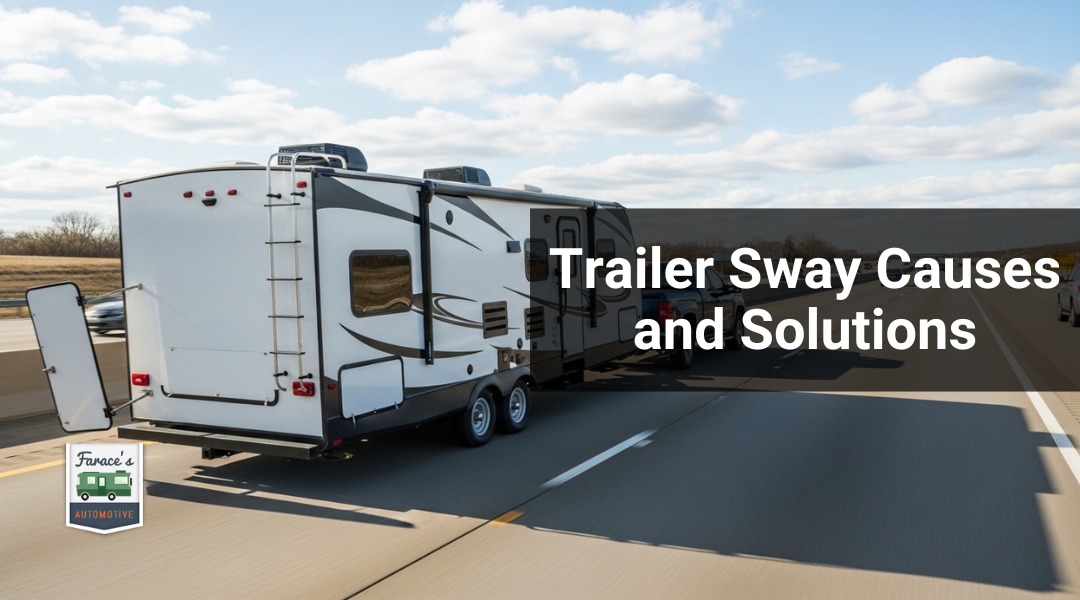
When a strong gust hits your trailer or a big rig roars past on the freeway, stability can change in an instant. The trailer begins to sway, and every movement of the wind amplifies the motion until it feels like the trailer is pushing you instead of following you. Trailer sway happens when outside forces or improper balance upset the towing setup, causing the trailer to oscillate and threaten control.
You can often trace the cause to something mechanical or aerodynamic—uneven weight distribution, low tongue weight, poor hitch alignment, or crosswinds common to wide California freeways. Each factor adds movement you must control before it builds into something dangerous. Knowing how these forces interact helps you recognize when the problem goes beyond simple adjustments.
Sometimes a minor correction like redistributing cargo or adjusting tire pressure is enough, but recurring sway may signal a deeper issue in the suspension or hitch. In those cases, a professional inspection from specialists like the team at Farace’s Automotive & RV Center in Huntington Beach ensures your towing setup remains stable and safe on the road.
When Trailer Sway Becomes a Control Issue
Loss of control during trailer sway often starts with external forces, uneven weight, or overly aggressive input from the driver. Recognizing how wind, speed, and improper setup interact helps you identify when correction turns into overcorrection.
Crosswinds, Passing Trucks, and Speed Thresholds
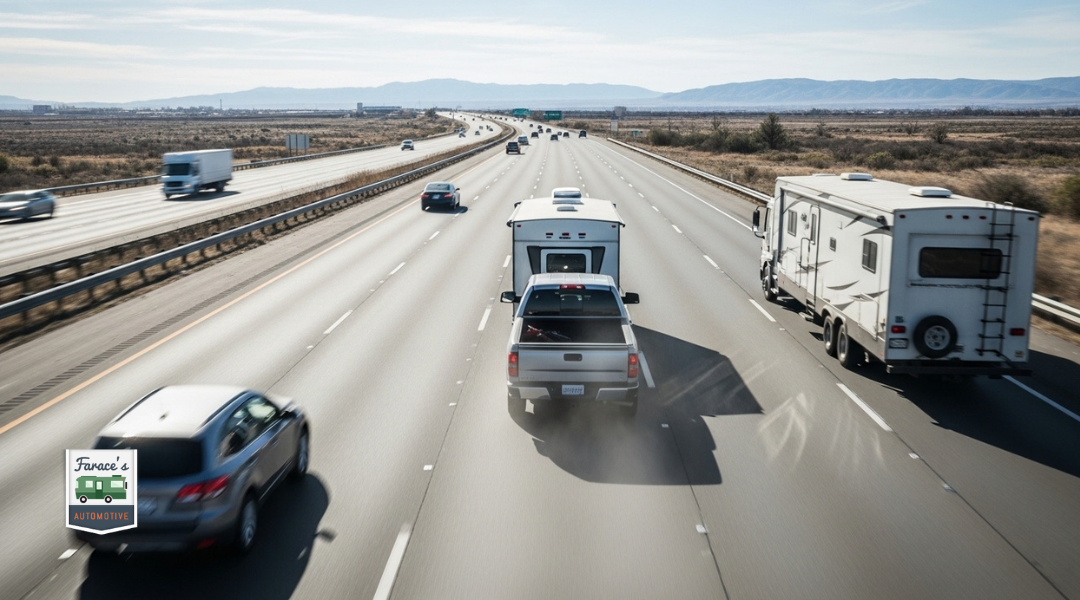
Crosswinds and sudden pressure changes from passing trucks can push the side of your trailer and trigger fishtailing. At highway speeds, even a small force can start a sway that quickly worsens if you don’t ease off the throttle in time. The faster you drive, the greater the lateral pressure on both the trailer and tow vehicle.
Wind gusts above 25–30 mph often cause noticeable movement in light or tall trailers. Consistent sway at 60–65 mph may indicate the onset of aerodynamic instability. You can minimize this by keeping speed below the trailer’s tested stability threshold and maintaining extra space from large vehicles.
If you must travel in crosswinds, avoid abrupt steering or braking. Hold the steering wheel firmly, reduce speed gradually, and let the combination stabilize. Use a sway control hitch when frequently driving in open or high-wind areas.
Load Imbalance and Hitch Weight Distribution Limits
Improper weight distribution is one of the most common mechanical reasons trailer sway becomes uncontrollable. A rear-heavy loading setup shifts the trailer’s center of gravity backward, reducing grip on the hitch and making the trailer more reactive to small movements. Ideally, about 10–15% of total trailer weight should rest on the tongue for bumper-pull designs.
If too little weight rests on the hitch, sway increases at lower speeds and may start with only mild wind or lane changes. Too much tongue weight, on the other hand, overloads the rear axle of the tow vehicle and affects steering. Use a weight distribution hitch to keep pressure balanced across all axles.
When you notice recurring sway despite proper loading, measure axle loads using a scale or seek an inspection. A professional can confirm whether suspension or tire issues are worsening the imbalance.
Driver Input Effects on Sway Amplification
Your steering and throttle actions directly influence how fast sway escalates. Quick corrections or jerking the wheel intensify motion by shifting momentum from side to side. Instead, steer straight, hold steady pressure on the wheel, and ease off the throttle gradually when motion starts.
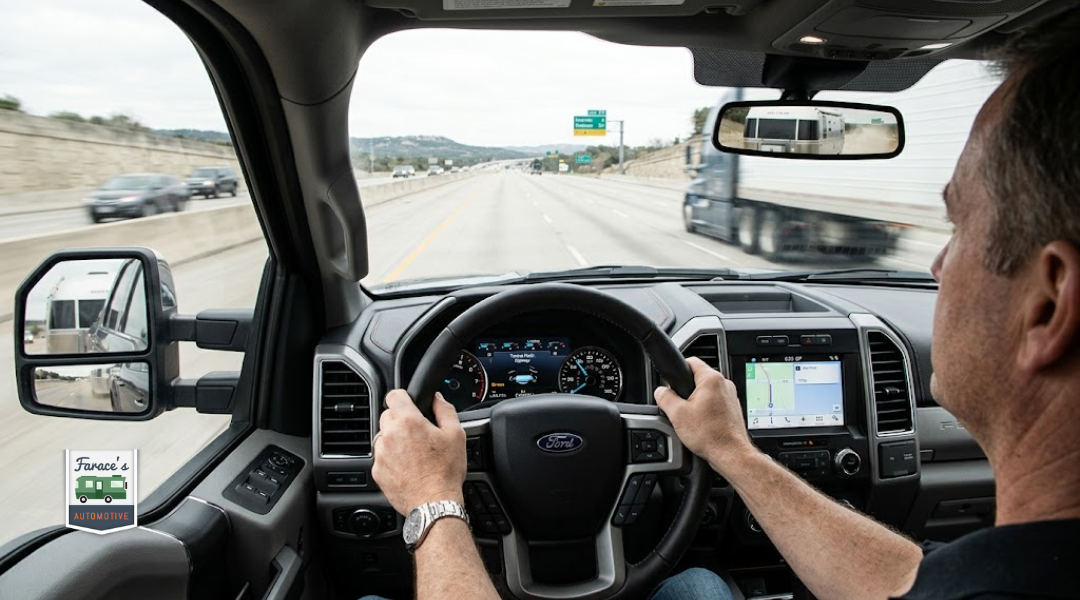
Braking suddenly during fishtailing often transfers weight forward and loosens rear traction, causing larger oscillations. If equipped, apply only the trailer brakes manually to slow the trailer while keeping the tow vehicle stable.
Training yourself to react calmly can prevent small sway from turning into full loss of control. Practicing recovery techniques in a controlled environment improves reflexes and helps you understand how your trailer responds to driver input changes.
Mechanical and Aerodynamic Forces Behind Sway
When you tow a trailer, every movement—wind, steering, braking, or passing trucks—interacts with mechanical and aerodynamic forces that affect stability. Small shifts in mass distribution, tire response, and hitch geometry can quickly turn steady motion into unstable sway if not properly managed.
Center of Mass Shifts and Pendulum Dynamics
The trailer’s center of mass (COM) determines how forces act during travel. If weight shifts rearward beyond the recommended 10–15% tongue weight, it reduces front-axle traction on the tow vehicle and increases swing at the rear. The result is a pendulum effect that grows at higher speeds or in strong crosswinds.
You can think of the trailer as a lever. The longer the distance between the COM and the hitch, the greater the torque created when wind or uneven pavement applies lateral force. Incorrect loading—such as heavy gear behind the axles—magnifies this torque and allows oscillations to build.
Maintaining a balanced COM and staying within the manufacturer’s GVWR prevents mass shifts that amplify sway. Even subtle changes, such as water sloshing in tanks or cargo redistribution, can tip the system toward instability.
Suspension Compliance and Tire Sidewall Flex
A trailer’s ability to resist sway also depends on how its suspension and tires react to side forces. Every spring, bushing, and sidewall flexes under load, introducing momentary lag between force and response. That delay allows the trailer to oscillate around its pivot point before stability returns.
Soft or aging suspension components increase motion amplitude, while overly stiff setups can cause the trailer to bounce and lose traction. Mismatched tires—especially with different sidewall ratings or pressures—worsen the problem by creating uneven lateral stiffness across the axles.
Inspect the suspension for worn shackles or bushings, and maintain tire pressures at manufacturer specs. Regular checks help reduce compliance-related sway, particularly when driving on uneven highways or encountering side gusts.
Hitch Geometry and Yaw Stability Factors
Hitch design directly controls where the trailer pivots. Traditional ball hitches allow yaw rotation, which makes the trailer behave independently once lateral forces begin acting on it. The farther this pivot sits from the tow vehicle’s rear axle, the easier it is for sway to develop.
Some advanced systems shift the effective pivot point forward through mechanical projection or linkage design. This geometry reduces or eliminates the trailer’s ability to yaw independently by coupling its motion more tightly to the tow vehicle’s chassis response.
The following table highlights basic hitch differences:
| Hitch Type | Pivot Location | Sway Response | Stability Type |
|---|---|---|---|
| Ball Hitch | At hitch ball | Reactive damping | Moderate |
| Friction Control | At hitch ball | Symptom reduction | Limited |
| Pivot Projection | Near rear axle | Prevents independent yaw | High |
Understanding hitch geometry helps you diagnose whether your setup can only manage sway or actually prevent it from forming.
Southern California Freeway Conditions and Sway Risk
Driving conditions across Southern California vary widely depending on wind exposure, vehicle spacing, and highway design. Each factor influences how a bumper pull trailer behaves under load and how much corrective control you may need to maintain safe alignment.
Coastal Wind Corridors and Open Highway Exposure
Southern California’s coastal stretches—especially along Interstate 10, Highway 1, and Interstate 15 near inland valleys—see persistent crosswinds. These open corridors allow gusts from the Pacific to accelerate through canyons and low passes. When your trailer enters these wind channels, side pressure can cause noticeable sway or yaw that worsens with higher speed and lighter tongue weight.
You can lessen exposure by reducing speed and adjusting your route according to real-time weather and Caltrans QuickMap wind advisories. Applying balanced weight distribution and ensuring proper tire inflation reduces susceptibility to side loading.
Tip: Slow down before passing through areas like the San Gorgonio Pass near Palm Springs, where wind turbines mark some of the region’s strongest gust zones.
Traffic Density and Lane-Change Turbulence
Dense freeway traffic often creates turbulent airflow and sudden lane-change events. On routes such as I‑405, US‑101, and I‑5 through Los Angeles, vehicles cut across lanes frequently, disturbing airflow behind large trucks and trailers. These wake patterns can nudge a bumper pull trailer sideways even when wind speeds are low.
Keeping a larger following distance gives you more reaction time and lets air patterns stabilize around your vehicle. Use mirrors constantly since compressed lanes and shoulder restrictions leave little correction space.
In slower congestion, trailer sway can start from over-steering during quick lane shifts. Gentle steering inputs, steady throttle use, and avoiding abrupt braking help minimize it. If sway persists despite careful driving, suspension or hitch adjustments may be necessary to restore control.
Speed Patterns on Multi-Lane Interstates
Southern California freeways run with sharp speed contrasts between lanes. The far-left lane on I‑15 or I‑210 can move 20 mph faster than truck lanes, creating alternating air pressures that destabilize lightly loaded trailers. Passing through these speed differentials too quickly can trigger oscillation, particularly when your trailer length increases wind exposure.
Monitor trip speeds using regional traffic tools like SoCal511 or Sigalert, which report real-time flow conditions. Keeping your pace steady and aligned with the median lane speed lowers risk.
Avoid riding the brakes on downgrades near mountain passes—apply trailer brake controls evenly to prevent overcorrection. In high-speed zones, each mph over 60 raises sway sensitivity, so using cruise control on calm, open segments helps maintain smoother balance between airflow and handling.
Correction Methods and Their Practical Limits
Trailer sway rarely has a single cause, and no single device or adjustment can eliminate it in every situation. Effective control depends on balancing the trailer’s load, matching equipment to weight and conditions, and maintaining mechanical systems that respond predictably under wind or traffic pressure.
Weight Distribution Hitches and Sway Control Devices
Weight distribution hitches shift part of the trailer’s tongue weight forward onto the tow vehicle’s front axle. This improves steering response and stability, especially at highway speeds. When used correctly, they reduce trailer pitch and lower the chance of fishtailing under crosswinds or when large trucks pass.
Sway control devices often combine with these hitches. Friction sway controls use tension bars or friction pads to damp side motion, while active sway elimination hitches or electronic sway control systems apply automatic corrections through trailer brakes. In most cases, these systems work best on moderate loads under 10,000 pounds. Excessive sway from poor loading or undersized tow vehicles will exceed their limits. You should follow manufacturer torque and tension settings carefully; overtightening friction bars can make handling feel stiff or unpredictable in turns.
| Type | Function | Effective Range | Maintenance |
|---|---|---|---|
| Friction Bar | Resists lateral motion | Light–medium trailers | Check pads and torque monthly |
| Dual-Cam Hitch | Distributes weight + limits sway | Medium–heavy | Inspect spring bars regularly |
| Electronic Sway Control | Uses brake input to stabilize | All sizes (most effective in crosswinds) | Run diagnostics annually |
Loading Adjustments and Axle Balance Corrections
Proper weight distribution begins before you attach any hitch. You should aim for about 10–15% tongue weight relative to total trailer weight. Too little tongue weight makes the trailer prone to sway, while too much overloads the hitch and rear suspension. Move heavy cargo forward but evenly across the trailer’s width to maintain left‑right balance.
Axle placement and load symmetry matter. If most mass sits behind the axle, lateral oscillation builds quickly when wind or passing traffic creates turbulence. In multi-axle setups, verify that both axles share the load equally. Uneven axle weights can cause one set of tires to overheat or lose traction earlier than the other. Simple adjustments using a vehicle scale can help identify imbalance. Correcting load placement often brings better results than adding more hardware.
Tire Pressure, Suspension Tuning, and Damping
Incorrect tire pressure directly affects how your trailer tracks behind your vehicle. Underinflated tires flex too much, amplifying sway. Overinflation reduces grip and increases bounce. You should use tire pressure within 5 psi of the rated maximum for highway towing and check it when cold. Consistent pressure between axle sides keeps rolling resistance balanced.
Suspension tuning and damping complement sway control systems. Worn shock absorbers allow oscillation to grow unchecked, while tuned dampers and well‑maintained leaf springs absorb side forces effectively. If your trailer or tow vehicle includes air suspension, maintain equal ride height on both sides to prevent lean. Combining sound suspension with a functioning brake controller improves towing safety—trailer brakes that engage smoothly reduce push on downhill grades and limit sway onset. While hardware can greatly minimize sway, neglected tires and suspension typically undo any benefit from advanced sway control devices.
Sway Issues Identified in Huntington Beach RV Service Contexts
Technicians at Huntington Beach RV service centers often identify trailer sway linked to setup accuracy, mechanical wear, and misunderstood hitch technology. You can prevent most of these issues through routine inspections, verified load measurements, and alignment checks before each trip.
Improper Hitch Setup and Tongue Weight Errors
One of the most common findings during local service visits involves improper hitch assembly or incorrect tongue weight. If your trailer’s front load is too light—less than about 10–15% of the gross trailer weight—the hitch pivot allows uncontrolled yaw movement. This imbalance makes the trailer more sensitive to crosswinds and pressure waves from nearby trucks.
Technicians frequently remeasure trailer balance using portable tongue weight scales. They also check that the weight distribution system is correctly tensioned and the ball height matches the tow vehicle’s level. Even a one-inch misalignment between the coupler and receiver can lead to noticeable instability.
Checkpoints often include:
- Hitch head angle and bar tension
- Trailer height relative to the tow vehicle
- Cargo placement relative to axle center
Simple adjustments restore proper geometry and improve steering response.
Worn Suspension Components Increasing Instability
Local mechanics regularly find that shock absorbers, bushings, and equalizer bolts wear faster on trailers frequently driven on coastal highways. When these parts degrade, the suspension allows side-to-side sway even when weight is properly set. The vehicle may still track straight on smooth pavement but can drift or “wiggle” across uneven road surfaces.
Service inspections often measure bushing play and spring sag. Mechanics may use dial indicators to confirm movement tolerances within acceptable limits. They also verify that axle alignment remains within manufacturer standards. If it’s off, even slightly, towing balance shifts rearward, reducing yaw resistance.
You can mitigate this issue by scheduling a suspension check every 12 months or after any high-mileage trip over rough terrain.
Recurring Sway Despite Aftermarket Control Systems
Many RV owners in Huntington Beach install friction sway control or electronic stabilization systems, only to find recurring instability on open freeways. These devices depend on resistance between hitch components to slow pivot motion. When faced with sudden gusts or passing trucks, that friction can be exceeded, allowing oscillation to resume.
Technicians often confirm that such systems are adjusted too loosely or installed on worn hitch heads. The friction pads may glaze or lose torque retention, reducing damping capacity. Proper retorque procedures and regular lubrication can help, but the underlying pivot geometry still allows independent trailer yaw.
If your trailer continues to sway even after adjustment, ask the shop to assess whether the hitch design projects the pivot forward near the tow vehicle’s rear axle. A geometry-based system, rather than added friction, can prevent recurring sway under coastal wind conditions.