Parking your RV in a coastal city like Huntington Beach can be convenient but also risky. Ocean air, salt, and moisture can wear down even the toughest exterior. Coastal RV storage in Huntington Beach is worth it only if you choose a facility designed to protect your vehicle from these conditions. Understanding what makes one lot safer than another can save you from costly damage and ongoing repairs.
You want a storage spot that offers more than just space—it should guard your investment. Some local lots, like Coastal RV & Boat Storage, emphasize security and accessibility, while others focus on affordability or covered parking. Knowing what to look for before you sign a contract makes all the difference.
In this guide, you’ll explore the real risks of storing near the shore, how local weather affects your RV, and what storage design features improve safety. You’ll also learn which RV owners face higher exposure and what options in Huntington Beach provide the best balance of convenience and protection.
Understanding Coastal Storage Risks
Keeping your RV near the ocean in Huntington Beach exposes it to environmental conditions that cause faster wear than inland storage. Salt air, steady humidity, and sunlight combine to corrode metal and weaken seals. Even small amounts of salt can create lasting damage if you don’t clean and maintain your RV often.
You’ll often see corrosion begin on bolts, hitches, roof seams, and electrical parts. These areas trap moisture that leads to rust and fading. Fiberglass surfaces dull faster, while rubber seals dry out and crack. Over time, small leaks may start, especially around roof vents and window frames.
| Common Coastal Risks | Example of Damage |
|---|---|
| Salt exposure | Rusted undercarriage, pitted chrome |
| Moisture accumulation | Mold in walls or flooring |
| UV radiation | Faded paint and brittle caulking |
Storage habits strongly affect how much damage your RV faces. Storing within five miles of the beach increases exposure to salt spray. Covered or indoor storage offers better protection, though it won’t block every effect of humid coastal air. Regular rinsing and undercarriage cleaning slow corrosion but require consistent effort.
You should also check how close the facility sits to direct ocean winds and whether it provides paved surfaces, drainage, and adequate ventilation. Facilities that lack these features allow more salt and moisture to reach your vehicle, increasing both maintenance needs and long-term costs.
How Coastal Conditions Affect Storage Outcomes
Storing your RV near the coast means planning for constant exposure to salt, moisture, and sunlight. Each factor wears down vehicle components differently and impacts how long finishes, seals, and electronics last.
Salt Air Corrosion Patterns Near Shorelines
Salt air carries microscopic chloride particles that speed up metal corrosion. When you store your RV close to the ocean, these particles cling to seams, hinges, and undercarriage parts. Even small amounts of salt can attract moisture and create a thin film that promotes rust formation.
Regular rinsing reduces buildup, but corrosion continues if you use outdoor RV storage without protection. Covered RV storage lessens direct exposure, though wind can still push salt mist indoors if openings face the sea. Indoor RV storage offers the best prevention because enclosed environments lower salt contact and reduce condensation.
You should inspect brake components, locks, and frames at least twice a season. Applying anti-corrosion sprays or marine-grade wax acts as an extra barrier against salt intrusion. Over time, this saves money on repairs and maintains resale value.
| Storage Type | Salt Air Risk | Recommended Action |
|---|---|---|
| Outdoor | High | Rinse regularly, wax metal parts |
| Covered | Moderate | Face openings away from coast, seal gaps |
| Indoor | Low | Maintain humidity control |
Humidity Cycles and Interior Material Degradation
Coastal humidity levels rise and fall daily, creating cycles that stress interior materials. The biggest issue occurs when air moisture condenses overnight inside cabinets and upholstery. This encourages mildew and weakens adhesive bonds in laminated surfaces.
Outdoor storage sites often lack ventilation, trapping damp air. Covered RV storage reduces temperature swings, but you still need desiccant packs or a dehumidifier. In indoor RV storage, climate control prevents humidity cycling and preserves interior fabrics longer.
Pay attention to these vulnerable materials:
- Foam cushions absorb moisture and develop odors
- Wood veneer can swell or peel
- Electronics corrode if condensation reaches circuit boards
Keeping small roof vents cracked or using moisture absorbers can reduce most of these problems.
UV Exposure and Surface Breakdown Over Time
Direct sunlight degrades paint, sealants, and rubber within a few seasons. Coastal areas like Huntington Beach face stronger UV intensity because reflected light from water and sand increases total exposure. The first signs are dull paint, chalky residue, and brittle gaskets.
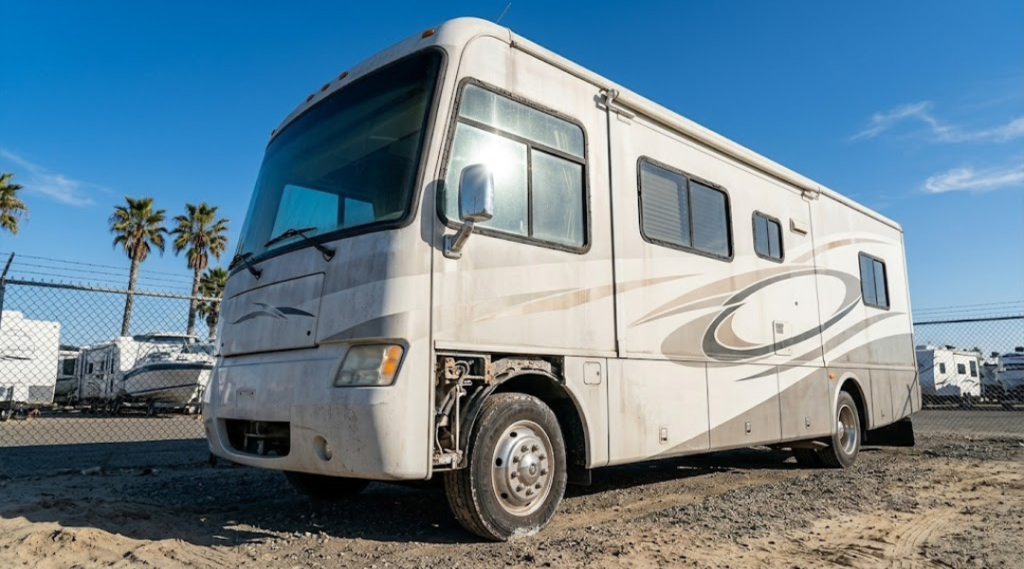
If you use outdoor RV storage, install UV-resistant covers or shade structures. Covered RV storage provides partial protection but still allows reflected UV to reach exposed surfaces. Indoor RV storage minimizes this risk completely by blocking most light.
Use this maintenance checklist:
- Wash and wax the exterior twice yearly.
- Apply UV-protective treatment to rubber seals and tires.
- Reseal roof seams every two years to prevent cracking.
Consistent care slows fading and prevents leaks that often start where UV damage softens sealant edges.
Which RV Owners Are More Exposed to Storage Risks
Your personal storage habits, the type of RV you own, and the level of upkeep you maintain all affect how exposed your vehicle is while parked. The specific risks differ depending on how often you use your RV, what materials it’s made from, and how well you care for it before and during storage.
Long-Term Storage vs Frequent Use Differences
If you store your RV for long periods, it faces higher risks from moisture, pests, and battery degradation. Coastal air in Huntington Beach can corrode metal parts and damage electrical systems over time, especially if your RV sits without ventilation or dehumidifying support.
Frequent users tend to check their rigs more often, which means small issues get repaired faster. However, frequent movement in and out of lots adds risk from minor collisions, scratches, or security lapses if you park in less protected short-term spaces.
It helps to keep a regular maintenance schedule even when the RV is unused. Check tire pressure, seals, and the electrical system every month or so. Protecting your vehicle with a cover designed for marine climates reduces oxidation and water intrusion during long-term storage.
Vehicle Type Sensitivity: Motorhomes vs Trailers
Motorhomes usually face more exposure because they have complex systems—engines, electronics, and plumbing—that can deteriorate faster in humid or salty air. These parts corrode even when parked, especially if the battery is not disconnected or maintained with a trickle charger.
Trailers, especially towables without engines, have fewer mechanical components at risk. Still, roof seals, hitch parts, and metal frames can rust or crack if left outside. Fiberglass and aluminum bodies react differently to moisture; aluminum resists rust but is prone to corrosion stains, while fiberglass can weaken under UV radiation.
Keep ventilation fans slightly open when possible to reduce trapped humidity. Use desiccants or a small dehumidifier in enclosed models to control interior moisture levels during long-term storage.
Maintenance Habits That Alter Risk Levels
Your maintenance frequency often determines how well your RV resists coastal wear. Neglecting basic tasks like washing off salt residue, lubricating hinges, and sealing windows speeds up corrosion and mold growth.
Low-risk habits include:
- Rinsing and drying the exterior after every storage period
- Removing food and organic waste to avoid pests
- Disconnecting batteries and using fuel stabilizers
Even affordable storage lots become safer when you take these preventive steps. Regular inspections, inside and out, allow you to fix damage before it spreads. Simple attention to detail—tight seams, dry cabinets, clean vents—can make the difference between steady preservation and costly repairs.
Storage Lot Design and Its Impact on Risk
The design of a coastal RV storage lot affects how well your vehicle stays protected from water, corrosion, and crime. Location, elevation, drainage, surface material, and security systems all influence the long-term safety of your investment. Small issues in design can cause major problems for RV owners who expect secure and dry storage.
Drainage, Elevation, and Flood Exposure
Water management determines how well a facility handles heavy coastal rain or high tides. A properly graded surface should slope enough to direct water away from parking areas without causing erosion. Poor grading can trap rainwater under RVs, increasing corrosion and mold risk.
Coastal Huntington Beach lots often sit near sea level, which makes flood exposure a real concern. You should look for a lot that uses raised areas or engineered slopes to prevent standing water. Drainage ponds, storm inlets, or swales are also signs of good planning.
Ask the operator how they handle flood control. A location that balances cut and fill during site grading can prevent the need for costly imported soil. Check whether drains connect to a city system or are managed on-site. These details can make the difference between minor puddles and serious flood damage.
Security Infrastructure and Access Control
A well-designed storage lot controls who can enter and when. Secure fencing and a controlled access gate help limit unauthorized entry. You should expect features like keypad or card entry systems paired with video surveillance that records all gate activity.
On-site management adds another level of safety. When staff regularly patrol or live on the property, they can respond quickly to alarms or suspicious behavior. Continuous lighting along drive aisles and corners reduces blind spots that attract theft.
If the lot includes shared amenities such as a dump station or wash area, each of these zones should still require access verification. Good design separates public service areas from storage rows. This reduces traffic near your vehicle and keeps your spot more secure.
Surface Types and Their Impact on Undercarriage Wear
Surface material affects both vehicle wear and drainage. Asphalt and concrete offer the smoothest, most durable base, reducing dirt buildup on undercarriages. These surfaces also allow easier cleaning and better water flow.
Gravel provides a lower-cost alternative but can trap moisture and grit that leads to corrosion over time. Poorly compacted gravel may create ruts, forcing you to drive or park on uneven ground. Over months, this wears down tires and suspension.
If you park long-term, you should ask about the base layer composition under the visible surface. A properly engineered layer of crushed stone or soil cement stabilizes weight and limits settling. The right surface design protects your RV’s frame, reduces maintenance needs, and prevents gradual undercarriage damage.
Specific Storage Considerations for Huntington Beach
Storing your RV near the coast requires attention to air quality, moisture, and limited space. You need to factor in how the salt air affects vehicle materials, how local weather changes over the year, and how market demand influences access and pricing for storage lots.
Coastal Zoning and Proximity to Ocean Air
Huntington Beach sits along the Pacific coast, where salty air can corrode metal and damage paint. If you keep your RV close to the shoreline, the risk of rust and oxidation increases. Facilities located a few miles inland typically offer reduced exposure while still staying convenient to main highways and campgrounds.
Choose a lot that lists coastal-resistant materials, covered storage, or indoor parking options. Metal canopies and enclosed units limit salt and humidity buildup. Inspect the facility for regular maintenance programs such as washing stations or on-site detailing to help preserve exterior finishes.
Local zoning laws may restrict large vehicle storage near residential areas or wetlands. Before signing a contract, confirm that the facility complies with city ordinances to avoid relocation issues or access restrictions during certain hours.
Seasonal Weather Patterns and Risk Variability
Huntington Beach weather stays mild most of the year, but moisture levels rise in early winter. Offshore winds and humidity create changing conditions that can lead to condensation in storage units or under RV covers. These fluctuations require proper ventilation and secure weatherproof barriers.
During hotter months, ultraviolet exposure becomes a key factor. Long-term sun exposure fades paint, damages seals, and weakens plastic parts. Covered or shaded lots reduce this risk. Heavy winds may also blow fine sand and salt spray inland, so you should inspect seals and vents regularly.
If a facility provides climate-controlled indoor units, they may cost more but offer more stable conditions. Monitoring temperature and humidity can extend the lifespan of your RV’s exterior and electrical systems.
Local Demand Pressure on Storage Availability
RV and boat ownership in Orange County continues to grow, increasing competition for limited storage lots. Huntington Beach draws both locals and visitors, which means storage space fills quickly after peak travel seasons. Prices can spike around summer or major holiday periods.
Many local facilities operate near capacity, with some reporting “no units available” for popular sizes. You may need to book early or join a waiting list. Comparing inland options in nearby cities like Westminster or Fountain Valley might offer better availability and lower monthly rates.
To manage demand costs, look for promotions such as first-month discounts or long-term contract options. Keep in mind that higher rates near the shoreline often reflect the added expense of coastal maintenance and security measures.