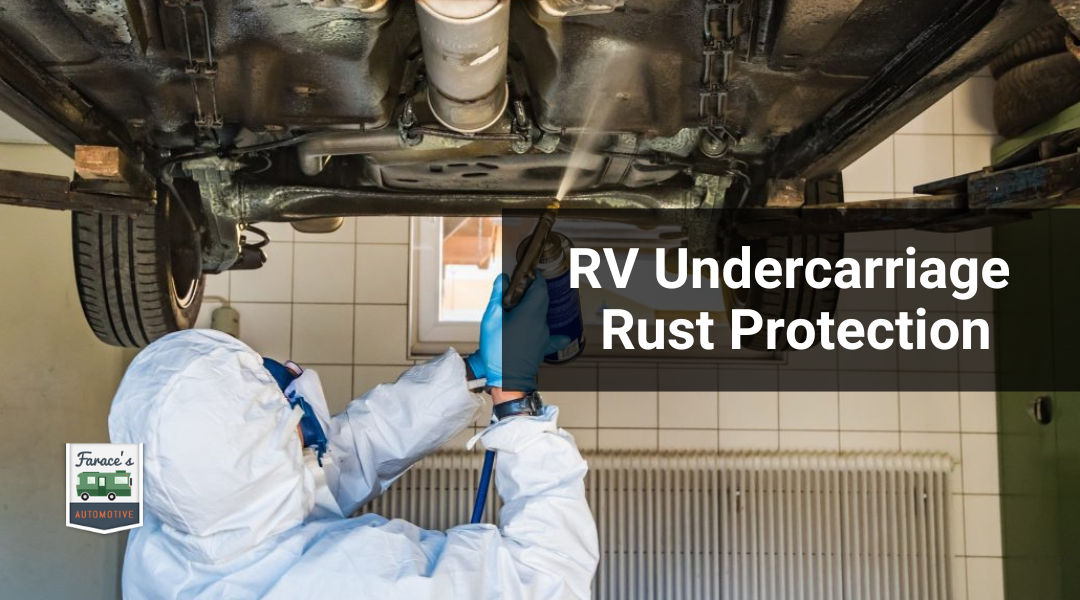
Salt air quietly attacks everything beneath your RV, turning exposed metal into a breeding ground for corrosion. When you store your RV near the beach, the undercarriage faces nonstop exposure to salty humidity that accelerates rust far faster than inland environments. You can prevent expensive damage and extend your vehicle’s life by applying the right undercarriage rust protection designed for coastal conditions.
Understanding how salt interacts with steel, paints, and protective coatings helps you make smarter maintenance choices before corrosion takes hold. You’ll also see how driving habits, storage surfaces, and even seasonal weather around places like Huntington Beach influence the rate of metal deterioration.
At Farace’s Automotive & RV Center in Huntington Beach, decades of hands-on repair work reveal clear patterns in how ocean air affects RV frames, suspensions, and fasteners. Their insight shows that consistent protection and inspection—not just one-time coating—make the biggest difference in resisting coastal rust over time.
How Salt Air Interacts With RV Undercarriages
Constant exposure to salt-laden air near coastal areas causes electrochemical reactions on metal surfaces, traps moisture inside structural cavities, and weakens fasteners and joints. The combined effects can gradually degrade your RV’s undercarriage even when it appears clean on the surface.
Electrochemical Corrosion in Coastal Environments
Salt air contains fine particles of sodium chloride that settle on exposed metal under your RV. When humidity rises, these particles dissolve into a thin electrolyte layer that bridges dissimilar metals, such as steel frames and aluminum components. This layer drives electrochemical corrosion, where one metal acts as an anode and corrodes faster.
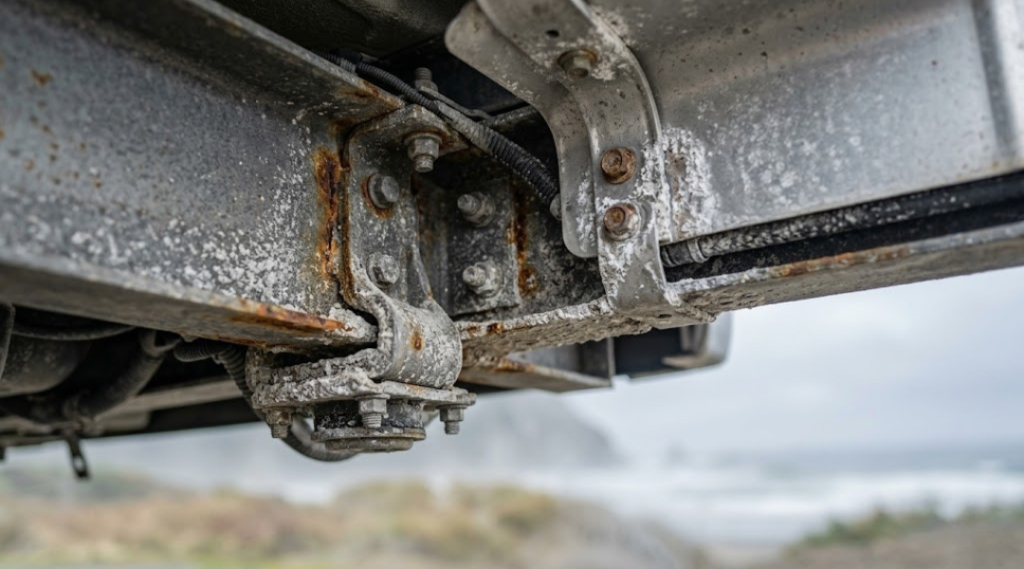
Even stainless steel can corrode if chloride ions remain trapped against it. Electrical connectivity between metal parts, such as through mounting bolts or wiring grounds, further accelerates oxidation when moisture is present.
You can reduce corrosion rates by washing the undercarriage frequently, applying dielectric grease to electrical grounds, and using an undercoating formulated for saline conditions. These steps slow down ion exchange and help maintain the structural integrity of the chassis.
Moisture Retention in Hidden Structural Components
The undercarriage includes boxed steel beams, suspension mounts, and cross‑members that easily trap moisture. Salt crystals collect in seams, welds, and drain holes, especially if you drive on wet sand or park close to the ocean. Once inside these tight spaces, moisture cannot evaporate quickly, creating a continuous damp film that feeds rust formation.
Areas most affected include the rear frame extensions, stabilizer brackets, and trailer tongue assemblies. Even protective coatings fail when moisture becomes trapped underneath them. Rinsing your RV with fresh water helps, but angled flushing under joints and supports is necessary to clear hidden salt buildup.
You can also improve drainage by enlarging small weep holes or adding plastic plugs with vents that allow air circulation without letting salt spray in.
Material Vulnerability Across Frames and Fasteners
Different materials in an RV’s undercarriage corrode at different rates. A steel frame rusts faster than aluminum panels, while uncoated fasteners often become early failure points. Galvanic pairing—when dissimilar metals contact each other in a salty environment—creates tiny electrical currents that accelerate metal loss at the junctions.
The biggest weaknesses usually appear around bolted connections, axle mounts, and hitch receivers. You can reduce vulnerability by using zinc-coated or dacromet-treated bolts, isolating dissimilar metals with nylon washers, and keeping a maintenance log for component replacement cycles.
| Component | Corrosion Risk | Recommended Protection |
|---|---|---|
| Steel frame | High | Epoxy undercoating |
| Aluminum panels | Moderate | Wax-based barrier film |
| Fasteners | Very High | Coated hardware, sealant |
Monitoring these materials closely gives you early warning before corrosion spreads into structural areas.
Which Storage and Usage Patterns Increase Rust Risk
Frequent moisture exposure, salty air, and lack of maintenance accelerate corrosion on RV frames and undercarriages. How often and where you store or move your vehicle directly affects the level of oxidation that forms on its metal components.
Long-Term Coastal Storage Without Movement
When an RV remains parked near the ocean for months, salt particles from sea spray and humid air settle on the undercarriage. Without regular cleaning or movement, these salts stay trapped on the metal, drawing in moisture that fuels electrochemical corrosion. Even small nicks in paint or protective coating can quickly develop into rust spots under these conditions.
Prolonged immobility also prevents the vehicle’s suspension and brake components from flexing, which allows moisture to collect in joints and seams. In coastal zones, a parked RV can encounter saline dew or mist almost daily. Using nonporous ground pads and a breathable cover helps reduce salt-laden splash-back from soil or pavement. Periodic visual inspection and light rinsing with fresh water slow the oxidation process.
Intermittent Use and Salt Residue Accumulation
Many RV owners use their vehicles occasionally throughout the year, often returning from beach trips with salt-coated undercarriages. When the vehicle is stored afterward without thorough rinsing, salt residue continues to react with the metal, causing corrosion even in dry weather. This pattern often causes uneven rusting—heavier on suspension parts and wheel wells where spray buildup is greatest.
Creating a quick post-trip cleaning routine reduces this risk. A simple checklist:
- Rinse the underside with low-pressure fresh water.
- Let the undercarriage dry completely before storage.
- Reapply rust inhibitor or coating annually.
By addressing salt and moisture immediately, you limit the long-term impact of occasional coastal travel.
Differences Between Covered and Open Storage
Covered storage slows down corrosion by reducing direct contact with airborne moisture, but it does not eliminate rust risk. Salt particles can still be carried in on wind currents and settle under the structure, especially if the storage area has poor ventilation. High humidity trapped under tarps or in enclosed sheds can also encourage condensation.
Open storage exposes an RV to rainfall and ocean spray more frequently, accelerating the breakdown of paint and coatings. If you rely on outdoor parking, elevating the RV slightly, maintaining drainage around the pad, and washing the undercarriage monthly are practical ways to limit exposure. Selecting corrosion-resistant aftermarket coatings gives added defense regardless of where you store your RV.
How Protection Methods Perform Under Coastal Conditions
Moisture, salt mist, and temperature swings in coastal environments accelerate corrosion on RV undercarriages. Protective coatings, cleaning routines, and treatment strategies must work together to slow metal degradation and preserve component integrity.
Coatings, Sealants, and Their Durability Limits
You’ll get the best undercarriage protection when coatings match your storage environment. Rubberized undercoatings such as 3M Professional Grade Rubberized Undercoating or Eastwood Chassis Undercoating (Gloss Black) form a physical barrier against saltwater spray and road debris. These sealants provide noise damping and an OEM-style gloss finish, but they can crack or trap moisture if applied over existing rust.
Products like Fluid Film Rust & Corrosion Protection, Wool Wax Formula, or B’laster Surface Shield Rust Protectant rely on lanolin-based chemistry that remains flexible. They wick into crevices and provide waterproof lubrication while resisting flaking. However, they wear away faster under direct spray or heat exposure.
In highly saline air, Boeshield T-9 Rust & Corrosion Protection performs well as a wax-based coating that dries to a thin film. It adheres firmly to metal and requires less reapplication than oils, though film thickness limits its long-term protection on high-impact zones. For best results, many owners layer products—oil-based protectants for internal seams and rubberized coatings for exposed chassis areas.
Washing Intervals and Residual Salt Removal
Salt accumulates quickly on undercarriages parked near beaches. You reduce oxidation by rinsing with fresh water every two to three weeks during storage and after each trip. Use low-pressure water or a specialized undercarriage sprayer to flush seams and brackets. Avoid high-pressure jets that might dislodge sealants or drive salt deeper.
A light detergent or biodegradable degreaser helps lift oily residue so corrosion inhibitors can bond better afterward. Drying fully before reapplying coatings prevents premature peeling. Consider these basic intervals:
| Activity | Frequency | Purpose |
|---|---|---|
| Freshwater rinse | 2–3 weeks | Remove salt deposits |
| Wash + detergent | Monthly | Clean bonded salt and grime |
| Inspect + spot treat | Every 2–3 months | Identify early rust |
Regular cleaning keeps the protective layer active and delays the need for full stripping and refinishing.
Tradeoffs Between Preventive Treatments and Maintenance Effort
Each protection method balances longevity, upkeep, and cost. Lanolin-based products like Fluid Film and Wool Wax Formula need reapplication every few months, but they save time during touch-ups because you can apply them over existing layers. Their ease of use suits RVs stored outdoors in mild coastal zones.
Rubberized coatings and Eastwood Chassis Undercoating last longer under normal driving conditions yet demand careful surface preparation. Once cracked or peeled, they lose adhesion and require full removal before re-coating.
Wax-based options such as Boeshield T-9 sit between these extremes. They provide moderate durability and clean application but may not withstand heavy road abrasion. You’ll need to weigh your environment, storage exposure, and desired appearance before settling on a system. Combining rubberized undercoating for high-impact sections with lighter oil-based protection for hidden areas often achieves the best compromise for year-round coastal defense.
How Huntington Beach Climate Shapes Corrosion Outcomes
Huntington Beach’s salt-rich air, marine fog, and mild but damp coastal seasons directly influence how fast your RV’s undercarriage corrodes. Small differences in salt concentration, temperature consistency, and ground moisture determine whether steel protection coatings last months or years.
Ocean Proximity and Salt Density Variations
The closer you park to the shoreline, the higher the salt density in the air. Salt particles travel inland through marine fog and wind and attach to metal surfaces. In areas within one mile of the beach, salt deposition rates can exceed tenfold compared to inland locations.
Light salt crystals cling to the undercarriage and dissolve in humidity, creating a thin electrolyte film that fuels oxidation. Surfaces near welds, bolt heads, and uncoated cavities trap saltwater longer than open panels. Frequent washing every one to two weeks helps break down this buildup before it triggers pitting.
Different microzones exist across Huntington Beach. Vehicles stored west of Pacific Coast Highway face higher corrosion exposure than those farther inland. A protective barrier like a rubberized undercoating or ceramic sealant reduces the direct impact of airborne sodium chloride.
Seasonal Humidity and Temperature Stability
Huntington Beach maintains moderate temperatures throughout the year, but relative humidity often exceeds 70%. This level sustains moisture on metal even when visible water is absent. The stable daily temperatures between 58–80°F prevent quick evaporation, allowing oxidation to progress quietly on untreated steel.
Morning fog introduces microscopic droplets that adhere to undercarriage metals. When these droplets mix with residual salt, they accelerate surface rust within weeks. Cooler winter months increase nighttime condensation, raising corrosion potential.
Humidity spikes after rainfall reinforce the need for consistent drying and ventilation under your RV. Installing breathable wheel covers and using airflow fans underneath during storage can reduce trapped moisture. Keeping temperature and humidity in check limits electrochemical reactions that feed corrosion.
Parking Surface and Drainage Effects on Undercarriage
The surface you park on determines how long moisture lingers near the undercarriage. Parking on grass, compact soil, or sand retains humidity and salt vapor around the frame. Concrete or gravel pads provide better drainage and limit direct contact with moisture.
Poor drainage allows standing water that pools beneath axles and suspension parts. Even short-term puddling causes corrosion in weld seams and brake components. You can reduce this by positioning your RV slightly nose-high so water drains toward the rear.
Elevated wheel ramps and undercarriage mats help isolate metal parts from damp surfaces. Periodic rinsing of the parking area removes residual salt and coastal dust that accumulates in runoff. Managing ground exposure plays a key role in slowing corrosion from below.
What Farace’s Automotive & RV Center Observes in Rust Progression
Technicians at Farace’s Automotive & RV Center in Huntington Beach frequently inspect RVs from coastal areas and report a consistent pattern in how corrosion develops. You’ll often see the earliest signs under the chassis where salt spray and moisture collect, especially on steel frames and cross members. These areas begin showing surface oxidation within months of repeated coastal exposure.
As corrosion advances, the texture of affected metal changes from smooth to rough and flaking. Minor surface rust can transition to pitting corrosion, where small cavities deepen into structural weak points. You might notice dark stains or bubbling paint that indicate trapped moisture beneath protective coatings.
Commonly affected components include:
| Area | Early Indicators | Long-Term Effects |
|---|---|---|
| Frame rails | Discoloration, light rust film | Weakening weld seams |
| Suspension mounts | Dull finish, orange spots | Reduced load capacity |
| Brake lines | Tarnish or flaking | Leakage, safety failure |
| Electrical grounds | Green or white deposits | Poor conductivity |
Farace’s specialists often find that corrosion progresses faster in RVs with insufficient undercoating or inconsistent washing routines. Electrical connectors corrode more quickly than expected due to residual salt in engine compartments. You can reduce this risk by maintaining clean contact points and applying corrosion inhibitors after each rinse.
By tracking rust formation stages, the shop helps owners plan timely maintenance. Identifying early-stage oxidation before it spreads across the frame makes a significant difference in preventing expensive structural repairs.