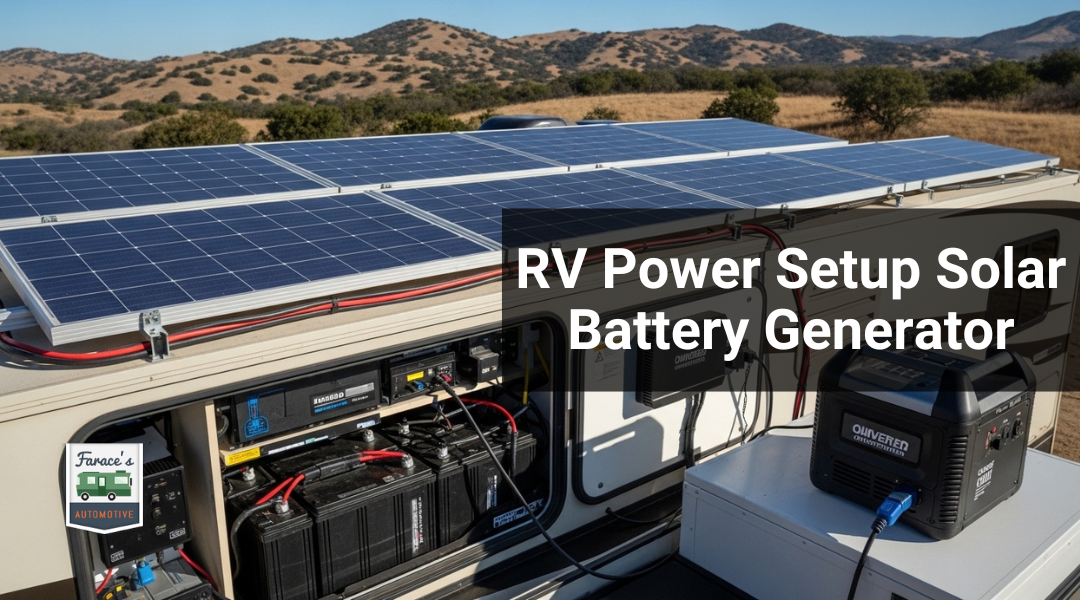
Southern California camping means sun, salt air, and long drives up and down the coast—but keeping your RV powered can test any setup. Shore power isn’t always available, and running a generator all weekend can be noisy and expensive. Combining solar panels, a quality battery bank, and a reliable generator gives you quiet, flexible power wherever you park—without depending on hookups or wasting fuel.
In regions like Huntington Beach, you have plenty of sunlight but also strict noise rules and crowded campgrounds. A hybrid system solves that balance. Solar and batteries handle your daily loads in silence, while the generator backs you up for air conditioning or cloudy stretches. It’s simple, stable, and practical for the SoCal lifestyle.
At Farace’s Automotive & RV Center, you’ll find real-world examples of these systems in action. From small travel trailers to full-sized motorhomes, shops are seeing more owners choose hybrid setups that cut generator hours and reduce long-term costs. When done right, your RV becomes both self-sufficient and compliant with local rules—ready for quiet desert nights or weekends by the beach.
Where Hybrid RV Power Systems Make Sense
Hybrid RV power systems serve RV owners who need steady energy in changing conditions. They matter most when your trips cross sunny, coastal, and desert regions, or when you live in your RV full-time and need dependable off-grid RV power without relying only on a generator or limited solar output.
Full-Time RV Living vs Weekend Travel
Full-time RVers often rely on power every day for cooking, refrigeration, air conditioning, and connectivity. A hybrid RV solar system with batteries and a generator provides stable energy that supports these needs even during cloudy days or high energy use. It reduces generator runtime and fuel costs, while keeping noise low, which improves comfort during long stays.
If you only camp on weekends, a simpler RV solar kit or set of portable solar panels may be enough. You can recharge between trips and use the generator occasionally as backup. However, weekend travelers who stay at dry sites or music festivals may still benefit from hybrid power, especially when plug-in options are limited or weather changes quickly.
| Setup Type | Ideal User | Power Source Mix |
|---|---|---|
| Hybrid solar + battery + generator | Full-time or frequent RVer | Balanced reliability and autonomy |
| Solar + battery only | Short trips, light users | Quiet, low-maintenance setup |
| Generator only | Occasional user | Quick setup, higher fuel use |
Coastal, Desert, and Inland Usage Differences
Southern California’s climates vary widely. Along the coast, fog reduces sunlight for solar panels for RV, so the generator and battery handle more of the load. Solar charging in these areas improves when panels have adjustable angles to capture light through haze.
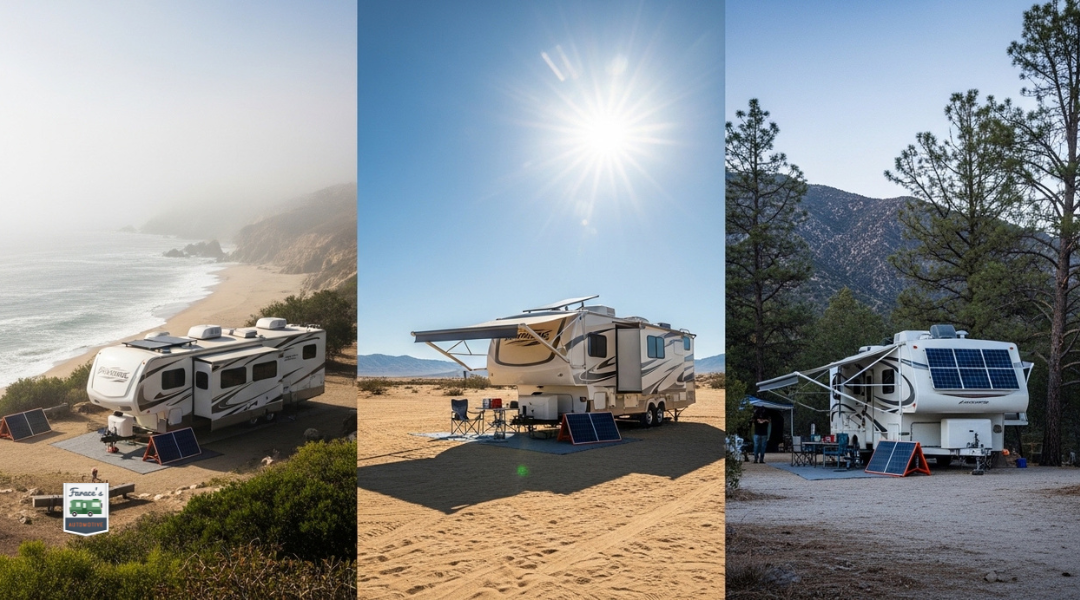
In the desert, sunlight is strong but battery capacity matters more than panel size. Heat lowers battery efficiency, so LiFePO₄ batteries or shaded installations extend performance. Inland mountain regions combine both extremes—sun exposure and cold nights—making a hybrid setup essential to balance conditions.
Portable panels also help travelers who move between shaded forests and open spaces. You can reposition them for optimal charging and still draw on the generator as needed.
When Single-Source Systems Fall Short
Single-source systems often work well until conditions shift. RV solar power works great under full sun but slows sharply under clouds, dense trees, or short winter days. Batteries alone can’t support long air-conditioning use or heavy appliances without steady recharge cycles.
Generators provide consistent output but create noise, vibration, and emissions that limit campground use. They also depend entirely on stored fuel, which can run out during extended off-grid camping.
A hybrid RV solar setup avoids these limits by blending sources. Solar handles daytime loads, batteries cover evenings, and the generator starts only when stored energy drops. This mix gives you reliable power wherever you travel and keeps your off-grid RV power system ready for any environment.
System Architecture: Solar, Battery, Generator Roles
A reliable RV power setup in Southern California depends on the right balance of energy generation, storage capacity, and backup sources. You need to understand how each part—solar panels, batteries, and a generator—works together to deliver steady power for daily needs and unexpected conditions.
Energy Generation vs Storage vs Backup Supply
Solar panels provide your primary power generation. Monocrystalline panels usually offer the best efficiency, while polycrystalline and bifacial panels can suit specific roof sizes or light angles. A system using several 100W solar panels often provides enough solar input for basic RV loads, but your solar panel wattage should match your daily energy consumption.
Energy captured by the panels flows through a solar charge controller, which regulates charging. Modern systems use MPPT (maximum power point tracking) controllers for higher conversion rates, while PWM charge controllers are simpler but less efficient. The energy then charges your battery bank, typically made up of lithium or AGM units.
Your generator acts as a backup supply when solar output and stored energy are insufficient. It engages automatically or manually to prevent battery depletion during cloudy weather or heavy use. Together, these three sources—solar, battery, and generator—create a hybrid system that balances cost, reliability, and sustainability.
Load Types: Continuous, Surge, and Intermittent
Your power system must handle different types of electrical loads. Continuous loads include refrigerators, ventilation fans, and lighting. Surge loads occur with appliances like air conditioners or microwaves, which need extra power at startup. Intermittent loads such as laptops or pumps draw variable current throughout the day.
Matching these loads to available power prevents system strain. For example, running a high-surge appliance on limited inverter capacity can trigger a voltage drop. Knowing the wattage and duration of each load helps you size your array, battery, and generator properly.
Use a battery monitor to track power use and charge levels. This helps manage energy allocation between continuous and high-demand devices while avoiding deep discharges that shorten battery life.
| Load Type | Typical Example | Power Demand Pattern |
|---|---|---|
| Continuous | LED lights, fridge | Constant low to medium |
| Surge | A/C unit, microwave | Short high bursts |
| Intermittent | Water pump, laptop | On-and-off variable |
Inverter, Charge Controller, and Transfer Logic
The inverter converts stored DC power from the batteries into AC power for your appliances. For RVs, a pure sine wave inverter—often around a 1000W inverter or higher—delivers stable power compatible with sensitive electronics. Cheaper modified sine wave models can cause noise or wear in some devices.
The charge controller manages how solar energy charges your batteries. The MPPT design maximizes efficiency by adjusting voltage and current flow, while PWM versions are better for smaller setups. Consistent regulation ensures your solar panel output safely matches the battery’s input range.
Your transfer logic automatically switches between power sources. When solar energy is strong, it supplies loads directly and charges batteries. As charge levels drop, the system shifts to stored energy, and if that becomes low, the generator starts automatically. This smart sequence minimizes downtime and keeps all power sources synchronized for uninterrupted use.
Southern California Constraints on Power Design
Designing a reliable RV power setup in Southern California involves balancing sunlight availability, local noise laws, and electrical access options. Temperature extremes, uneven solar exposure, and campground restrictions all shape how you size your inverter, select batteries, and manage generator use.
Sun Exposure Variability Across SoCal Regions
Southern California offers high solar potential, but sunlight exposure shifts sharply between coastal areas, valleys, and desert regions. You get steady sun in the inland deserts, yet humidity and coastal fog often lower solar charging efficiency near the ocean. These variations affect how many amp-hours your battery bank can store and recharge each day.
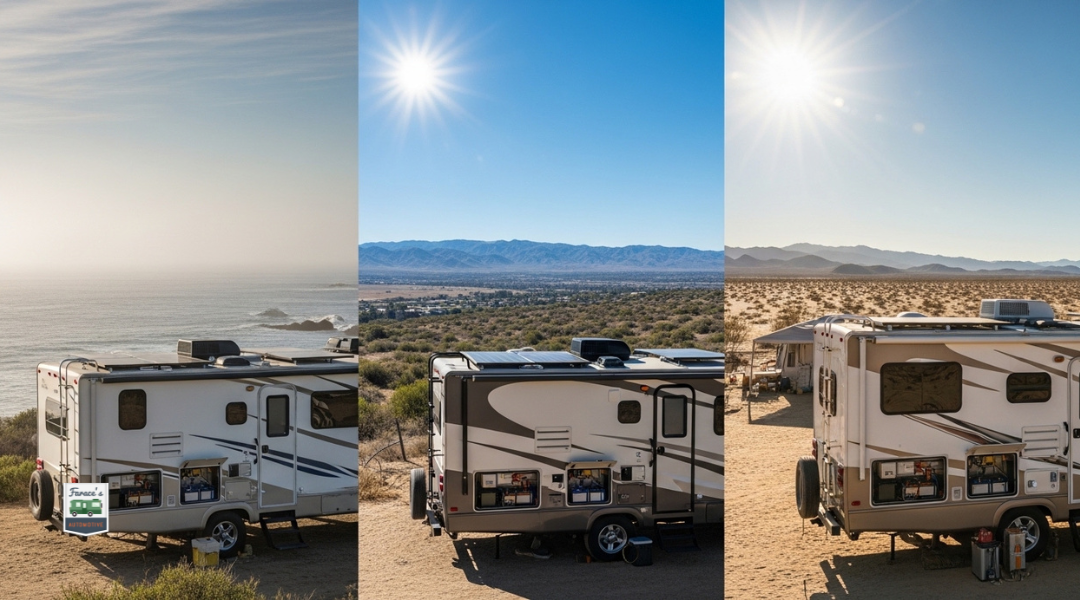
When you plan your solar array, check regional solar maps or use a solar calculator to estimate daily production. Inland RVers might use a smaller array paired with pass-through charging systems, while coastal travelers may need additional panels or a compact solar generator for cloudy days.
Temperature also matters. High heat near the desert can degrade battery performance over time. Keeping lithium batteries in a shaded or ventilated compartment helps you maintain reliable output even during summer peaks.
Noise Restrictions and Generator Runtime Limits
Local rules often limit when and how long you can run a generator. Many counties and campgrounds restrict operation to specific daytime hours, typically between 8 a.m. and 10 p.m. In denser areas or coastal state parks, quiet models rated under 60 decibels are required.
You need to factor this into your energy plan. Long runtime limits may push you to rely more on solar and stored battery power overnight. Using inverter generators with eco modes or remote start capability helps optimize fuel use while staying within noise limits.
Maintaining flexibility is key. Set up a power system that meets your quiet-hour demands — for example, using solar to top off batteries during the day and a small generator only when battery voltage drops below safe limits.
Campground Hookups vs Off-Grid Expectations
Southern California RV parks vary widely in available power hookups. Some offer 30 or 50-amp service, but remote or beachside campgrounds often have no electrical access. You should size your inverter to handle key loads like air conditioning, refrigeration, and cooking devices even when hookups are unavailable.
For off-grid stays, tracking your battery amp-hour capacity helps you plan how long you can run essential appliances before recharge. Pairing solar and generator charging ensures consistent energy regardless of location.
When hookups are available, pass-through charging allows you to power appliances while recharging your batteries simultaneously. This keeps your energy system active without overloading circuits or draining power reserves. Setting clear expectations for your power use prevents unnecessary strain on your inverter or battery bank, giving you a more steady and predictable setup wherever you travel.
Tradeoffs Between Independence, Cost, and Complexity
Building a reliable RV power setup in Southern California means balancing how much energy you can store, how often you run your generator, and how complex the system becomes. Larger solar and battery systems cost more but reduce fuel use and noise, while smaller systems save money but require more generator time.
Battery Capacity vs Generator Reliance Balance
The size and type of your RV batteries shape how independent your system feels. Lead-acid and AGM batteries have lower upfront costs but need more frequent charging and maintenance. Lithium-ion or LiFePO4 batteries store more energy in less space, last longer, and tolerate deeper discharges, but they cost significantly more.
If you depend heavily on a generator, you can reduce battery cost but spend more on fuel and maintenance. Generators also bring noise and heat, which can limit comfort in hot SoCal climates.
An efficient balance often includes mid-range battery capacity paired with moderate generator use. For example, a setup with 400–600 Ah of lithium batteries allows several days of off-grid use, while a short generator run every few days keeps batteries topped off during poor sunlight. Over time, this tradeoff saves fuel while maintaining flexibility for extended trips.
Solar Array Size vs Roof Space Limitations
Your RV’s roof limits how much solar power you can gather. Typical RVs fit 400–800 watts of panels, enough to support moderate use if paired with efficient batteries. More panels mean fewer generator hours but add weight and cost, and shading from vents or AC units can cut output.
Portable solar panels expand capacity when parked but add setup time. Fixed arrays are simpler day-to-day but can’t always catch optimal sun angles.
When comparing panels, larger arrays paired with high-efficiency lithium batteries often outperform small setups with frequent generator use. Still, most SoCal RVers find that about 600 watts of solar strikes a good balance for partial independence without overcomplicating wiring or inverter sizing.
Maintenance Demands Across System Types
Maintenance varies widely between batteries, solar equipment, and generators. Flooded lead-acid batteries need monthly water checks and must stay charged to prevent sulfation. AGM and lithium batteries require less care but need proper temperature management and regular monitoring of charge levels.
Solar panels need periodic cleaning, especially in dusty SoCal regions, to maintain efficiency. Generators require oil changes, filter replacements, and fuel checks every few months or after a set number of run hours.
To simplify upkeep, standardize components and keep easy-to-reach access panels. Using battery monitors and solar controllers with clear readouts helps track performance, reduce guesswork, and prevent costly issues. Balancing these routines avoids expensive downtime and keeps all parts running efficiently.
Power System Patterns Seen in Huntington Beach RV Service Bays
Service technicians in Huntington Beach often see familiar patterns when inspecting RVs that combine solar, batteries, and generators. Many rigs rely on mixed setups—roof solar panels charging lithium banks, tied to either a solar generator for RV or a conventional generator—but uneven configurations can lead to early wear, slower charging speeds, and unstable power output.
Common Integration Failures and Misconfigurations
In many service bays, technicians note that RV owners often connect components without matching their voltage ratings or controller capacity. A frequent mistake is pairing large roof-mounted solar arrays with a low-capacity charge controller. This causes overheating, poor charging efficiency, or tripped power converters.
Battery isolators and converters are also miswired. When your system lacks the proper inverter-to-battery connection, AC devices may pull from the wrong power line, causing your RV solar generator or alternator to overwork. Many setups skip fuses or misplace them, which raises the risk of damaged conductors or fried inverters.
To prevent these issues, label your inputs clearly, match your solar controllers to panel output, and use a proper solar power station like the Bluetti AC200P with regulated ports. A short checklist keeps you from repeating costly service errors:
| Checkpoint | Why It Matters |
|---|---|
| Match controller amperage to panel rating | Prevents overheating |
| Verify ground and neutral wiring | Avoids shorts and inverter failure |
| Keep fuses close to all power sources | Limits surge damage |
Generator Wear from Poor Load Management
Conventional generators and RV solar generators see unnecessary stress when load management is neglected. Running your generator at light loads for long periods leads to low combustion temperatures, carbon buildup, and reduced efficiency. This is common when solar power provides partial charge during mild daylight, and the generator runs idly at night.
Overloading has similar effects. Sudden startup spikes from large appliances strain windings and shorten the generator’s lifespan. Huntington Beach technicians often observe corrosion, dirty fuel filters, and fouled spark plugs tied to irregular use.
Operate within 40–80% of rated wattage for stable output. Rotate between solar and generator power logically, letting your solar power station handle small loads while reserving the generator for air conditioners or microwaves. This consistent load control helps extend service intervals.
Battery Degradation Linked to Charging Setups
Improper charging methods cause faster battery decline than most owners expect. Over time, service shops find that mixing solar input with an unregulated alternator line or low-quality converter introduces unstable voltage that shortens battery lifespan.
Many RVs charge lithium banks too quickly or leave them on float mode for extended periods. A proper smart charger extends cycle life by adjusting voltage automatically. When you depend on a Bluetti AC200P or similar solar generator, ensure the charging source matches the manufacturer’s amp and voltage limits.
Technicians also report frequent issues with poor cable maintenance. Loose or corroded terminals reduce charging speed and create heat buildup. Clean your terminals, monitor your charge controller’s output, and use cables rated for the total system load. Consistent maintenance makes your energy storage predictable and safe for long trips.