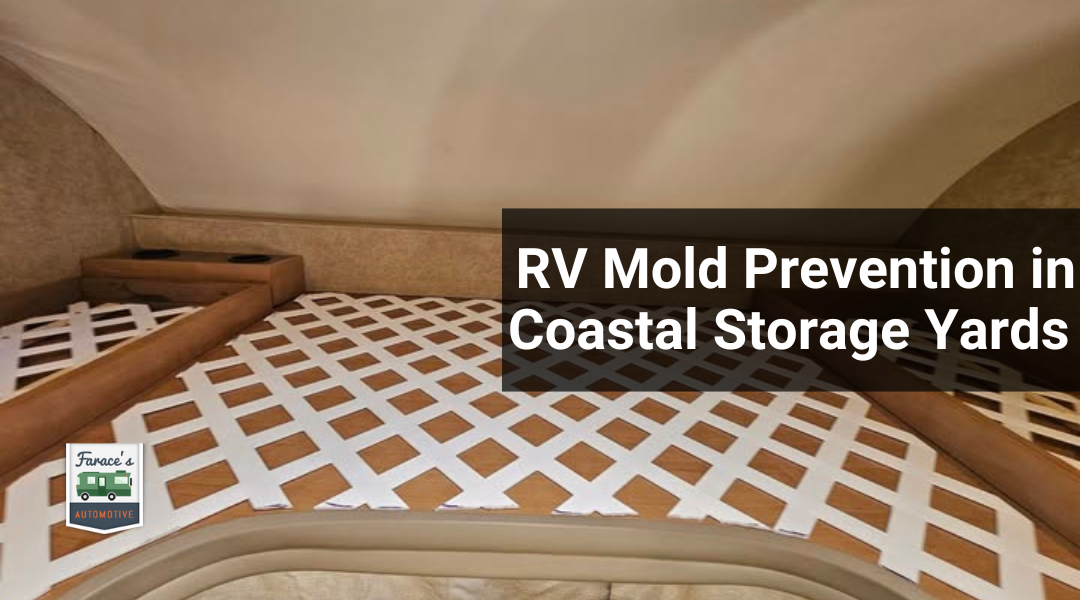
Storing your RV near the coast exposes it to constant humidity, salt air, and shifting temperatures that can quietly trigger mold and mildew inside. These conditions turn every sealed seam, soft fabric, and hidden corner into a potential breeding ground for moisture damage. To prevent mold and mildew in coastal storage yards, you must control humidity, improve ventilation, and inspect your RV regularly for leaks or dampness.
You can protect your investment by understanding how coastal air affects your RV’s interior materials and storage environment. Mold spores thrive when humidity stays high, so it’s not just about cleaning—it’s about managing airflow and fixing leaks before they spread. In places like Huntington Beach, even short storage periods without proper drying can lead to long-term issues.
At Farace’s Automotive & RV Center, technicians often see how quickly damp conditions lead to interior deterioration and costly repairs. Using tested prevention methods tailored for coastal climates can help you maintain a clean, dry, and road-ready RV all year long.
Factors Behind Coastal Humidity and Interior Mold Growth
Moisture in coastal storage yards comes from constant ocean air exposure, condensation inside sealed RVs, and limited ventilation. These conditions let surfaces stay damp long enough for mold to form and spread on organic materials such as wood, fabric, and insulation.
Condensation Cycles in Enclosed Storage Conditions
When warm, humid air from the coast enters your RV and later cools at night, condensation forms on interior walls, metal parts, and windows. Even small daily temperature swings cause water vapor to collect where air circulation is poor.
If your RV remains sealed for long periods, trapped moisture cannot escape. Over time, dampness accumulates behind panels, under cushions, and on ceiling surfaces. This steady moisture cycle supports mold and mildew colonies that can begin forming within 24–48 hours.
Keeping the indoor relative humidity below 60% helps reduce this risk. Using a dehumidifier, desiccant packs, or vent openings during storage can limit condensation while preventing the air inside from stagnating.
Airflow Limitations and Trapped Moisture Zones
RVs in coastal yards often stay tightly closed to protect against salt air and storms, but this also limits airflow. Still, stagnant pockets of air inside favor mold in RV interiors. Humid air collects in narrow spaces where it cannot evaporate, such as under mattresses, inside cabinets, or around plumbing fixtures.
Common trapped moisture zones include:
| Area | Cause of Moisture | Prevention Tip |
|---|---|---|
| Under beds/cushions | Limited air movement | Use vented bed bases |
| Bathroom corners | Shower steam | Install a small exhaust fan |
| Storage bays | Condensation and leaks | Check for gaskets and seal gaps |
Regularly opening vents or using small battery-powered fans can move humid air out before it settles on cool surfaces. This prevents moisture layering, which encourages hidden fungal growth.
Organic Materials and Hidden Growth Surfaces
Most interior materials in an RV—such as plywood, carpet backing, and fabric—are organic and can feed mold spores once they absorb moisture. When you store your RV near moist coastal air, these materials stay damp, giving mold a place to grow even if surfaces appear dry.
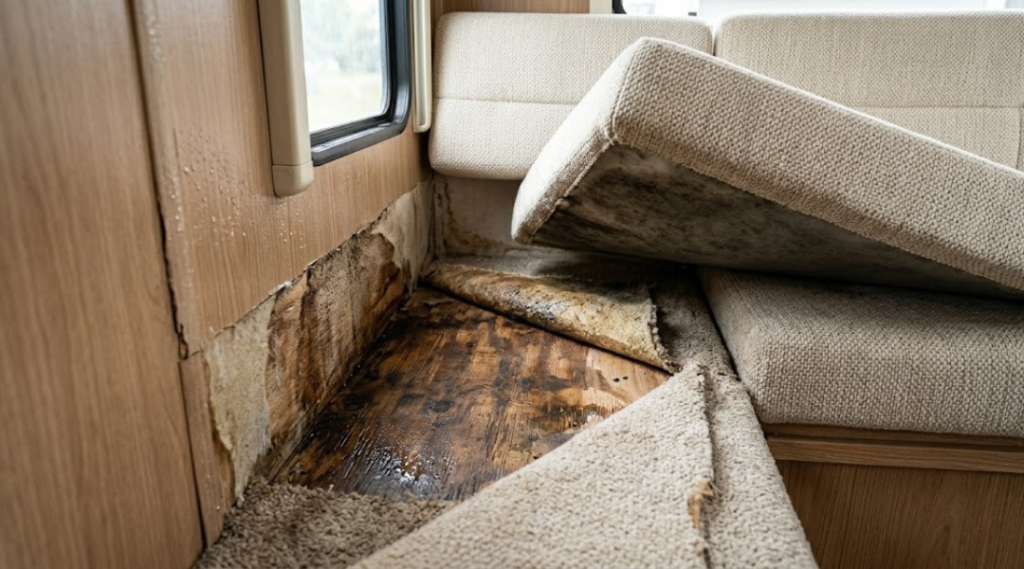
Hidden areas like the underside of carpets, paneling seams, or the back of wallboards can trap humidity. Mold grows within these layers where cleaning doesn’t reach.
Inspect soft furnishings and wood trim for musty odors or discoloration, as these signs often appear before visible mold spots. Replacing absorbent materials with moisture-resistant options and keeping the RV dry through desiccants and airflow control can minimize hidden mold development.
Storage Variables That Elevate Contamination Threats
High humidity, trapped air, and unstable temperatures create ideal conditions for mold and mildew in coastal RV storage yards. By understanding how these factors interact, you can make informed choices about storage type, ventilation, and moisture control.
Long-Term Sealed Storage Without Ventilation
When you store your RV in a closed space without airflow, even small amounts of trapped humidity can lead to microbial growth. Condensation collects on walls, ceilings, and upholstery, feeding mold spores that are already present in the air.
Airtight sealing often seems protective, but it can backfire. Without ventilation, evaporated moisture from flooring, plumbing, or wet gear lingers inside the RV. This is especially risky in coastal regions where outdoor humidity remains high year-round.
To prevent buildup, crack roof vents or use vent covers that block rain while allowing air exchange. If your storage yard provides electricity, running a small dehumidifier or placing desiccant packs in closed compartments reduces moisture. Regular inspections every few weeks help catch early signs of dampness before mold spreads.
| Common Symptoms | Likely Source | Preventive Action |
|---|---|---|
| Musty smell | Trapped air, sealed vents | Open vents or windows periodically |
| Condensation on windows | Poor air circulation | Run fan or dehumidifier |
| Dark patches on fabric | Persistent humidity | Remove and clean affected items |
Temperature Swings and Dew Point Triggers
In coastal zones, temperature shifts between daytime heat and cooler nights often push interior surfaces past the dew point. The result is condensation, even in covered or indoor RV storage.
Moisture tends to form on metal frames, window edges, and uninsulated walls first. These spots quickly become breeding grounds for mildew. You can limit this effect by using insulated window covers and sealing leaks around roof seams or vents.
Climate-controlled storage is the most efficient option since it keeps both temperature and humidity steady. If you do not have access to such facilities, try running a fan or using moisture-absorbing products during transitional months. A stable internal climate, even within a few degrees, dramatically reduces mold risk.
Differences Between Covered and Open Yard Storage
Whether your RV sits under a canopy or in an open yard plays a major role in how much moisture exposure it faces. Covered storage shields your vehicle from direct rain and coastal fog, lowering surface dampness. Still, humidity can drift in from the surrounding air, especially if walls or side barriers are absent.
Open yard storage often exposes your RV to salty air and wind-driven rain, which settle into seams and crevices. Without active protection, this accelerates corrosion and provides constant moisture for mold.
A high-quality RV cover tarp helps offset these risks. Choose one labeled as breathable and UV-resistant so trapped humidity can escape. If you must store outdoors long-term, elevate the wheels on pads, check seals every month, and run interior fans after wet weather. These small steps significantly cut the contamination threat in coastal environments.
Prevention Techniques Tested in Coastal Environments
High humidity, salt air, and poor airflow in coastal areas make RVs more vulnerable to mold and mildew. Effective prevention relies on combining steady air movement, careful moisture control, and balanced sealing methods suited for the climate of coastal storage yards.
Ventilation Strategies and Passive Air Exchange Limits
You need consistent airflow inside your RV to stop humid air from settling on cool surfaces. Small passive vents allow natural air exchange, but they have limits. In humid coastal storage yards, outside air can add moisture instead of removing it.
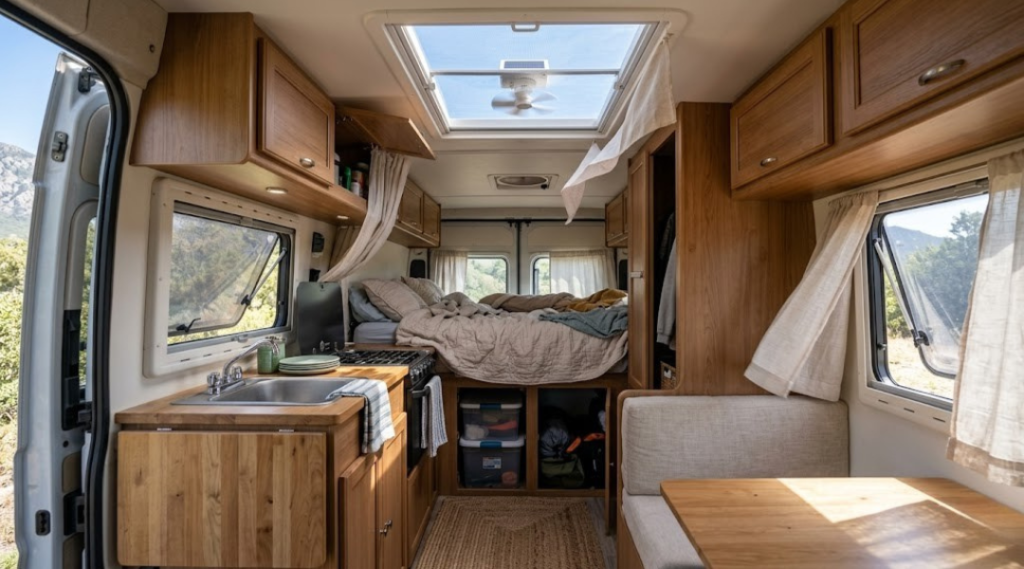
Use roof vents, window gaps, and vent covers that remain open safely during storage. Install 12-volt fans or solar-powered vent fans to keep air circulating without battery drain. Fans reduce condensation in cabinets, closets, and under mattresses—areas that often trap moisture.
Passive venting alone rarely keeps interior humidity below 60%. Combine air exchange with moisture control tools, or air may circulate but still stay damp. Regularly check that intake and exhaust paths stay clear of dust, wasp nests, or salt corrosion that can limit airflow.
Moisture Control Tools and Their Practical Constraints
Dehumidifiers, moisture absorbers, and ventilation fans help prevent mold in RVs by lowering indoor humidity. Compressor dehumidifiers work best when temperatures stay above 60°F, while desiccant units perform better in cooler or unpowered conditions.
Many RV owners use DampRid, silica gel packs, or similar desiccants in storage closets. Replace or recharge them monthly for reliability. If electricity is available, a low-power thermoelectric dehumidifier or continuous drainage model can run in automatic cycles to keep humidity between 40–55%.
When you blow out fresh water lines before storage, you also remove water left in pipes that could increase interior humidity. Keep drip pans dry, empty all tanks, and open cabinet doors to allow air circulation.
Each tool has a cost and capacity limit, so use more than one method to cover different zones of the RV.
Tradeoffs Between Sealing, Venting, and Climate Control
Good RV mold prevention requires a balance between sealing and venting. A tightly sealed RV keeps out rain, sea mist, and insects, but it also traps moisture inside if air cannot escape.
Before long-term storage, seal roof seams, window gaskets, and utility ports. Then add controlled venting through roof caps or vent covers that shed rain while allowing minimal airflow. If you use a dehumidifier, partial sealing helps it work efficiently by reducing outside moisture inflow.
However, sealing without ventilation can lead to stagnant, humid air. Venting too much brings in coastal dampness. In most cases, maintaining moderate sealing plus powered ventilation prevents both rain intrusion and moisture buildup.
Use a small hygrometer to track interior humidity. It’s difficult to manage what isn’t measured. This balance between containment and airflow matters most for preventing mold while keeping the RV ready for use.
Regional Climate Effects on RV Interior Moisture Dynamics
Coastal storage yards expose RVs to damp air, salt-laden winds, and frequent temperature swings. These environmental conditions raise the chance of interior condensation, corrosion, and mold when air circulation or moisture control is poor.
Marine Layer Patterns and Overnight Humidity Retention
Marine layers, common along coastal regions, form when cool ocean air meets warmer inland temperatures. At night and early morning, this dense layer often sits over storage yards, keeping humidity above 80–90%. When the sun rises, the air warms quickly, but the moisture trapped inside closed RVs remains.
You may notice water droplets on windows or ceiling panels after several nights of marine fog. This happens when interior surfaces cool below the dew point, causing condensation. Even small leaks or unsealed vents let damp air settle inside cabinets and wall cavities.
To lessen the effect, use roof vents or moisture-absorbing products during storage. Small solar fans or cracked windows can help equalize interior air and reduce lingering humidity.
| Time of Day | Typical Coastal Humidity | Effect on RV Interior |
|---|---|---|
| Late Night–Morning | 80–95% | Condensation risk rises |
| Midday | 50–70% | Air begins drying |
| Evening | 70–85% | Humidity increases again |
Proximity to Coastline and Moisture Saturation Levels
The closer your RV is to the coastline, the more exposure it has to damp, salt-rich air. Within one mile of the shore, humidity can stay above 70% for most of the year. Salt particles in the air can also trap moisture against metal and fiberglass surfaces, encouraging corrosion and mildew.
Parking slightly inland, even a few miles away, can reduce moisture exposure. If relocation isn’t possible, sealing seams and applying corrosion inhibitors to hardware can slow damage. You should also inspect slide-out seals and window gaskets more often, as salt and moisture wear them faster.
Store fabrics, bedding, and paper goods in sealed containers to prevent them from absorbing airborne dampness. This simple step minimizes condensation from coastal humidity.
Seasonal Stability and Persistent Damp Conditions
Unlike inland climates that shift between dry and wet seasons, coastal zones often keep high humidity year-round. Even in cooler months, steady moisture levels prevent full drying of materials inside RVs. Long-term storage during this period can allow slow mold growth behind panels or under flooring.
Late autumn through spring typically brings more fog and rain, keeping air circulation low in parked vehicles. In summer, temperatures rise but ocean breezes carry steady humidity. Both conditions trap moisture inside if ventilation is closed off.
During longer storage periods, check humidity levels with a small digital hygrometer. Use desiccant containers, electric dehumidifiers, or moisture alarm sensors to maintain a humidity range of 30–50%, which is safe for most interior materials. Regular monitoring helps prevent damage before it begins.
Damage Patterns Noted by Farace’s Automotive & RV Center
Technicians at Farace’s Automotive & RV Center often see predictable damage patterns in RVs stored near coastal areas. Salt-laden air, high humidity, and minimal ventilation create ideal conditions for rv mold growth and metal corrosion. You may notice these issues first in hidden or less-used areas.
Common spots of concern include under-seat storage, wall insulation, and areas around windows or air vents. Moisture trapped behind panels or under flooring can cause soft spots and a musty smell. Once mildew forms, it tends to spread along surfaces that stay cool and damp, such as aluminum frames or vinyl wall coverings.
Typical early indicators include:
- Fading or peeling wall panels
- Bulging laminate or warped subfloor
- Rust near screws, joints, and exterior seams
- Staining around window seals and roof edges
The table below highlights recurring issues reported by Farace’s team:
| Area Affected | Common Problem | Likely Cause |
|---|---|---|
| Roof and seams | Cracked sealant, leaks | UV and salt exposure |
| Interior walls | Mold growth, odor | Trapped moisture |
| Under RV flooring | Rot or delamination | Poor drainage |
| Electrical bays | Corroded connectors | Salt and humidity |
If your RV is parked near the ocean or in a damp storage yard, you should inspect for these patterns at least twice a year. Regular cleaning, resealing, and use of a dehumidifier can minimize damage and slow the return of rv mold.