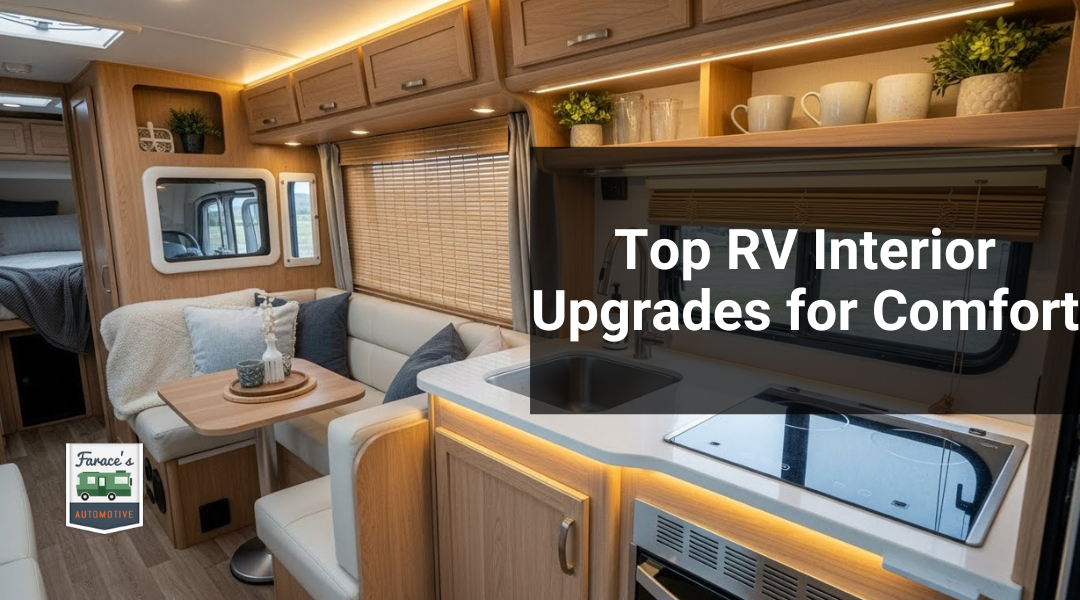
Comfort matters when every mile becomes part of your journey. Whether you’re exploring the Pacific Coast Highway or weekend camping across Orange County, a well-designed RV interior can make the difference between simply traveling and truly enjoying the road. Upgrading your RV’s interior gives you the comfort, function, and efficiency you need for long trips without sacrificing style or space.
You can start by upgrading essential furniture for better support and storage, add lighting that sets the right mood, and improve energy systems for more reliable off-grid travel. Modern fittings, smart storage, and climate control upgrades help you stay organized and relaxed, no matter the destination.
With expert help from local RV specialists like Farace’s Automotive & RV Center in Huntington Beach, you can customize everything from your mattress and kitchen layout to lighting and ventilation. Each improvement makes your RV feel more like home, keeping every Orange County road trip comfortable, practical, and ready for adventure.
Essential RV Furniture Upgrades
Comfortable, functional furniture helps you relax and make better use of limited space during long road trips. Choosing the right RV upgrades improves both convenience and travel enjoyment by reducing clutter and maximizing seating and sleeping areas.
Recliners and Sofas for Enhanced Relaxation
Replacing factory seating with wall-hugger recliners or a small loveseat can make a big difference in your comfort. These pieces fit close to the wall, allowing you to recline fully without wasting space. Many modern RV recliners feature USB ports, cup holders, and even massage settings, giving you the same comfort level as at home while still being lightweight enough for travel.

Look for lightweight frames made from aluminum or composite materials to keep your RV’s total weight down. Some models also have removable backs, which makes them easier to install through narrow RV doorways. When choosing fabric, consider easy-clean materials like vinyl or microfiber to handle spills and dust from the road.
Upgrading to a small convertible sofa bed can also add sleeping space. This option works well for guests or when you need extra room without sacrificing your main seating area.
Convertible Dinette Solutions
Factory dinettes often take up a lot of space and may feel cramped. Replacing them with freestanding tables and chairs lets you reposition pieces based on your needs. You can also install a fold-down or wall-mounted table that saves space when not in use.
If you prefer built-in seating, upgrade to a convertible dinette set that easily turns into a bed or workstation. Some RV owners add storage benches under the seats to make use of hidden areas for kitchen gear, linens, or tools.
A simple table chart below shows practical upgrade ideas:
| Feature | Upgrade Idea | Benefit |
|---|---|---|
| Table | Lift-top or wall-mounted | Converts to desk or dining |
| Seating | Storage bench | Space for gear |
| Cushions | High-density foam | Improved comfort |
By improving flexibility, you make your RV dining space more usable throughout the day.
Upgrading to Multi-Functional Seating
When your RV has limited room, multi-functional furniture provides flexibility without clutter. Pieces such as a lift-top coffee table or modular sofa sections can shift between lounge and sleeping setups quickly. This type of seating helps you create designated areas for work, rest, or socializing using the same space.
You might also add storage ottomans or folding stools that double as footrests or extra chairs. These lightweight, compact pieces are easy to move and store when not needed.
Another smart choice is swivel seating near an entry or window area. A chair that turns 360 degrees allows you to adjust your vantage point, whether facing the dining table or enjoying the view outside. Investing in versatile seating supports both comfort and efficiency for your Orange County road trips.
Maximizing Sleep Comfort on the Road
Sleep quality often determines how much you enjoy your time on the road. The right RV upgrades—including your mattress, bedding, and layout—can make a major difference in rest, recovery, and overall comfort. These changes don’t require luxury budgets but do call for careful selection and fitting to your specific RV setup.
Choosing the Right RV Mattress
Many RVs come with basic mattresses that prioritize weight and cost over comfort. Replacing this factory model with a better RV mattress is usually the most effective upgrade for sleep quality. You can choose from memory foam, hybrid, or latex mattresses depending on how you prefer to sleep.
If you want easy installation, a memory foam mattress works well since it can compress and fit through small doors. Hybrid mattresses provide better airflow and support if you tend to sleep warm. Latex options last longer and resist moisture but may cost more upfront.
When comparing models, pay attention to thickness and density. A mattress that’s too thick might block storage doors or interfere with slide-outs. Lightweight, high-density foam can deliver comfort without adding unnecessary weight to your rig.
High-Quality Bedding Essentials
Once you have a solid mattress, focus on bedding that supports temperature control and durability. Start with breathable sheets made from cotton, bamboo, or moisture-wicking blends. These materials help manage heat and reduce sweating on warm nights.

Use a mattress protector to guard against spills, humidity, and dust buildup. Choose one that’s waterproof but still ventilated so your mattress stays dry and fresh.
A good comforter or blanket should suit seasonal travel. Down alternatives are a practical choice for most RV owners since they’re lighter, easy to wash, and less prone to allergens. Pair that with a few firm and soft pillows to adjust to your sleeping preferences.
Custom Bed Solutions for Unique Spaces
Some rigs have nonstandard bed shapes—such as rounded corners or split platforms—that make it hard to find a standard mattress. In those cases, ordering a custom RV mattress ensures a proper fit and eliminates wasted space. Companies that specialize in RV bedding can cut foam or hybrid materials to your exact dimensions.
If you have bunk beds or convertible dinette setups, consider modular cushions with removable covers. These act as flexible sleeping surfaces that can double as seating during the day.
Adding a memory foam topper can upgrade older or uneven cushions without full replacement. Measure carefully and secure each piece to prevent slipping when the vehicle moves. Custom solutions may cost more, but they often maximize comfort and usability in compact interiors.
Smart Storage and Organizational Solutions
Efficient storage keeps your RV interior open and usable while protecting your belongings during long drives. Small design choices—like upgraded cabinets, durable hardware, and hidden compartments—help you travel with less clutter and more comfort.
Overhead Cabinet Design Improvements
Overhead cabinets often hold kitchenware, linens, and small electronics, so their layout affects both safety and usability. You can add adjustable shelves to fit items of different sizes or install gas struts that hold doors open while you load or unload. Installing LED strip lighting under the cabinets improves visibility at night without taking up extra room.
To increase storage depth without adding weight, consider lightweight composite materials for cabinet construction. They reduce strain on the RV frame yet stay sturdy for long trips. Replacing old hinges with soft-close models also prevents rattling while driving.
For visual consistency, use matching finishes on cabinet faces and trim. High-gloss whites or light wood tones make small interiors feel more open. Keep handles compact to prevent snagging in tight spaces. Small design upgrades like these give your cabinets better function and a cleaner look overall.
Drawer Pulls and Hardware Replacement
Upgrading drawer pulls and cabinet hardware improves both form and function. Many older RVs use plastic fixtures that loosen or crack over time. Replacing them with metal pulls or brushed aluminum handles makes them sturdier and easier to grip, especially when driving on rough roads.
Choose locking latches or push-button pulls to keep drawers shut securely. This prevents shifting during travel and protects the drawer slides from wear. Labeling drawers or adding soft-close slides makes daily use smoother and quieter, reducing vibrations from the road.
When you replace hardware, stay consistent in size and screw pattern to avoid new holes. A simple hardware upgrade modernizes your kitchen, bathroom, and bedroom storage areas without a major remodel. These small touches make your RV feel well-finished and built for longevity.
Under-Bed and Hidden Storage Innovations
Every inch counts in an RV, and the space beneath beds offers major potential. You can install lift-up bed platforms with gas struts for easy access to large bins or slide-out drawers. This setup works well for storing clothes, camping gear, or extra linens.
Modular containers or rolling storage boxes keep everything organized and prevent shifting during transit. For heavy items, use drawer slides with locking mechanisms so they stay in place on the move.
Other useful hidden spaces include false seat bottoms, dinette benches with lift panels, and floor compartments designed between joists. These areas let you store emergency tools or seasonal items out of sight. Combining these hidden solutions maximizes your storage capacity without adding visible clutter to your RV interior.
Modern Lighting Upgrades for Ambience and Efficiency
Lighting plays a major role in how comfortable and inviting your RV feels during road trips in Orange County. By improving visibility and reducing power use, you can make your space more efficient while creating a warm and relaxing atmosphere inside your vehicle.
Switching to LED Lighting
Upgrading to LED lighting is one of the most cost-effective RV upgrades you can make. LEDs use up to 80% less energy than halogen or incandescent bulbs, reducing battery draw when parked off-grid. They also generate less heat and last significantly longer, which helps maintain a stable interior temperature in sunny Southern California.
You can choose from a range of LED options to suit different needs:
- Pancake or dome lights for ceilings and general illumination
- Bulb replacements for existing fixtures
- Recessed lights that give a clean, built-in look
Look for warm white LEDs (around 3000K) for a cozy interior or daylight tones (4000–6000K) if you prefer brighter work areas. Many fixtures now include dimming functions or USB ports, adding both efficiency and convenience. Installation is usually simple, requiring only basic tools and wiring knowledge.
Accent and Task Lighting Strategies
Layering light helps you create comfort and function in different zones of your RV. Accent lighting—such as under-cabinet strips or wall-mounted pucks—adds visual interest and highlights design features. It also prevents shadows in narrow areas like hallways or kitchen corners.
For task lighting, focus on targeted fixtures near work surfaces or beds. Flexible reading lights with built-in USB ports or adjustable goosenecks provide control and reduce glare. In cooking areas, bright neutral LEDs improve visibility without distorting color.
Combining ambient, accent, and task lights lets you adjust brightness levels as your activities change. With efficient LED fixtures and thoughtful placement, you can maintain the right mix of practicality and style throughout your RV.
Energy-Efficient Upgrades for Off-Grid Comfort
Modern RVs can stay comfortable and self-sufficient without relying on constant hookups. You can achieve longer stays off-grid by adding solar power and choosing appliances that draw less electricity while keeping daily conveniences running smoothly.
Solar Panels Installation for RVs
Solar panels let you produce your own electricity and reduce generator use. You can mount them on your RV roof using fixed or tilt brackets. Fixed panels are simple and low-maintenance, while tilt panels capture more sunlight during winter or low-sun conditions.
For most small RV setups, 400–600 watts of solar panels can handle basic needs like lighting, refrigeration, and device charging. Larger systems above 1,000 watts support air conditioning or extended boondocking. Combine the panels with a lithium battery bank and an MPPT charge controller for better power conversion and storage efficiency.

If you travel in partly shaded areas, wiring panels in series helps maintain voltage, but parallel wiring is easier to troubleshoot. Clean your panels monthly and check mounting brackets for tightness to maintain efficiency over time.
A well-sized solar system decreases campground fees, reduces fuel use, and extends your ability to stay off the grid in comfort.
Energy-Saving Appliance Upgrades
Efficient appliances reduce how often your batteries need recharging. LED lighting should replace halogen bulbs, cutting power use by up to 80%. A 12V compressor refrigerator cools faster and consumes less energy than old absorption models.
Choose a low-wattage induction cooktop or propane-efficient stove for easier meal prep. Switching to variable-speed fans and a soft-start kit on your air conditioner can cut startup power surges that stress your battery system.
Look for Energy Star-rated products when possible. These small changes free up your battery capacity for critical needs and let you stay comfortable even when camping far from hookups. Keep cables, connectors, and thermostats well maintained to prevent hidden energy losses.
Climate and Air Quality Enhancements
Maintaining comfortable temperatures and clean air inside your RV helps reduce fatigue and improves sleep during long Orange County road trips. Small interior upgrades like improved airflow systems, smart climate control, and insulated window coverings can make your RV feel more stable and livable in every season.
Ventilation and Air Circulation Improvements
Good ventilation keeps your RV fresh and prevents humidity buildup that can cause odors or mold. Roof vent fans, such as MaxxAir or Fan-Tastic Vent, efficiently move hot air out and draw cooler air in. You can also install window fans to create a cross‑breeze or add screen doors that let air pass through while keeping bugs out.
Adding vent covers allows you to keep vents open even during light rain, improving airflow without leaks. For smaller RVs, a portable dehumidifier helps reduce moisture, especially when parked near the coast. Clean your vent filters and check seals regularly to maintain airflow efficiency.
Tip: When cooking or showering, run your vent fans to limit humidity. Maintaining moderate airflow helps your RV stay cleaner and more comfortable.
Smart Thermostats and Temperature Controls
A smart thermostat lets you control heating and cooling from your smartphone or tablet. This feature is helpful when leaving your RV parked in the sun or returning after an outdoor activity. Many systems monitor temperature and humidity and adjust settings automatically to stay within your preferred range.
Pair your thermostat with Wi‑Fi‑enabled AC units or diesel and propane heaters for consistent climate control. You can check readings in real time, reducing energy waste and maintaining comfort while on the road.
Some thermostats integrate with sensors placed in different zones of your RV, which balances cooling or heating in every area. Installing one requires basic wiring but offers long‑term comfort and efficiency benefits.
Window Treatments for Insulation and Privacy
Temperature control also depends on how well your RV holds in heat or blocks it out. Use reflective window covers to deflect sunlight and lower interior heat during summer road trips in Southern California. In cooler weather, thermal curtains and insulated blinds keep warmth inside.
Here’s a quick guide:
| Upgrade Type | Benefit | Best Used For |
|---|---|---|
| Reflective Covers | Reduce solar heat | Hot sunny climates |
| Thermal Curtains | Retain warmth | Cold nights and mountain drives |
| Blackout Shades | Add privacy and light control | Sleeping areas |
You can layer materials for better insulation and quieter interiors. Proper window treatments also help balance temperature changes caused by coastal breezes or desert air.
Finishing Touches for a Personalized RV Interior
Adding small yet thoughtful details helps your RV feel more like a comfortable home. Simple interior upgrades such as new textiles, updated decor, and modern tech features create a more welcoming and functional space during your Orange County road trips.
Rugs and Soft Furnishings
Soft materials instantly change how your RV interior feels. A cozy rug near your seating area reduces noise and adds warmth underfoot. Choose washable, low-pile rugs that fit tight spaces and are easy to keep clean after a day at the beach or on the road.
Throw pillows and cushion covers give color and comfort without taking up extra space. Opt for removable covers in durable fabrics such as cotton or microfiber. Use a few matching tones to tie the dining and lounging areas together.
Small curtains or blackout shades improve privacy and block light when parked near busy campsites. Soft bedding and updated upholstery also make long stays more relaxing. Keep textures practical and easy to maintain to avoid frequent replacements.
| Upgrade Type | Benefit | Maintenance |
|---|---|---|
| Area rug | Warms interior and reduces road noise | Vacuum or shake outdoors |
| Throw pillows | Adds color and comfort | Wash covers as needed |
| Blackout shades | Improves sleep quality | Wipe with mild cleaner |
Easy Decor Updates
Decor upgrades can modernize your RV without major tools. Peel-and-stick wallpaper or removable wall decals change the atmosphere quickly and can match local scenery or your travel style. Light, neutral tones help small spaces feel larger, while darker accents add contrast.
Use multi-use accessories such as foldable storage bins, wall hooks, and magnetic strips. These upgrades combine practicality with style and prevent clutter during long drives. Even LED lighting strips can brighten kitchen counters or under-seat storage for a clean, modern look.
Replace dated cabinet handles or switch plates with brushed metal or matte black finishes. Small details like these create a cohesive, updated appearance throughout the cabin.
Quick decor checklist:
- Removable wallpaper
- LED light strips
- Updated cabinet handles
- Smart storage baskets
Technology and Entertainment Additions
Modern tech upgrades improve both comfort and convenience during RV travel. A compact smart TV with a mounted swivel arm lets you stream favorite shows from multiple viewing angles. Install a Bluetooth soundbar for clear audio without using bulky speakers.
A reliable Wi-Fi booster helps with remote work or navigation apps when campgrounds have poor signal strength. Many boosters draw power efficiently from your RV’s electrical system.
For energy control, add smart plugs and small LED displays to monitor usage and avoid draining the battery. Some travelers also install tablet stands near the dining area for maps or recipes, keeping screens off valuable counter space.
These tech-based rv upgrades keep your mobile setup connected and adaptable without heavy wiring or large equipment.
Frequently Asked Questions
Comfort upgrades in RVs can greatly improve your experience on long Orange County road trips. From better sleep setups and smart lighting to improved storage and climate control, small changes can make travel safer, easier, and more enjoyable.
What are the essential comfort upgrades for RV interiors before a long road trip?
Start with seating, bedding, and lighting. Replace worn cushions with high-density foam or ergonomic seating that supports posture during long drives.
Upgrade insulation and window coverings to control temperature and reduce noise. Adding soft-touch materials and LED lighting with dimming options creates a calmer atmosphere for relaxing after a day on the road.
Which RV mattress types offer the best sleep quality for extended travel?
Memory foam and hybrid mattresses offer the most balanced support and comfort for long-term use. Memory foam reduces motion transfer, while hybrid designs combine foam layers with pocketed coils for better airflow.
Choose a model made for RV dimensions, which are often shorter or narrower than home sizes. A ventilated mattress cover can help reduce heat buildup during warm Orange County nights.
How can I maximize space with multi-functional furniture in my RV?
Look for sofa beds, convertible dinettes, and hidden storage built into furniture. These pieces help you use every inch of interior space without adding clutter.
Foldable tables and wall-mounted desks create flexible work or dining areas. Using lightweight materials also helps you maintain fuel efficiency while keeping your interior versatile.
What are the latest trends in RV interior lighting for a comfortable ambiance?
LED fixtures now dominate due to their low power draw and customizable color temperature. Warm-white lights produce a softer glow ideal for evenings, while daylight LEDs are better for cooking or cleaning.
Smart lighting controls allow you to adjust brightness from a mobile device or remote panel. Accent lighting under cabinets or along floors improves visibility and adds a cozy touch.
How do I choose the best climate control system for my RV?
Select a roof-mounted air conditioner or heat pump sized for your RV’s square footage. Ducted systems distribute air more evenly, while portable or window units work well in smaller campers.
For greater comfort off-grid, consider installing a vent fan with a thermostat and reversible airflow. Insulated shades and weather sealing will also help stabilize interior temperatures.
What options are available for enhancing the bathroom and kitchen facilities in an RV?
Compact washer-dryer combos, water-saving showerheads, and upgraded faucets improve convenience. You can replace standard plastic fixtures with stainless steel or lightweight composite materials for durability.
In the kitchen, installing an induction cooktop and high-efficiency refrigerator gives you better temperature control and energy use. Slide-out pantry shelves or magnetic racks create accessible storage without reducing counter space.