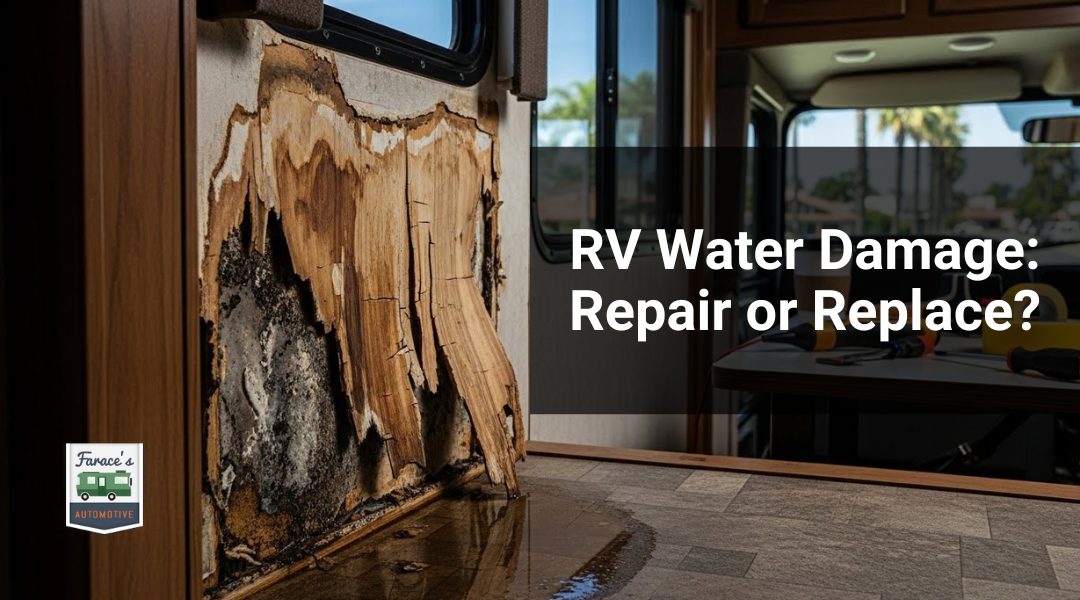
Water damage can turn your RV from a weekend escape into a costly restoration project faster than you expect. Living in Orange County, where coastal humidity and year-round sun can strain seals and roofs, you know how quickly small leaks grow into major problems. Your rig is still worth saving when the structure remains sound, the damage is isolated, and restoration costs stay below the vehicle’s value.
You can identify issues early by watching for soft spots, warping, musty odors, or staining in ceilings and walls. Acting early makes the biggest difference, and knowing when to repair versus replace protects both your budget and your RV’s lifespan. Professional restoration specialists in Orange County, like the experienced team at Farace’s Automotive & RV Center in Huntington Beach, can evaluate the true condition of your vehicle and give you a realistic path forward.
As you explore the causes, assessment methods, and restoration process, you’ll see where saving your RV makes financial and practical sense—and when starting fresh might serve you better. Understanding these boundaries helps you make clear, informed decisions to keep your RV ready for the next trip rather than parked in permanent storage.
Common Causes of RV Water Damage in Orange County
Water damage in your RV often starts small—an unnoticed leak, a worn seal, or a poorly maintained valve—before it spreads into walls, floors, or cabinetry. In Orange County’s mix of coastal humidity and year-round sun, the combination of environmental wear, aging materials, and neglected maintenance makes your rig particularly vulnerable.
Leaking Roofs and Seals
Your roof and exterior seams face continuous exposure to the elements. Roof seals and window caulking dry out over time, leaving gaps that invite water intrusion. In Irvine or Costa Mesa, where strong UV rays degrade rubber and sealants quickly, leaks often form around roof vents, skylights, and air conditioners.
Inspect the roof at least twice a year. Look for cracks, peeling sealant, or soft spots that feel spongy underfoot. Use a self-leveling lap sealant or EPDM-compatible patch to reseal joints when needed. Addressing minor roof issues early prevents damage to insulation and structural panels below. Even small leaks can migrate several feet inside the roof structure before showing visible signs, so timely roof checks are critical.
Plumbing Issues and Water Heaters
Leaks from plumbing lines, fittings, and water heaters account for a large share of interior water damage. Flexible hoses can crack or detach during travel, and fittings may loosen from vibration. The water heater, especially if poorly winterized or corroded, can leak around connections or the relief valve.

You can reduce the risk with basic plumbing maintenance. Check behind access panels, under sinks, and near the pump for any dampness or mineral buildup. If you notice inconsistent pressure or a slow drip, shut off the water supply and locate the source immediately. In Orange or surrounding areas where hard water is common, install an inline water filter to reduce mineral buildup that degrades seals. Keep the water heater’s anode rod in good condition to protect against tank corrosion.
Weather and Environmental Factors
Orange County’s coastal climate can accelerate both corrosion and seal deterioration. Moist marine air from the Pacific mixes with long periods of direct sun exposure, expanding and contracting your RV’s materials daily. This thermal stress weakens joints and allows water to penetrate through microcracks.
Heavy rains that follow dry periods often reveal hidden damage. Water can enter through poorly sealed roof edges or slide-out gaskets that have lost flexibility. Park your RV on level ground where drainage is adequate and avoid shaded, damp storage areas that trap condensation. Ventilation also matters—open roof vents periodically to reduce humidity inside your rig after coastal trips or while parked near the beach.
Maintenance and Aging Components
As your RV ages, materials like fiberglass, plywood, and rubber lose resiliency. Sealants dry out, plumbing lines become brittle, and fasteners loosen. Combine that with the vibration of highway travel and small weather-related stresses, and your risk of water intrusion rises sharply.
A structured inspection routine helps extend your RV’s life. Use a checklist that includes roof seams, window frames, plumbing joints, and undercarriage fittings. Replace worn gaskets before leaks develop. Local service centers in Orange County often offer moisture detection tests that identify trapped water behind panels before visible mold or rot appears.
Consistent upkeep keeps minor degradation from becoming costly damage. By staying alert to how your environment and vehicle age affect those components, you protect both your RV’s structure and your long-term investment.
Assessing the Extent of Water Damage in Your RV
Understanding how far water damage has spread helps you decide if restoration is practical or if your RV needs extensive rebuilding. A careful inspection of structural integrity, moisture exposure, and mold activity reveals both visible and hidden threats to your rig’s safety and value.
Comprehensive Damage Inspection
Start by conducting a complete visual survey inside and outside your RV. Look for water stains, bubbling wallpaper, and warped wood around windows, vents, and roof seams. Use a moisture meter to measure dampness inside walls or under flooring—areas that often trap unseen water.
In Orange County’s coastal climate, humidity accelerates deterioration, especially in rigs parked near the ocean or in shaded lots around Irvine. Check the roof seals, corner joints, and slide-outs since these points frequently allow water intrusion.
Create a simple inspection checklist:
| Area to Inspect | Signs of Damage |
|---|---|
| Roof seams | Soft spots, peeling sealant |
| Windows/vents | Discoloration, damp trim |
| Storage bays | Rust, mildew odor |
| Flooring | Spongy feel, delamination |
Documenting your findings with photos and notes will help estimate repair costs and track any progressive damage later.
Identifying Structural Weaknesses
Water compromises your RV’s structural frame, often affecting plywood, laminates, and subfloor layers. You may notice flexing or sagging when stepping inside, which signals weakened supports. Tap walls and floors to check for hollow sounds that suggest internal rot.
Inspect undercarriage components too. Metal corrosion and rust on the chassis or frame mounts reduce load capacity and safety. In cases of roof or wall intrusion, examine framing around vents and AC units since moisture tends to seep into those areas and spread downward.
Perform a pressure test or seek a professional Orange County water damage specialist who uses air leak detection tools. Identifying the paths water took through seams helps you prevent repeat infiltration once repairs begin.
Detecting Mold Growth
Mold develops quickly after leaks—often within 24 to 48 hours in Orange County’s mild coastal air. Look for discoloration around vents, under mattresses, and behind cabinets where airflow is limited. Pay attention to musty odors even when visible mold is not yet apparent.
Use a flashlight and respirator during inspection to avoid inhaling spores. Mold often grows on backing materials such as insulation or wood paneling. Probe these with a screwdriver to check for softness or decay beneath the surface.
If growth covers an area larger than a few square feet or spreads through ventilation ducts, contact a certified mold remediation technician. They can remove affected materials safely and reduce airborne contamination in your RV.
Evaluating Interior Damage
Interior materials—flooring, cabinetry, upholstery—show how deeply water has penetrated living areas. Vinyl floors may peel or bubble, while laminate panels warp as adhesives fail. Press gently on interior walls; soft patches usually mean water soaked into the wall core or insulation.

Inspect electrical fixtures and outlets for corrosion since moisture intrusion can cause shorts or unsafe wiring. Appliances such as refrigerators or water heaters may rust at their base, signaling exposure to pooled water.
Create a prioritized list: items needing replacement, those suitable for drying and sealing, and sections requiring reconstruction. Estimating each category’s cost gives you a realistic picture of whether restoring your RV in Irvine or elsewhere in Orange County is financially reasonable compared to replacement.
Determining If Your RV Is Worth Restoring
When a leak or flood strikes your RV, the question of restoration comes down to numbers, structure, and safety. You need to evaluate the repair costs, the remaining life of your rig, the presence of mold or weakened materials, and how your insurance claim affects the total financial impact.
Cost of Water Damage Repair vs. Replacement
Start by estimating the extent and cost of damage repair. Water can affect not only the surface but also the subfloor, insulation, and frame. Minor damage near a window seal might cost a few hundred dollars, while wall or roof reconstruction can reach $10,000 or more depending on materials and labor rates in Orange County.
Compare these figures to the current market value of your RV. If repairs approach or exceed half of what your rig is worth, replacement might be more practical. A professional inspection can help identify hidden structural or electrical issues that inflate repair costs.
List the main expenses to clarify your decision:
| Repair Area | Typical Cost Range |
|---|---|
| Roof reseal or patch | $500–$2,000 |
| Subfloor replacement | $2,000–$6,000 |
| Full wall rebuild | $4,000–$10,000+ |
| Plumbing or electrical repair | $500–$3,000 |
Get multiple quotes from RV specialists before committing, and verify that estimates include both drying and restoration work to avoid repeat moisture issues.
RV Age, Value, and Longevity Considerations
The age of your RV directly influences whether restoration makes sense. A trailer made within the last ten years often retains higher resale or sentimental value, so major work might still pay off. However, older rigs with outdated wiring or brittle framing may cost more to repair than they’re worth.
Check the frame, roof structure, and mechanical systems first. If they’re sound, cosmetic or panel repairs can extend your RV’s life for years. Conversely, if rot has spread through multiple sections, total restoration becomes impractical.
Use recent resale listings or appraisal guides like NADA RV Values to gauge market pricing. Subtract estimated repair costs from your RV’s post-repair value. If the gap is narrow or negative, it’s typically better to replace. Don’t forget to factor in downtime—the longer it sits in a repair shop, the more potential use you lose across a travel season.
Safety and Health Impacts
Even minor water intrusion can create mold growth within 24–48 hours, affecting indoor air quality and respiratory health. Mold spores easily spread through ventilation, so safety comes before cost when deciding whether to restore.
Examine key areas such as the walls, ceiling, and under-floor cavities. If you detect musty odors, soft spots, or visible mold, test for contamination. Professional remediation can reach $1,000–$5,000 or more, depending on how far the moisture spread.
Consider the health of everyone who uses your RV. If you or your family have allergies or respiratory issues, investing in full mold remediation and new materials may be necessary. Use mold-resistant replacements, such as treated plywood and vapor barriers, to prevent recurrence. When the contamination is widespread or located in structural areas you can’t safely access, replacement may be the safer decision.
Insurance Claims Evaluation
Your insurance claims process often determines whether restoration is viable. Contact your insurer as soon as you confirm water damage and document everything with photos and repair estimates. Insurers typically cover water damage caused by sudden leaks or storm-related incidents, but gradual deterioration from poor maintenance may not qualify.
Ask your insurance company about coverage limits, required documentation, and approved repair facilities. In some cases, an adjuster will evaluate the rig before authorizing work. If your claim is approved, you may receive funds for materials, labor, and even towing to a certified shop.
Keep in mind that depreciation and deductibles affect what you actually receive. Compare the payout with your projected repair bill to decide if restoration makes financial sense. For uninsured or partially covered damage, calculate out-of-pocket costs carefully—sometimes selling the damaged RV for parts yields better value than funding major structural repairs.
Professional RV Water Damage Restoration Process
Reliable water damage restoration protects your RV’s structure, prevents mold growth, and helps preserve resale value. You should know how professionals inspect, extract, dry, and restore your vehicle so you can make informed choices about repairs or replacements.
Emergency Water Extraction and Cleanup
When water penetrates your RV, acting fast limits structural damage. Professional emergency water damage restoration services begin with a detailed inspection to locate leaks and measure moisture levels. Technicians often use infrared cameras or moisture meters to identify hidden wet areas inside walls, ceilings, or floors.
They then perform water extraction using industrial pumps or truck-mounted vacuums to remove standing water. This step minimizes swelling in wood panels and prevents metal corrosion. The process continues with damage cleanup, which includes removing soaked insulation, carpets, and upholstery that cannot be salvaged.
Surfaces are cleaned with approved antimicrobial agents to eliminate bacteria and reduce odor. Any remaining debris gets disposed of properly. This quick, methodical approach helps stabilize the interior so further restoration can proceed safely.
Drying and Dehumidification Methods
After visible water is gone, trapped moisture must be removed. Professional water damage restoration services rely on a combination of air movers and dehumidifiers to control humidity and stop mold before it starts. Air movers circulate dry air across damp surfaces, accelerating evaporation.
Dehumidifiers—either refrigerant or desiccant—capture water vapor from the air. The choice depends on the temperature and material composition inside your RV. Technicians monitor humidity levels daily and reposition equipment to reach hidden cavities, such as under cabinets or inside wall panels.
This phase can take several days, depending on the extent of saturation. Professionals document the moisture readings throughout to verify when your RV is completely dry. Proper drying prevents long-term damage like delamination and warping of plywood subfloors or wall framing.
Restoration and Repair Techniques
Once the interior is dry, technicians restore damaged materials. They may remove and replace wall panels, vinyl flooring, ceiling insulation, or cabinetry affected by moisture. Specialized adhesives and sealants maintain structural strength and reduce future leaks.
Professionals also reseal vulnerable seams around windows, slide-outs, and roof membranes. Electrical wiring and plumbing lines are checked for corrosion or mineral buildup and replaced if necessary. To finish, technicians match surface textures and finishes so repairs blend with the original design.
Some service providers coordinate directly with your insurance company to document the restoration process. This ensures that inspection reports, photographs, and cost estimates support your claim for both labor and material reimbursements.
Choosing the Right Water Damage Restoration Company
A qualified water damage restoration company can determine whether your RV remains safely repairable or suffers long-term deterioration. Choosing competent professionals ensures accurate moisture assessment, proper material drying, and transparent project estimates from start to finish.
Key Qualities to Look For
Look for companies with IICRC-certified technicians, as this certification verifies training in professional water damage restoration standards. Certification matters because improper drying or contamination control can result in structural damage or hidden mold later.
Select providers offering 24/7 emergency water damage restoration services. Quick response prevents further water intrusion and reduces interior decay. Reliable firms arrive fully equipped with moisture detection tools and industrial drying systems.
Also verify licensing, bonding, and insurance coverage. These protections safeguard you in case of accidental damage or incomplete work. Established companies typically maintain clear service records and publish customer ratings that show consistent results across past projects.
You can use this checklist for quick comparison:
| Company Factor | Why It Matters |
|---|---|
| Certification | Ensures technicians follow recognized restoration standards |
| Emergency Availability | Prevents further RV damage from delays |
| Insurance & Bonding | Protects you from liability |
| Transparent Pricing | Helps plan realistic repair budgets |
Questions to Ask Restoration Providers
Before hiring, ask how the provider assesses hidden moisture in walls, flooring, and compartments. Effective restoration depends on thorough drying, not just surface cleanup.
Confirm what type of drying equipment they use and whether they track humidity readings daily. This level of documentation shows professionalism and helps your insurer evaluate the claim.
Discuss the process for insurance coordination. Many Orange County restoration companies handle direct communication with your adjuster, which simplifies paperwork and payment tracking.
Other points worth clarifying:
- Do they guarantee response times for emergencies?
- Can they provide photos or digital reports after each step?
- How do they handle mold growth discovered during repairs?
Keeping these answers organized helps you compare multiple providers on consistent criteria.
Local Expertise in Orange County
Restoration professionals familiar with Orange County understand regional conditions like coastal humidity, seasonal storms, and high salt exposure that affect RV materials. Local experts can identify common leak sources, from cracked sealants to failing roof vents.
Established Orange County companies often maintain partnerships with mobile RV repair specialists and nearby parts suppliers. This coordination shortens wait times for components and ensures the restored RV meets regional safety and environmental regulations.
Local experience also means technicians know area insurance representatives and adjusters, improving communication and claim accuracy. When your RV needs prompt recovery after water intrusion, choosing a nearby water damage restoration company combines fast response with practical knowledge of local repair standards.
Prevention and Maintenance for Your RV
Protecting your RV from water damage starts with consistent observation, proper sealing, and smart handling of plumbing and storage conditions. Taking time to inspect, maintain, and store your rig correctly reduces costly repairs and helps extend its lifespan.
Regular Plumbing and Roof Inspections
Inspect your RV’s plumbing and roof at least twice a year. Focus on areas most prone to leaks—such as fittings, faucets, water tanks, and roof seams. Small cracks or loose sealant on vents, skylights, and joints often go unnoticed until water has already caused interior damage.
Include the water heater and all visible plumbing lines in your checks. Look for signs of corrosion, damp insulation, or water stains near the heater compartment. Use a flashlight to inspect under sinks and behind cabinets where fittings can loosen from vibration.
Create a quick inspection routine:
- Plumbing: Check water lines, pump fittings, and tank valves.
- Roof: Clean debris, reseal suspect areas, and verify that caulking isn’t brittle.
- Interior: Watch for soft walls, sagging panels, or mildew odors.
Catching a small leak early often prevents major restoration costs later.
Preventive Measures for Water Damage
Apply quality RV sealant to seams, roof edges, and window frames as part of your seasonal maintenance. Proper sealing blocks moisture and prevents hidden leaks. Replace cracked gaskets or damaged caulk immediately rather than patching over them.
Inspect and maintain drainage systems and gutters to ensure proper runoff. A blocked drain can back up water and push it into wall panels or the subfloor. Keep the exterior washed and waxed since UV protection helps prevent seal deterioration.
Inside the RV, monitor humidity with a small hygrometer and use vents or dehumidifiers in damp climates. Test the shower pan, toilet base, and water heater connections for leakage while the system is pressurized. Simple leak detection like a soapy water spray test can quickly reveal slow drips before they cause rot or mold.
Long-Term Care and Storage Tips
How you store your RV influences how well it resists future water issues. Whenever possible, keep it in a covered or indoor space. If open-air storage is the only option, use a breathable RV cover to block rain without trapping moisture.

Drain and winterize the plumbing before long-term storage. That means emptying freshwater, gray, and black tanks, then adding antifreeze where required. Turn off and drain the water heater to avoid sediment buildup and internal corrosion.
Maintain ventilation even when parked. Open roof vents slightly or install vent covers that allow airflow and prevent condensation. Inspect seals, slide-out gaskets, and roof membranes before each storage period. Small maintenance tasks—tightening clamps, cleaning gutters, treating seals—save you from expensive structural repairs in the future.
Commercial and Insurance Considerations for RV Owners
Repairing water damage in an RV involves both financial management and insurance coordination. You must weigh restoration costs against the vehicle’s market value and assess whether insurance coverage justifies professional restoration instead of replacement.
Navigating Restoration Costs
Understanding the cost structure helps you make informed decisions. Restoration expenses usually include diagnostics, material replacement, labor, and potential structural rebuilds. Prices vary depending on whether water entered through a roof leak, plumbing issue, or flood event.
You should request detailed estimates from certified RV repair facilities. A written breakdown clarifies which repairs are essential for safety versus those that are cosmetic. In Orange County, professional repair rates can be higher, so comparing authorized service centers and independent specialists often saves money.
Use the following checklist before authorizing major work:
| Item | Typical Action | Cost Impact |
|---|---|---|
| Roof membrane replacement | Replace or reseal | Medium |
| Subfloor repair | Rebuild and re-seal | High |
| Electrical inspection | Test and replace wiring | Variable |
If the total cost approaches 50–60% of your RV’s replacement value, restoring it may no longer make economic sense.
Working With Insurance Companies and Adjusters
Water damage claims depend on policy type and cause of loss. Comprehensive policies usually cover sudden incidents like burst pipes or rain entering through storm-created openings. Gradual leaks, mold, or neglected maintenance often fall under exclusions.
Notify your insurer quickly. Provide photographic documentation, repair estimates, and professional inspection reports. Adjusters rely on these details to verify that the water intrusion was accidental and not the result of deferred maintenance.
Keep records of every communication and ensure your claim specifies the origin of damage. You can also hire an independent adjuster if you believe the settlement undervalues necessary repairs. Some repair facilities work directly with insurance companies to streamline claim approval and reduce out-of-pocket costs.
Commercial Water Damage Scenarios
If you operate a rental RV fleet or a mobile business, water damage introduces commercial considerations beyond basic repairs. Downtime can lead to lost income and contract penalties. Commercial RVs often require specialized insurance policies that include business interruption and property damage coverage.
You should verify that your policy extends to commercial water damage incidents, especially those involving road exposure during storms or leaks affecting customer-use areas. Maintaining detailed maintenance logs helps validate future claims.
For large-scale flooding events, coordinate with restoration contractors experienced in fleet and commercial unit recovery. They can document multiple units simultaneously, reducing overall claim processing time and ensuring your operations resume as quickly as possible.